






Definition & Purpose of the 2008 February Facts - Cornell Blogs Service - Cornell University
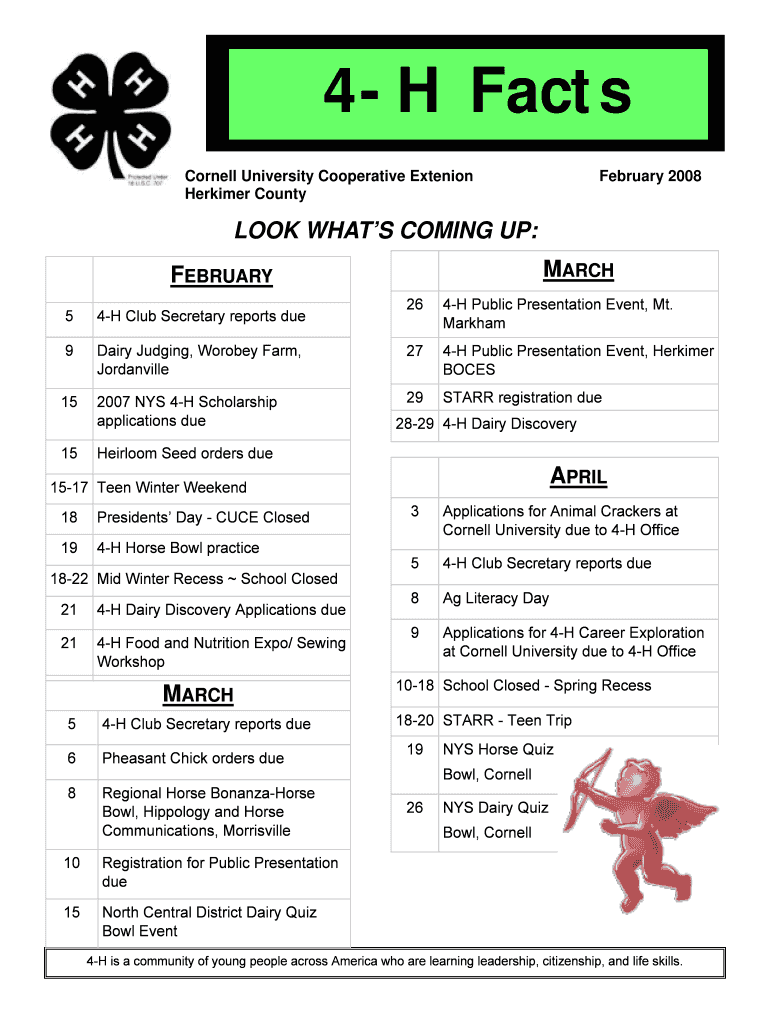
The 2008 February Facts is a newsletter from the Cornell University Cooperative Extension for Herkimer County's 4-H program. It provides a comprehensive overview of events, workshops, and activities scheduled for February 2008, aiming to enhance the personal development of 4-H members. This document serves as an informational guide, detailing activities such as public presentations, dairy judging, educational programs, and community service projects.
Key Elements of the Newsletter
The newsletter includes critical elements designed to support the 4-H program's mission:
- Upcoming Events: Features details of scheduled activities including public presentations and dairy judging.
- Educational Programs: Outlines various learning opportunities for skill development.
- Scholarship Opportunities: Highlights scholarships available to 4-H members.
- Community Projects: Describes community service initiatives undertaken by 4-H clubs.
How to Use the Newsletter
To maximize the utility of the 2008 February Facts, follow these steps:
- Review Scheduled Activities: Examine the calendar of events to register for workshops that align with your interests.
- Explore Educational Opportunities: Identify programs that offer new skills or enhance existing ones.
- Apply for Scholarships: Review eligibility criteria and deadlines for available scholarships.
- Engage in Community Service: Participate in projects to contribute to community well-being and personal growth.
Important Terms Related to 4-H Programs
Understanding specific terminology is crucial for navigating the newsletter:
- Public Presentations: Structured forums where 4-H members present research or projects.
- Dairy Judging: An evaluative competition focusing on cattle quality and scientific understanding of dairy production.
- Cooperative Extension: A community education extension providing various public services and resources.
Steps to Complete Involvement in the 4-H Program
Participating effectively in 4-H activities encompasses several key actions:
- Register for Events: Complete necessary forms to sign up for workshops and competitions.
- Prepare Presentations: Develop content and practice for public speaking events.
- Participate in Training Sessions: Attend sessions that provide specialized knowledge or skill enhancement.
- Collaborate on Community Projects: Work with peers to plan and execute service projects, fostering teamwork and civic responsibility.
Who Typically Uses This Newsletter
The 2008 February Facts is primarily aimed at:
- 4-H Members: Youth enrolled in the 4-H program looking to participate in activities and events.
- Parents and Guardians: Individuals overseeing 4-H members' participation and development.
- 4-H Leaders and Educators: Facilitators who guide and support 4-H members' learning and growth.
Examples of Utilizing the Newsletter
Real-world applications of the information found in the newsletter include:
- Planning Participation: A 4-H member uses the calendar to plan attendance at a dairy judging event.
- Educational Enhancement: Another member applies for a scholarship to attend a specialized agricultural education program.
- Community Engagement: A 4-H club leader coordinates a community service project highlighted in the newsletter.
Legally Binding Elements of the Newsletter
While the newsletter itself is not a legal document, it might reference legally binding activities such as:
- Scholarship Applications: Adhering to application guidelines and deadlines.
- Community Service Requirements: Compliance with community standards and regulations for service projects.
Digital vs. Paper Versions
The availability and format of the newsletter can impact access:
- Digital Version: Allows for easy distribution, environmental benefits, and accessibility.
- Paper Version: Traditional format for physical distribution at meetings or events.
Applying the Information Provide
To put the guidance from this newsletter into practice:
- Read Thoroughly: Analyze the information to identify personal interests related to events and workshops.
- Engage Actively: Commit to joining events and participating actively to gain from practical experiences.
- Collaborate with Mentors: Leverage the expertise of 4-H leaders for guidance and support in activities.