






Definition and Meaning
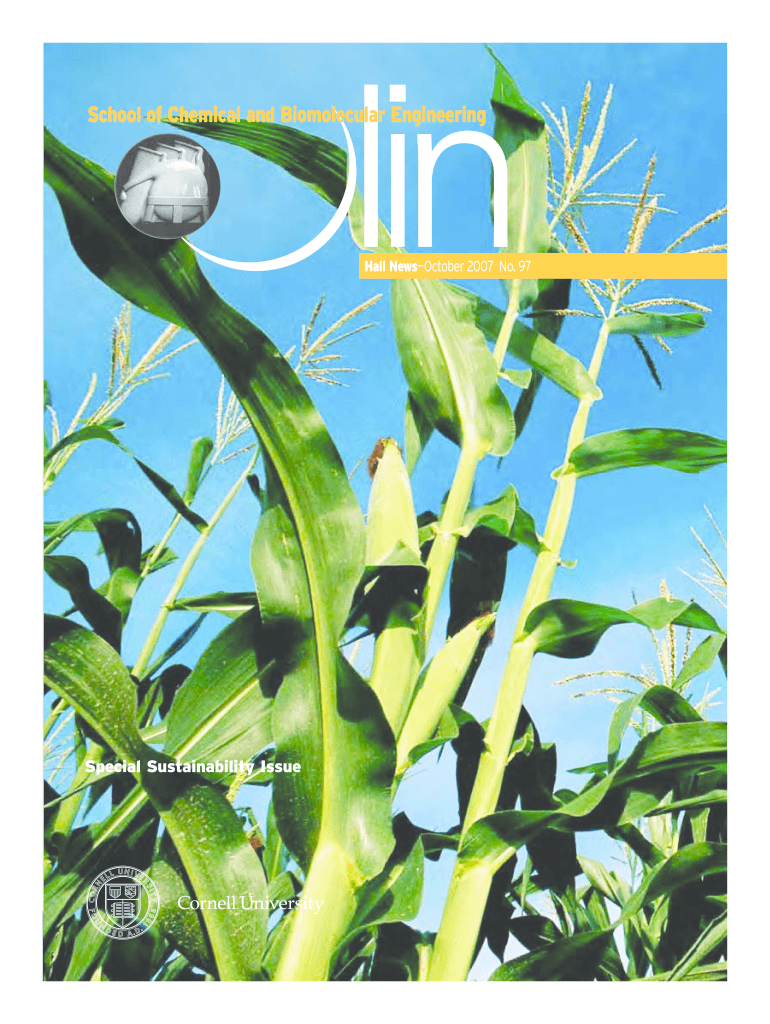
The "2007 - School of Chemical and Biomolecular Engineering - Cornell" refers to the October 2007 issue of Olin Hall News, a publication by the School of Chemical and Biomolecular Engineering at Cornell University. This newsletter serves as a record of highlights from the school, focusing on sustainability, energy research, faculty achievements, and student awards. It is a crucial resource for understanding the institution's commitments and milestones during that year.
How to Use the 2007 Edition
Professionals and students interested in chemical and biomolecular engineering may find valuable insights in the 2007 edition. The publication provides a historical perspective on the school's initiatives and achievements, which can be leveraged for academic research, professional development, or inspiration for similar projects. Faculty members might use it to revisit past accomplishments and engage with ongoing sustainability efforts.
How to Obtain the 2007 Edition
The 2007 issue of Olin Hall News can be accessed through Cornell University’s archives or library resources. Alumni and faculty networks might also provide access. Additionally, reaching out to the School of Chemical and Biomolecular Engineering could yield a digital or physical copy for personal or educational use.
Key Elements of the Newsletter
- Sustainability Initiatives: Information on energy systems research and projects.
- Faculty Achievements: Announcements regarding faculty appointments and contributions.
- Student Awards: Highlights of student accomplishments and recognitions.
- Community Engagement: Details on the importance of alumni support and community involvement.
- Upcoming Events: Announcements of events aimed at enhancing educational programs.
Who Typically Uses the 2007 Edition
The primary audience includes students, educators, alumni, and researchers in the field of chemical and biomolecular engineering. The document serves as an important reference for those studying the school's historical trajectory and its emphasis on sustainability and innovation.


Important Terms Related to the 2007 Edition
- Sustainability: Key focus on sustainable practices and research within the school.
- Energy Systems Research: Overview of specific research initiatives related to energy solutions.
- Community Engagement: The role of alumni and community members in supporting the school’s mission.
Application Process & Approval Time
While the newsletter itself does not require an application process, engaging with the school for alumni events or research collaborations may involve formal processes. Prospective students interested in the school’s programs would typically follow standard university application procedures, noting any specific deadlines or requirements related to chemical and biomolecular engineering.
State-Specific Rules and Differences
Cornell University follows U.S. educational standards, meaning there are no state-specific rules applicable to the distribution or use of the newsletter. However, those interested in sustainability projects may look into state-specific environmental regulations if pursuing related initiatives prompted by the content of this document.
Examples of Using the 2007 Edition
Researchers can cite the newsletter in studies related to sustainability in chemical engineering. Educators might use examples within the publication in courses focused on renewable energy or community-based engineering projects. Alumni might refer to the newsletter for reconnecting with past projects or conducting outreach within the Cornell community.