






Definition and Meaning
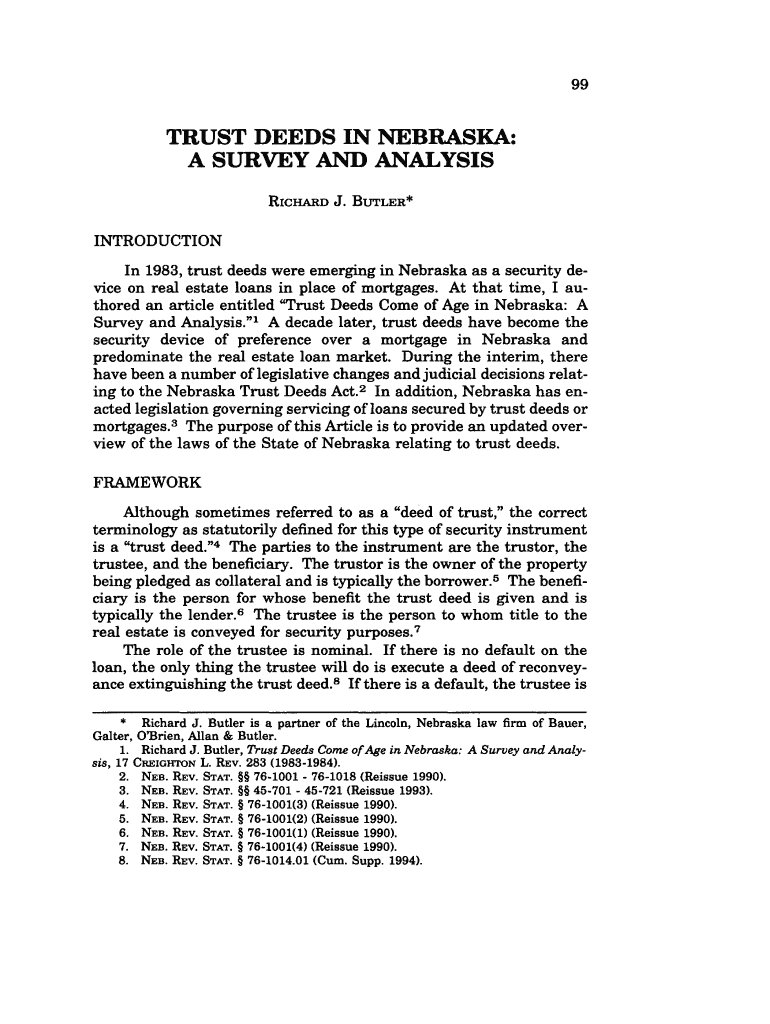
Trust deeds in Nebraska serve as a legal instrument used primarily in real estate transactions. They function as a security device, ensuring that a property loan is repaid. Unlike traditional mortgages, trust deeds involve three parties: the trustor (borrower), the trustee (third party), and the beneficiary (lender). The trustee holds the title of the property as security for the loan until the borrower repays the debt. This arrangement provides the lender with a quicker process to recoup the owed funds in case of borrower default, thanks to the trustee's power of sale clause.
How to Use Trust Deeds in Nebraska
To utilize a trust deed in Nebraska, a borrower, lender, and trustee must be established. The borrower conveys the property's legal title to the trustee, who holds it as collateral on behalf of the lender. When all loan terms, including interest and principal, are met by the borrower, the trustee re-conveys the property's title back to the borrower. However, if the borrower defaults, the trust deed permits the trustee to execute a non-judicial foreclosure, selling the property without court involvement.
Key Elements of Trust Deeds in Nebraska
- Parties Involved: Trust deeds involve the trustor, trustee, and beneficiary. Each holds distinct roles and responsibilities throughout the life of the loan.
- Power of Sale: This provision allows the trustee to sell the property to satisfy the unpaid debt in cases of default without going through lengthy court procedures.
- Lien Position: Trust deeds generally hold a superior position to other claims, except for specific tax liens, enhancing their attractiveness to lenders.
State-Specific Rules for Trust Deeds in Nebraska
Nebraska law governs the use and execution of trust deeds, requiring compliance with its specific provisions. The state mandates certain formalities, such as notarization and recording of the deed to secure its validity. Additionally, Nebraska law outlines detailed procedures for foreclosure, primarily through non-judicial means, contingent on transparent notification processes to affected parties. These rules ensure a streamlined transition while safeguarding all parties' rights.
Steps to Complete Trust Deeds in Nebraska
- Drafting the Trust Deed: Begin by preparing the trust deed document, ensuring the inclusion of all necessary parties and relevant financial terms.
- Execution and Notarization: Both the trustor and trustee must sign the document in front of a notary public to validate it legally.
- Recording the Deed: File the executed deed with the local county recorder’s office where the property is located to formalize the lien.
Important Terms Related to Trust Deeds in Nebraska
- Trustor: The borrower who conveys the title to a trustee.
- Trustee: The neutral third party holding the title, tasked with executing the power of sale if needed.
- Beneficiary: The lender secured by the trust deed.
- Default: Failure of the trustor to meet loan terms, triggering potential foreclosure actions.
- Foreclosure: The legal process by which the trustee sells the secured property due to borrower default.
Legal Use of Trust Deeds in Nebraska
Trust deeds are legal instruments facilitating secured transactions within Nebraska’s real estate sector. They align with laws ensuring fair treatment of borrowers while offering lenders recourse in default scenarios. Legal provisions dictate careful adherence to notice requirements and timelines for foreclosure actions, safeguarding borrower rights even in situations leading to property sale.
Examples of Using Trust Deeds in Nebraska
In Nebraska’s agricultural sector, trust deeds are commonly used to finance large-scale farm purchases. Such deeds enable farmers to secure the needed funds quickly while providing lenders assurance of repayment through the property’s holding. The flexibility and streamlined foreclosure process inherent in trust deeds appeal to both parties in Nebraska’s high-value real estate markets.
Penalties for Non-Compliance
Failing to adhere to the legal requirements surrounding trust deeds in Nebraska can lead to significant penalties. For lenders, this may result in the invalidation of the deed, complicating foreclosure efforts. Conversely, borrowers risking non-compliance with deed terms face potential loss of property through foreclosure sales. Legal guidance is advised to navigate these regulations effectively.
Who Typically Uses Trust Deeds in Nebraska?
Trust deeds are predominantly utilized by real estate investors and homebuyers in Nebraska seeking streamlined financing avenues. Mortgage lenders often prefer this mechanism due to its expedited foreclosure capabilities, while first-time homebuyers might encounter trust deeds in their funding arrangements. Agricultural enterprises also frequently employ trust deeds when securing large-scale land acquisitions.