






Definition & Meaning
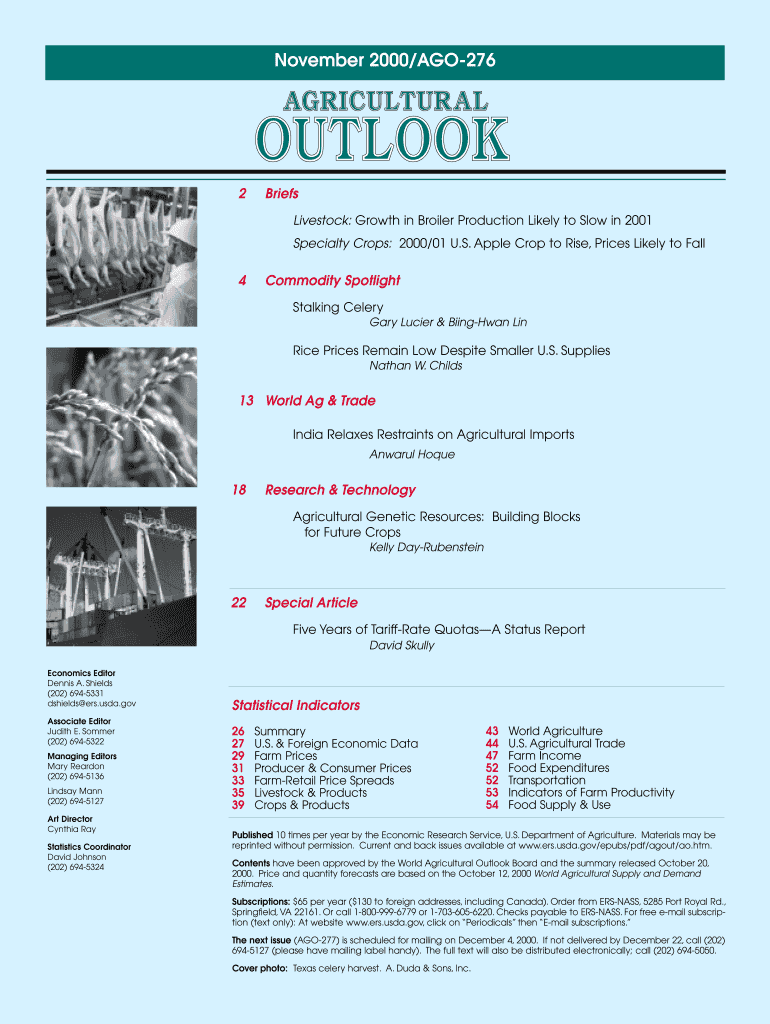
The "November 2000 AGO-276 - Cornell University" document serves as a comprehensive review of various agricultural sectors in the United States, particularly around the early 2000s. This form provides critical insights into trends in livestock production, specialty crops, and commodity prices. It acts as a substantial resource for those involved in agricultural policy, research, and economic analysis.
How to Use the November 2000 AGO-276 - Cornell University
Utilizing this form involves examining the extensive data and projections it includes. Stakeholders such as policymakers, researchers, and agricultural economists can leverage the insights for strategic planning, research initiatives, and historical analysis of agricultural trends during the time. Understanding how to navigate the statistical indicators and reports will enable users to effectively apply the data in real-world scenarios.
Key Elements of the November 2000 AGO-276 - Cornell University
- Livestock Production: Insights into anticipated changes in broiler production growth.
- Specialty Crops: Discussion on the growth in U.S. apple crop production.
- Commodity Prices: Analysis of low rice prices despite reduced supply levels.
- International Trade: Impact of global trade policies, particularly India's import restrictions.
- Agricultural Genetic Resources: Importance highlighted for crop development.
- Tariff-Rate Quotas: Status report concerning international trade negotiations.
Steps to Complete the November 2000 AGO-276 - Cornell University
To thoroughly comprehend the document:
- Review Historical Data: Start with understanding past trends presented.
- Analyze Projected Trends: Look into forward-looking statements concerning livestock and crops.
- Consider Global Implications: Examine how global trade policies affect U.S. agriculture.
- Summarize Findings: Pull together major insights suitable for strategic agricultural decisions.
Who Typically Uses the November 2000 AGO-276 - Cornell University
This document is primarily utilized by:
- Policy Makers: Crafting agricultural policies and regulations.
- Researchers and Academics: Conducting economic and agricultural research.
- Agricultural Economists: Analyzing market trends and advising stakeholders.
- Trade Analysts: Understanding international trade impacts on U.S. agriculture.


Legal Use of the November 2000 AGO-276 - Cornell University
The information in this document is useful for drafting policies and regulations regarding agricultural production and trade. It provides empirical data that can substantiate legislative changes and compliance with international trade agreements, ensuring that U.S. agricultural policies align with global standards.
Important Terms Related to November 2000 AGO-276 - Cornell University
- Broiler Production: Refers to the meat chicken industry and its production forecasts.
- Commodity Prices: The pricing trends of key agricultural products such as rice.
- Tariff-Rate Quotas: Trade mechanisms limiting the quantity of goods that can be imported under lower tariff rates.
State-Specific Rules for the November 2000 AGO-276 - Cornell University
While primarily a federal document, the influence of state-specific agricultural rules may be inferred. Agricultural producers in various states might experience diverse effects of the broader national trends and policies discussed in this form. Each state's agricultural output and economic focus can alter the relevance of certain national trends.
Application Process & Approval Time
Although not a formal application form, those engaging with the document for actionable insights or institutional use should prepare by aligning its findings with current data. Collaborators, such as academic partners or industry leaders, may jointly utilize it to apply historical findings to current agricultural challenges. There is no formal approval process associated with utilizing its content.
Who Issues the Form
The November 2000 AGO-276 document is issued under the joint auspices of Cornell University and relevant agricultural bodies in the U.S. It represents a collaborative scholarly and practical effort to distill agricultural trends and projections for policy and academic purposes.