






Definition & Meaning
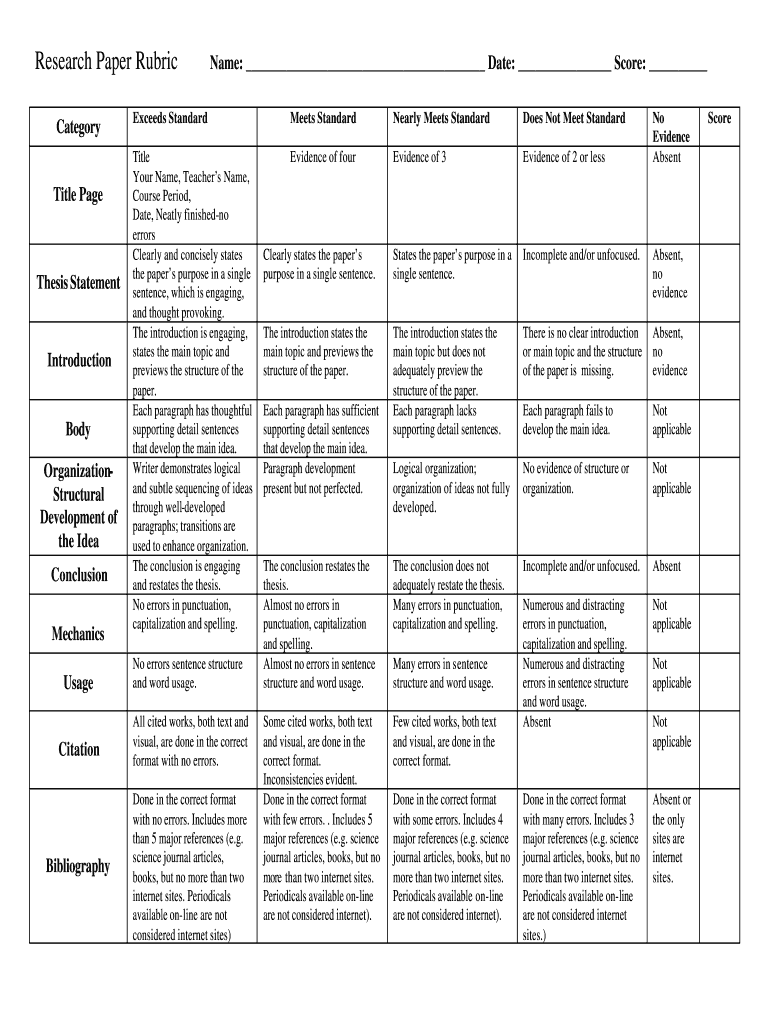
A research paper rubric is a grading tool used to evaluate students' research papers based on defined criteria. Rubrics are crucial in academic settings, providing educators with a clear framework to assess a student's performance across various dimensions. In the context of a research paper, rubrics typically cover aspects such as the clarity of the thesis statement, organization, evidence quality, citation accuracy, and writing mechanics. This structured assessment helps ensure consistency, fairness, and transparency in grading.
Key Components of a Research Paper Rubric
- Thesis Statement: Evaluates the clarity, specificity, and strength of the argument. A strong thesis is well-defined and connected to the research conducted.
- Organization: Assesses how well the paper is structured, including a logical flow of information and coherent paragraphs that support the thesis.
- Evidence and Support: Looks at how effectively the paper incorporates and analyzes research, including the relevance and credibility of the sources used.
- Mechanics and Style: Covers grammar, spelling, punctuation, and adherence to style guidelines such as APA or MLA.
- Citations and References: Ensures that all sources are correctly cited and formatted according to the specified style guide.
How to Use the Research Paper Rubric
Using a research paper rubric involves understanding the criteria and applying them consistently during the grading process. Both educators and students can benefit from rubrics as they outline expectations and provide a roadmap for successful paper writing.
Steps to Effectively Use the Rubric
- Review the Criteria: Before starting the assignment, students should closely examine the rubric to understand what aspects will be evaluated.
- Draft According to Guidelines: As you draft your paper, use the rubric to guide your writing, ensuring each section meets the established standards.
- Self-Assessment: Before submission, compare your final draft against the rubric to identify potential weaknesses or areas needing improvement.
- Feedback Integration: After receiving graded feedback, use the rubric to understand strengths and areas for future improvement.
Key Elements of the Research Paper Rubric
A research paper rubric consists of several key elements that focus on distinct aspects essential for a high-quality research paper. Evaluating these components ensures that the paper meets academic standards.
Important Aspects to Include
- Title Page: Should communicate the paper's main topic efficiently and adhere to the formatting style.
- Introduction and Thesis Statement: Must provide a concise introduction to the topic and present a strong thesis.
- Body Paragraphs: Ought to support the thesis with evidence through structured arguments and clear transitions.
- Conclusion: Should summarize the main points and restate the thesis, without introducing new information.
- References/Bibliography: Needs to correctly list all cited sources, matching in-text citations with reference entries.
Examples of Using the Research Paper Rubric
Real-world examples can illustrate how rubrics effectively evaluate diverse research papers. For instance, a study on renewable energy might be assessed on its ability to present complex data clearly, while a history paper may be evaluated based on narrative coherence and factual accuracy.
Practical Applications
- Case Study Analysis: A rubric can determine how well a business case study addresses all required components, like problem identification and solution assessment.
- Comparative Essays: For subjects such as literature, rubrics help compare themes across different works, evaluating analysis depth and thematic connections.
- Scientific Research Papers: Focus on hypothesis formation, methodology clarity, data interpretation, and conclusion validity.
Steps to Complete the Research Paper Rubric
To properly complete a research paper rubric, students and educators must break down each criterion into tangible, evaluable actions. This ensures that the rubric acts as a functional guide throughout the paper-writing process.
Step-by-Step Breakdown
- Understand the Criteria: Read and interpret each element of the rubric to grasp what is expected for an excellent paper.
- Outline and Plan: Use the rubric as a framework for outlining papers, ensuring all required components are included.
- Drafting: Write the paper with continuous reference to the rubric, ensuring criteria like organization and argument coherence are met.
- Self-Review: Before submission, use the rubric to self-assess and make necessary revisions for improvement.
- Seek Feedback: Utilize peer reviews or instructor feedback based on the rubric to enhance paper quality before final submission.
Legal Use of the Research Paper Rubric
Within educational institutions, the research paper rubric serves as an official tool to ensure fair and legal evaluation standards are upheld. Rubrics define grading parameters transparently, reducing bias and subjectivity.
Legal Implications
- Consistency and Fairness: Rubrics solidify objective grading criteria, protecting against potential disputes or claims of bias.
- Transparency: By providing clear expectations upfront, rubrics facilitate open communication between educators and students regarding performance evaluation.
- Compliance with Educational Standards: Aligns with policies that mandate fair assessment practices within academia.
Digital vs. Paper Version
Research paper rubrics can exist in digital or paper formats, each catering to different preferences or institutional capabilities. Each format has its potential advantages depending on the context and users.
Comparative Analysis
- Digital Rubrics: Enable easy sharing and modifications, integrate with digital learning platforms, and allow for real-time feedback and updates.
- Paper Rubrics: May provide a tangible guide that some find easier for quick reference, particularly in environments where digital access is limited.
- Hybrid Models: Combining both formats can deliver the advantages of digital interactivity with the familiarity of paper-based annotation.
Software Compatibility
Modern educational environments may utilize various software platforms that integrate with research paper rubrics. Familiarity with these tools enhances the utility and accessibility of rubrics for both grading and instructional purposes.
Common Compatible Platforms
- Google Classroom: Supports digital rubric dissemination, student submissions, and real-time feedback.
- Learning Management Systems (LMS): Like Blackboard or Canvas, they allow rubrics to be embedded within course assignments for seamless grading.
- Document Editors: Apps like Microsoft Word or Google Docs enable rubric templates to be easily shared and modified during the writing process.