




01. Edit your mitigation hearing letter sample online
Type text, add images, blackout confidential details, add comments, highlights and more.

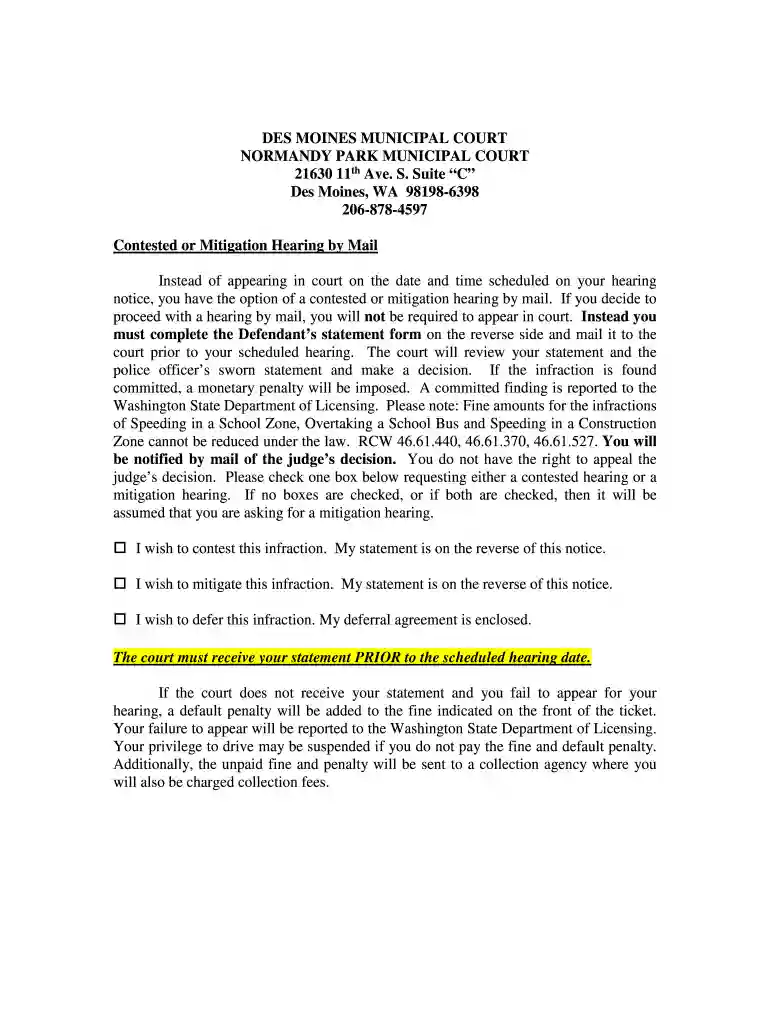
Type text, add images, blackout confidential details, add comments, highlights and more.

Draw your signature, type it, upload its image, or use your mobile device as a signature pad.

Send mitigation letter sample via email, link, or fax. You can also download it, export it or print it out.
A mitigation letter sample serves as a reference document designed to aid individuals in crafting a letter intended to mitigate legal or financial consequences, typically related to traffic violations or other offenses. This type of letter is generally submitted to a court or relevant authority to present compelling reasons for leniency in sentencing or penalties. In the context of traffic violations, a mitigation letter may seek to explain circumstances surrounding the offense and provide any pertinent information that could help reduce fines or the severity of repercussions.
When writing a mitigation letter, it is critical to address specific aspects:
Utilizing a mitigation letter sample efficiently involves understanding its structure and tailoring it to fit individual circumstances. Follow these steps to create an effective letter:
An effective mitigation letter includes several critical components to ensure completeness and clarity. Important elements to consider are:
Familiarity with key terms associated with mitigation letters can enhance understanding and facilitate better letter crafting. Some important terms include:
To effectively illustrate the use of a mitigation letter sample, consider the following scenarios:
Each example emphasizes the importance of personalized content and how specific circumstances can influence the outcome of mitigation requests.
We've got more versions of the mitigation hearing letter sample form. Select the right mitigation hearing letter sample version from the list and start editing it straight away!
| Versions | Form popularity | Fillable & printable |
|---|---|---|
| 2020 | 4.8 Satisfied (26 Votes) |
At DocHub, your data security is our priority. We follow HIPAA, SOC2, GDPR, and other standards, so you can work on your documents with confidence.


Jan 26, 2017 (Post Mitigation) = Sample was collected at least 30-days after mitigation activities were completed. Concentrations highlighted in blueRead more
by C Nickerson Cited by 22 For example, the need for mitigation is likely to be greater in a letter initiating contact than in a letter from the same Sender to the same Receiver


