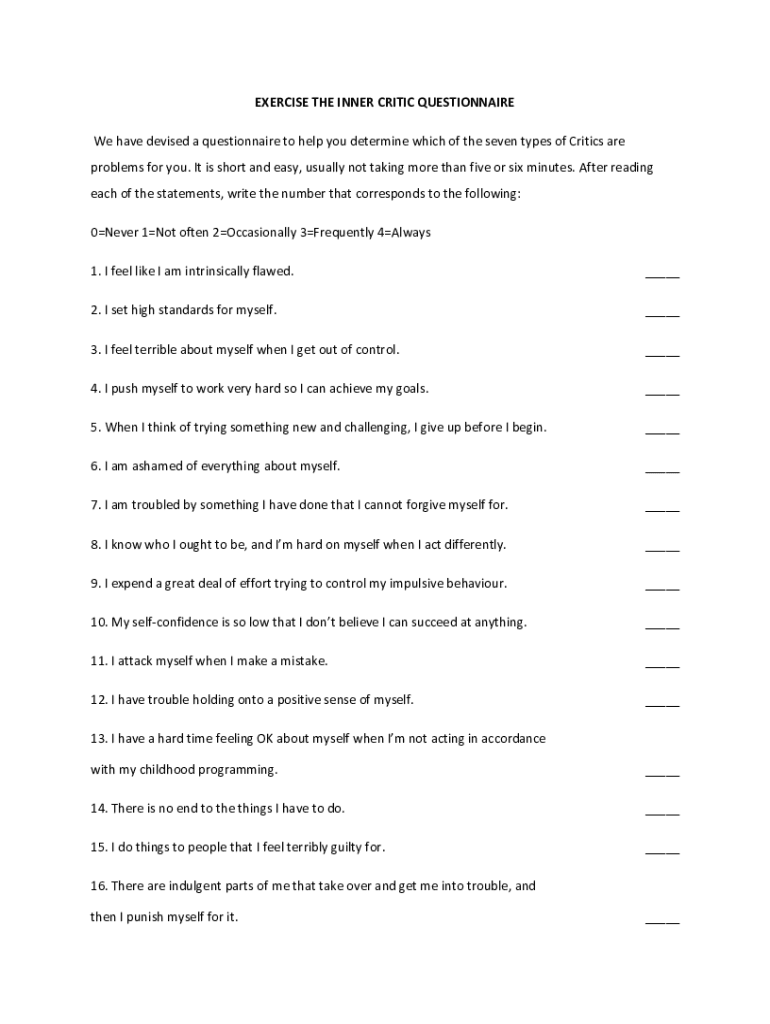







Definition & Purpose of Inner Critic Worksheets
The "Living With the Inner Critic: 8 Helpful Worksheets (+ PDF)" serves as a tool designed to help individuals identify, understand, and manage their inner critic. The worksheets aid in distinguishing between various self-critical voices that manifest as different personas or cognitive biases, impacting self-esteem and motivation. Each worksheet is structured to target specific aspects of the inner critic, facilitating self-awareness and promoting self-compassion.
Components Found in the Worksheets
- Identifying the Inner Critic: Exercises that prompt individuals to recognize the specific language and tone used by their inner critic.
- Challenging Negative Thoughts: Techniques to question and counteract negative self-talk.
- Affirmation Development: Guidelines to create positive affirmations that reinforce self-worth.
- Mindfulness Activities: Practices aimed at increasing present-moment awareness and reducing negative self-judgment.
- Reflective Journaling: Prompts that encourage deep reflection on personal experiences with the inner critic.
How to Use the Worksheets
To effectively utilize these worksheets, it is important to approach them with an open mindset and dedication to personal growth. Users are encouraged to:
- Set a Consistent Routine: Dedicate a specific time each day to work on the worksheets to develop a habit.
- Select a Quiet Environment: Find a space free from distractions to ensure focus and introspection.
- Engage Honestly: Answer prompts truthfully for an authentic exploration of personal thoughts and feelings.
- Review Progress Regularly: Regular reflection helps track changes in thought patterns and behaviors.
Examples of Use
- Daily Journaling: Use prompts daily to note shifts in perception and emotion.
- Therapeutic Sessions: Worksheets can be integrated into therapy, offering structured exercises under guidance.
Steps to Complete the Worksheets
Completing these worksheets involves several systematic steps to extract maximum benefit:
- Read Instructions Thoroughly: Begin by understanding the purpose and flow of each worksheet.
- Reflect Before Responding: Take time to think about each question or prompt.
- Document Thoughts: Write down immediate thoughts and feelings without self-editing.
- Review Answers: Analyze responses to identify patterns or insights.
- Implement Learnings: Apply action points identified in daily life.
Detailed Examples
- Mindfulness Practices: Following guided mindfulness exercises can calm the mind and foster a balanced perspective.
- Affirmation Development: Create affirmations that counter negative thoughts identified on the worksheets.
Who Typically Uses These Worksheets
These worksheets are beneficial for a diverse range of individuals:
- Mental Health Professionals: Psychologists and therapists may employ them as part of cognitive-behavioral therapy.
- Self-Help Enthusiasts: Those seeking to improve personal well-being through self-guided exercises.
- Corporate Wellness Programs: Organizations offering resources for employee mental health can include these worksheets.


Case Scenarios
- Anxiety Management: Individuals dealing with anxiety find the exercises supportive in managing overwhelming self-critical thoughts.
- Self-Esteem Building: Those aiming to boost confidence use affirmations and reflective exercises to strengthen self-regard.
Legal Use & Ethics
In ensuring ethical use, the worksheets:
- Adhere to Psychological Standards: Exercises align with cognitive-behavioral principles known to mitigate negative self-talk effects.
- Confidentiality Assurance: Users are advised not to share personal responses to maintain privacy.
Guidelines for Implementation
- Non-Diagnostic Tool: The worksheets are not substitutes for professional diagnosis but complement therapy.
Key Benefits of Inner Critic Worksheets
The comprehensive benefits include:
- Enhanced Self-Awareness: Greater understanding of personal thought patterns and behaviors.
- Improved Emotional Regulation: Techniques provided help manage and modulate emotions effectively.
- Increased Self-Compassion: Encourages gentler self-talk and acceptance of imperfections.
Diverse Application Settings
- Personal Development Courses: Incorporated as materials in workshops focused on personal growth.
- Support Groups: Used in collective settings to facilitate discussion and mutual learning among participants.