






Definition and Meaning of "Formulaire de mise en demeure"
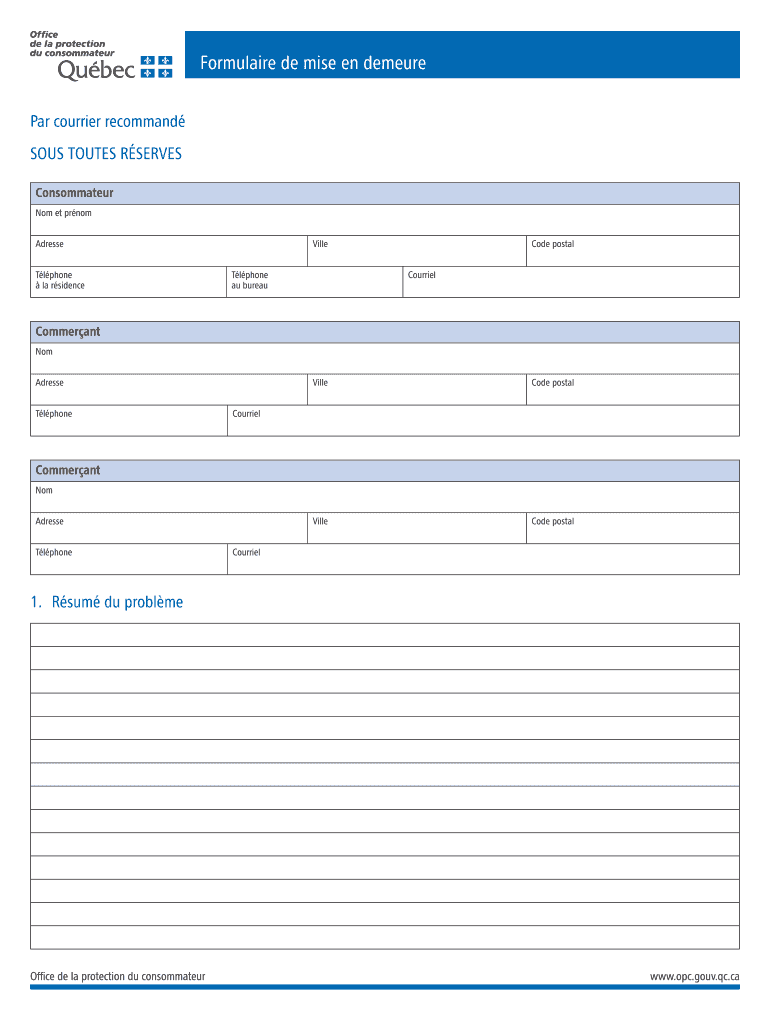
A "Formulaire de mise en demeure" is a formal notice utilized primarily by consumers to address merchants regarding unresolved issues. This document serves as an official request for resolution or payment within a specified timeframe, highlighting the potential for legal consequences if action is not taken. The intention behind the form is to foster communication between the concerned parties, potentially avoiding legal proceedings by resolving disputes amicably and efficiently.
How to Use the "Formulaire de mise en demeure"
- Identify the Issue: Clearly articulate the problem at hand and any previous attempts to resolve it.
- Complete the Form: Include all necessary details such as names, addresses, a detailed description of the issue, and the demanded resolution.
- Specify Timeframe: Indicate a reasonable deadline by which the issue should be resolved to avoid legal action.
- Send to the Merchant: Once completed, send the form to the merchant through a reliable method, ensuring proof of receipt.
How to Obtain the "Formulaire de mise en demeure"
The "Formulaire de mise en demeure" can typically be downloaded in PDF format from various consumer protection or legal advice websites. Using platforms like DocHub streamlines this process by allowing users to access, edit, and save the document digitally, ensuring it remains both accessible and secure.
Steps to Complete the "Formulaire de mise en demeure"
- Download the Form: Access the PDF form via DocHub or a trusted source.
- Fill Out Personal Information: Enter your name, address, and the merchant's contact details.
- Detail the Dispute: Provide a comprehensive explanation of the issue, including dates, transactions, and communication history.
- State Your Demands: Clearly outline the desired outcome and the actions required by the merchant.
- Indicate Legal Consequences: Mention potential legal steps if the issue is not resolved.
- Submit the Form: Choose a submission method that ensures the merchant receives the form, such as registered mail.
Importance of Using the "Formulaire de mise en demeure"
Utilizing the "Formulaire de mise en demeure" empowers consumers by formally documenting their grievances and expectations. It serves as both a written record and a non-confrontational approach to potentially escalate matters if the issue is ignored, ultimately enhancing the consumer's position in any subsequent negotiations or legal proceedings.
Who Typically Uses the "Formulaire de mise en demeure"
The form is primarily used by consumers facing disputes with merchants. It is particularly relevant for individuals dealing with unmet contractual obligations, erroneous billing, or unfulfilled services. Businesses may also use the form to address contractor disputes or unresolved services.

Legal Use of the "Formulaire de mise en demeure"
A "Formulaire de mise en demeure" is a legally recognized document. While it does not constitute a lawsuit, it establishes documented evidence of the plaintiff's intent to seek resolution. It aligns with consumer protection laws and can strengthen a subsequent legal claim if necessary.
Key Elements of the "Formulaire de mise en demeure"
- Consumer Information: Name and contact details
- Merchant Details: Address and business identification
- Problem Description: Detailed account of grievance
- Resolution Demands: Specific requests for remedial action
- Deadline for Response: Timeframe for compliance
- Consequences of Inaction: Possible legal steps
Examples of Using the "Formulaire de mise en demeure"
- Unresolved Repair Services: A consumer may use the form to request a refund or completion of promised repairs.
- Contractual Disputes: When a service provider fails to honor agreements, the form outlines the breach and expectations.
- Faulty Product Compensation: It can document the demand for replacement or refund for defective goods.
State-Specific Rules for the "Formulaire de mise en demeure"
While the form's structure is generally standardized, specific states may have unique requirements regarding its use. These may include additional disclosures, specific wording, or compliance with state consumer protection statutes. It's advisable to consult local guidelines to ensure the form meets all necessary legal criteria.