01. Edit your form online
Type text, add images, blackout confidential details, add comments, highlights and more.

Type text, add images, blackout confidential details, add comments, highlights and more.

Draw your signature, type it, upload its image, or use your mobile device as a signature pad.

Send it via email, link, or fax. You can also download it, export it or print it out.
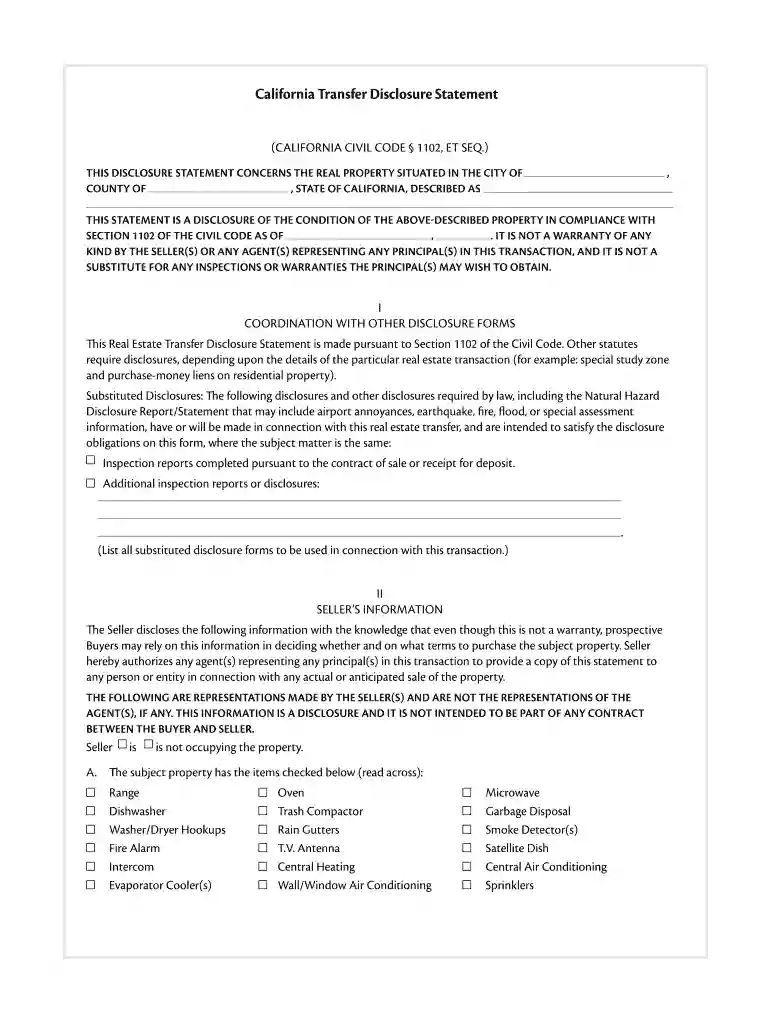
The California Transfer Disclosure Statement (TDS) is a significant legal document mandated by California Civil Code § 1102. It functions as a critical communication tool between sellers and prospective buyers in real estate transactions, detailing the condition and features of the property being sold. This statement includes various details about the property, such as any material defects and potential environmental hazards, ensuring that buyers receive a comprehensive overview of the property's condition. Unlike a warranty, the TDS provides information based on the seller's knowledge, prompting buyers to conduct their own independent inspections to verify the condition of the property.
Proper use of the California Transfer Disclosure Statement involves several key steps from both sellers and buyers. For sellers, it is imperative to provide accurate and complete information about the property's condition. This includes disclosures about structural issues, past repairs, and any known defects. For buyers, reviewing the TDS allows them to assess any potential risks associated with the property, enabling informed decision-making before finalizing a purchase.
Complete the Form Accurately: Sellers must fill out each section of the TDS with honest and thorough information. Any known defects or issues with the property should be disclosed.
Disclose Environmental Hazards: Include disclosures about any environmental concerns, such as asbestos, lead paint, or proximity to hazardous sites.
Provide to Potential Buyers: Once the TDS is complete, it should be provided to potential buyers as early as possible in the transaction process.
Review the Disclosure: Buyers should carefully review the TDS, paying close attention to details about the property's condition.
Conduct Independent Inspections: It is advisable for buyers to conduct their own inspections to confirm the information provided in the TDS and identify any undisclosed issues.
Obtaining the California Transfer Disclosure Statement can be a straightforward process, often facilitated by real estate agents or brokers involved in the transaction. The form can be accessed through various legal and real estate websites.
Real Estate Agents: Most real estate professionals have copies of the TDS and can provide it to sellers at the beginning of the selling process.
Online Resources: Sellers and buyers can also download the form from legal documentation websites or directly from the California Department of Real Estate's online portal.
Filling out the California Transfer Disclosure Statement requires careful attention to detail by the seller. Here’s a step-by-step guide to completing the form accurately:
Property Information Section: Begin by providing the property's basic information, including address and any identifying characteristics.
Disclosure of Property Conditions: Disclose any physical defects, past repairs, and other issues affecting the property. This section should be completed with full transparency.
Environmental Hazards and Zoning Information: Indicate any known environmental risks and zoning issues that could affect the property.
Signatures and Dates: Conclude by signing and dating the document to validate the information provided. Ensure any involved agents also sign where applicable.
Certain elements are crucial to the comprehensive nature of the California Transfer Disclosure Statement:
Structural Condition: Information about the physical condition, including the foundation, roof, and other key structures.
Safety Hazards: Details of potential safety risks such as faulty wiring or plumbing issues.
Environmental Concerns: Disclosures about environmental hazards like fire zones, natural flooding risks, and exposure to hazardous wastes.
The legal use of the California Transfer Disclosure Statement is defined and enforced by California Civil Code § 1102. The document serves to protect both buyers and sellers by ensuring that important information regarding the condition of the property is disclosed and documented. Failure to provide or accurately complete the TDS can result in legal consequences, including liability for nondisclosure.
Non-compliance with the requirements for the California Transfer Disclosure Statement can lead to significant legal repercussions:
Civil Liability: Sellers may face legal action and financial penalties if they fail to disclose known defects or issues.
Rescission of Sale: Buyers may have the right to void the contract if they demonstrate that material defects were undisclosed by the seller.
To illustrate, consider a scenario where a seller is aware of a leaky roof and known plumbing issues but fails to disclose these facts in the TDS. The buyer discovers these issues after purchase and could take legal action against the seller for failing to disclose material defects, potentially leading to financial restitution or nullification of the sale.
In conclusion, the California Transfer Disclosure Statement is an essential document in real estate transactions within California, designed to promote transparency and safeguard both parties from unexpected disputes over property condition post-purchase.
At DocHub, your data security is our priority. We follow HIPAA, SOC2, GDPR, and other standards, so you can work on your documents with confidence.