
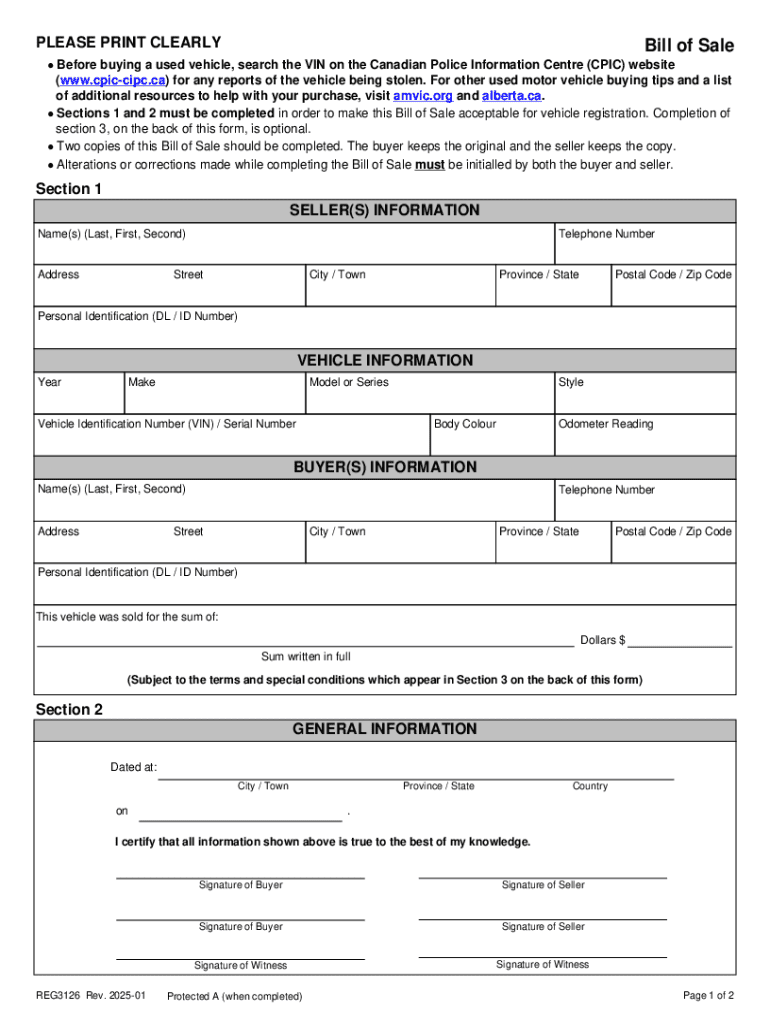







Definition and Meaning of a Bill of Sale
A Bill of Sale is a legal document that serves as evidence of the transfer of ownership of specific goods from one party to another. This document is typically used in transactions involving tangible personal property, such as vehicles, boats, or equipment. It includes details about the involved parties, description of the item sold, purchase price, and the date of transaction. By formalizing the transfer, a Bill of Sale helps protect both the buyer and seller by documenting the terms of the sale and preventing possible disputes.
Key Components of a Bill of Sale
- Parties Involved: Identifies the buyer and seller.
- Description of the Item: Detailed information including make, model, and serial number if applicable.
- Purchase Price: The amount agreed upon for the item.
- Date of Sale: The exact date when the transfer occurs.
- Signatures: Both parties must sign to validate the document.
How to Use a Bill of Sale
A Bill of Sale is used to formalize the sale and transfer of ownership of personal property. Upon completion, the buyer becomes the legal owner. The document should be filled out accurately with all required information to ensure legality. Generally, both parties should retain a copy for their records.
Steps in Using a Bill of Sale
- Gather Required Information: Collect details such as the items being sold, the identities of the buyer and seller, and the sale price.
- Fill Out the Form: Complete each section of the document carefully.
- Review with Both Parties: Ensure that both parties agree with the details outlined.
- Signatures: Obtain signatures from both the buyer and seller to finalize the document.
- Distribute Copies: Each party should keep a signed copy.
How to Obtain a Bill of Sale
A Bill of Sale can be obtained from several sources. Many states and local governments provide templates for specific types of transactions, such as vehicle sales. Alternatively, numerous online platforms offer customizable Bill of Sale templates.
Sources for a Bill of Sale
- State DMV or DMV Website: Provides templates specifically for vehicle transactions.
- Legal Stationery Stores: Physical locations often carry forms for various transactions.
- Online Platforms: Websites like DocHub allow users to create and fill out forms digitally for ease of use and storage.
Steps to Complete a Bill of Sale
Completing a Bill of Sale is a straightforward process involving the accurate detailing of sale-related information. Here are the steps to guide you through:
- Identify the Parties: Start by listing the full legal names and contact information for both the buyer and the seller.
- Describe the Property: Include specific details of the item being sold, such as make, model, year, VIN, or serial number.
- State the Sale Price: Clearly indicate the total payment agreed upon for the item.
- Write Down the Date: Record the exact date on which the transaction is taking place.
- Sign the Document: Signatures from both parties, along with the date, are essential for the validity of the form.
- Notarization: Although not always required, notarizing the document can provide additional verification if questions arise later.
Legal Use of the Bill of Sale
In legal terms, a Bill of Sale functions as a receipt and proof of ownership. It is legally binding and can be used as evidence in disputes. The document may also be required for official processes, such as registering a vehicle or transferring a title. It helps ensure compliance with applicable laws and business practices.
Considerations for Legal Use
- Verify Statutory Requirements: Check if notarization or additional forms are necessary.
- Retention Period: Both parties should keep a copy for several years for any future legal or tax issues.
- Sales Tax and Liabilities: Ensure that any taxes and financial obligations related to the sale are clear.
Important Terms Related to Bill of Sale
Understanding key terms associated with a Bill of Sale is crucial when preparing or using one. These terms often appear in legal contexts.
Essential Terminology
- As-Is Condition: A disclaimer indicating that the buyer accepts the item in its current state, including any faults.
- Warranty: A promise by the seller regarding the condition of the item.
- Consideration: The amount exchanged for the item.
- Lien: A notice that the property has a claim against it.
State-Specific Rules for Bills of Sale
Each state in the U.S. may have different requirements and rules regarding the use and submission of a Bill of Sale. Compliance with state-specific regulations ensures the document's validity.
Examples of State-Specific Variations
- Vehicle Identification: Some states require specific disclosures about odometer readings during vehicle sales.
- Notarization: In certain jurisdictions, a Bill of Sale must be notarized to be legally recognized.
- Language Requirements: Some states provide Bill of Sale forms in multiple languages to accommodate diverse populations.
Digital vs. Paper Versions of a Bill of Sale
A Bill of Sale can exist in either paper or digital format. Each format has its advantages and limitations, which can influence how the document is used and stored.
Comparison of Formats
- Digital Version: Offers the convenience of online filling, signing, and storing. This method is secure and environmentally friendly.
- Paper Version: A traditional approach requiring physical storage but is suitable when digital access is unavailable.
This comprehensive guide on Bill of Sale addresses various aspects, including definition, use, completion, and legal considerations, ensuring clarity and precision for users participating in sale transactions.


