






Definition & Meaning
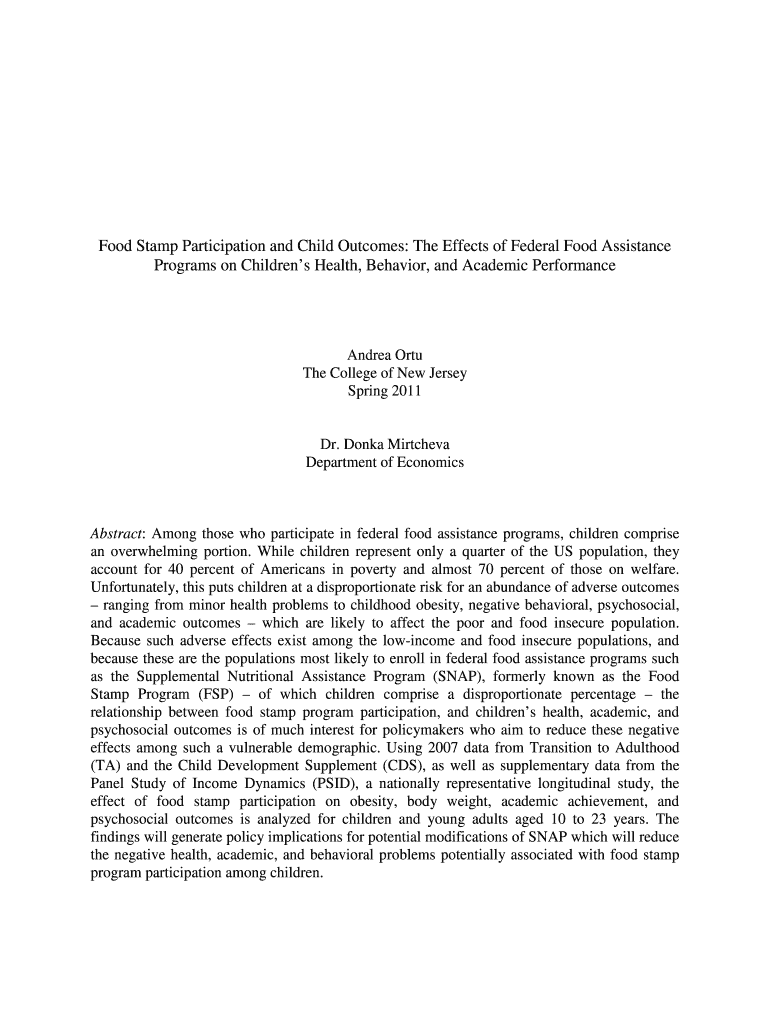
The "Food Stamp Participation and Child Outcomes: The Effects of Federal Food Assistance" refers to a comprehensive analysis focusing on the impact of federal food assistance programs, notably the Supplemental Nutrition Assistance Program (SNAP), on various child outcomes. This document delves into how participation in food stamp initiatives affects children's health, behavior, and academic performance, offering insights drawn from national studies. It provides an understanding of the vital role these programs play in addressing food insecurity, poverty, and their subsequent effects on young participants aged 10 to 23.
How to Use the Form
Understanding the study on food stamp participation can be instrumental for policymakers, educators, and health professionals. It serves as a resource to guide the development and modification of policies aimed at improving the effectiveness of SNAP. For educators, this analysis can highlight areas where additional support may be needed for children affected by poverty and food insecurity. Health professionals can use these findings to better address the nutritional needs of children and help mitigate health issues such as obesity.
Who Typically Uses the Information
This analysis of federal food assistance program effects is typically utilized by a broad audience, including:
- Policymakers: To inform revisions to SNAP and related food assistance programs.
- Educators and School Administrators: To implement supportive measures in educational settings for children facing food insecurity.
- Health Professionals: To devise strategies for improving children's health outcomes related to nutrition.
- Researchers: For conducting further studies on food security and its impact on children's development.
- Community Organizations: To advocate and tailor interventions aimed at assisting vulnerable populations.


Key Elements of the Analysis
The study includes several critical components that are central to understanding the broader implications of SNAP participation:
- Obesity Rates: Examination of the correlation between SNAP and obesity in children.
- Academic Achievement: Analysis of how food assistance affects school performance.
- Psychosocial Well-being: Insights into how access to adequate nutrition supports mental and emotional health.
- Behavioral Issues: Identification of any potential negative behaviors associated with food assistance.
Eligibility Criteria
Eligibility criteria for studies like these, which often lays the foundation for policy decisions, typically consider:
- Age Group: Focused on children and youth aged 10 to 23.
- Economic Status: Participants generally come from low-income households eligible for SNAP.
- Geographic Location: Primarily within the United States, with considerations for state-specific variations.

Important Terms Related to the Analysis
Understanding the key terminology used in discussions around this form is crucial:
- SNAP: Supplemental Nutrition Assistance Program, the largest federal nutrition assistance program.
- Food Insecurity: The state of being without reliable access to a sufficient quantity of affordable, nutritious food.
- Obesity: A medical condition characterized by an excessive amount of body fat, examined in the context of child health.
- Psychosocial Well-being: A composite measure of psychological and social functioning.
Examples of Study Findings
Some real-world examples and scenarios elucidated in the document include:
- Case Studies on Obesity: Analysis of specific regions where SNAP participation increased obesity rates, prompting policy review.
- Educational Impact Studies: Observations on how food insecurity impacts test scores and overall academic progress.
- Behavioral Assessments: Findings on the correlation between food security and reduced behavioral issues in school settings.
Why Should You Pay Attention to This Analysis
This study is critical for stakeholders involved in child welfare and education. Understanding its findings helps in:
- Policy Development: Informing the design of more effective nutrition assistance programs.
- Educational Improvements: Tailoring academic support for food-insecure students.
- Health Interventions: Structuring public health campaigns that address childhood obesity and nutritional deficiencies.
State-Specific Rules and Differences
Although SNAP is a federal program, its implementation and the study's outcomes can vary by state due to differences in supplementary state policies:
- Benefit Levels: Variations in benefits and eligibility criteria across states.
- Additional State Programs: Impact of state-specific nutrition programs that complement SNAP.
- Localized Health Trends: How state-specific public health issues influence SNAP results.
Legal Use of Findings
The analysis is also subject to legal and ethical use guidelines:
- Data Privacy: Ensuring confidentiality and ethical handling of participant data.
- Compliant Reporting: Using findings to support policy change must adhere to legal standards for research and reporting.
- Fair Representation: Obligating that the data be used to represent diverse populations accurately and equitably.
Examples of State-by-State Differences
The document highlights how different states address similar issues related to food stamp participation:
- Nutritional Programs in California: How California's additional programs impact child health positively.
- Midwestern State Challenges: Challenges faced by states like Ohio in implementing effective SNAP policies.
- Southern State Educational Outcomes: Observations in states like Mississippi, where educational outcomes have been closely tied to food assistance policies.
Comprehensive Impact on Stakeholders
It provides a holistic view of how various stakeholders can engage with and benefit from the findings:
- School Systems: Improved understanding of the link between nutrition and learning capabilities.
- Healthcare Providers: Enhanced strategies for addressing pediatric nutrition and health.
- Community Leaders: Strengthened approaches for community-based interventions to fight food insecurity.
These sections aim to give an in-depth understanding of how federal food assistance affects child outcomes, spotlighting areas for intervention and policy improvement.