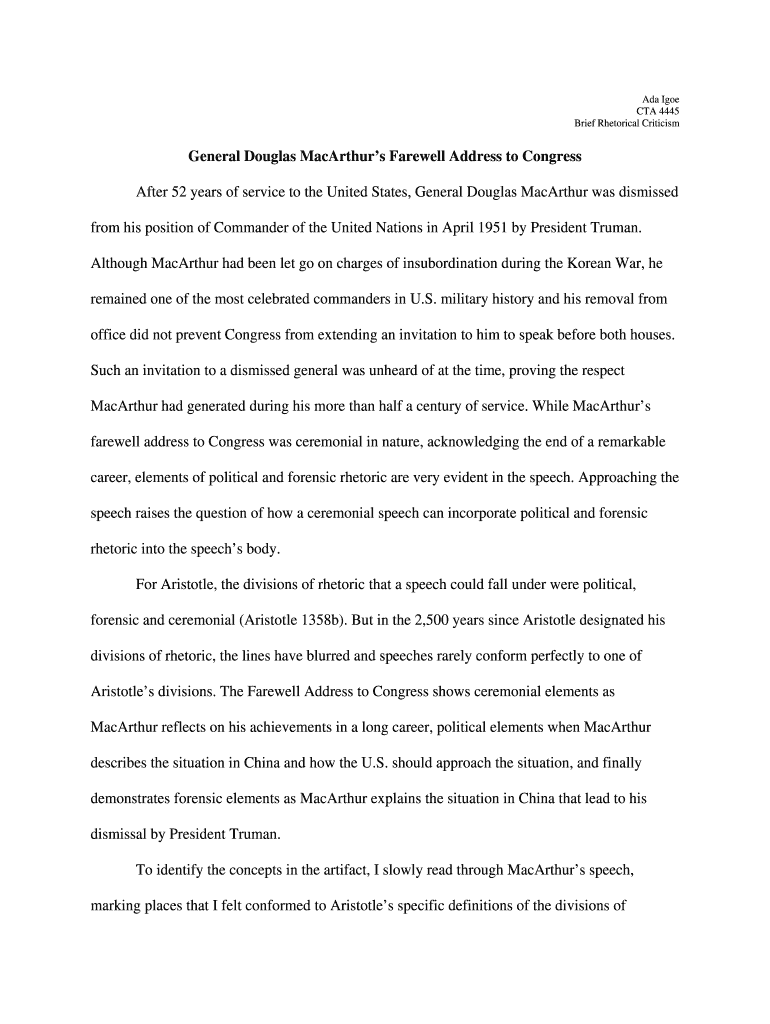







Definition and Meaning of Brief Rhetorical Criticism
Brief rhetorical criticism involves evaluating and interpreting the rhetorical elements within a text, speech, or communication. The primary focus is to examine how the use of language and style influences the intended audience. Drawing from classical rhetorical traditions such as Aristotle’s three modes of persuasion—ethos, pathos, and logos—this form of criticism identifies and analyzes the effectiveness of rhetoric in achieving the communicator’s objectives.
Key Components of Rhetorical Analysis
- Ethos: Evaluating credibility and ethical appeal of the speaker or writer.
- Pathos: Analyzing emotional engagement and appeal to the audience’s values or emotions.
- Logos: Assessing logic, reasoning, and evidence utilized in the argument.
Steps to Complete the Brief Rhetorical Criticism
Conducting a brief rhetorical analysis involves several systematic steps to ensure thorough examination:
- Identify the Purpose and Audience: Understand why the text was created and who the intended audience is.
- Examine the Context: Consider historical, cultural, and situational contexts.
- Analyze Rhetorical Strategies: Focus on how ethos, pathos, and logos are used.
- Evaluate Effectiveness: Determine how well the rhetorical techniques serve the intended purpose.
- Draw Conclusions: Summarize insights on the impact and success of the rhetorical elements.
Key Elements of the Brief Rhetorical Criticism
Identifying key elements is essential for effective brief rhetorical criticism. These components form the foundation for detailed analysis:
- Textual Features: Language, style, tone, and structure.
- Visuals and Audio: Imagery, sounds, and media integration in presentations or visual documents.
- Argument Structure: Claim, evidence, and assumptions within the argument.
Examples of Using Brief Rhetorical Criticism
Practical examples illustrate how brief rhetorical criticism can be applied:
- Political Speeches: Analyzing speeches for persuasive techniques to gauge their political influence.
- Advertising Campaigns: Evaluating how advertisements use rhetoric to appeal to consumer emotions and desires.
- Academic Essays: Reviewing papers for logical consistency and strong argumentation through rhetorical devices.
Who Typically Uses the Brief Rhetorical Criticism
Various groups and professionals utilize brief rhetorical criticism for different purposes:
- Students and Educators: For critical thinking development and academic assessments.
- Business Professionals: To enhance communication strategies and campaigns.
- Media Analysts: For assessing the effectiveness of messaging in media.


Legal Use of the Brief Rhetorical Criticism
Understanding the legal boundaries of rhetoric is crucial in areas such as advertising and contractual obligations:
- Truth in Advertising: Ensures rhetorical strategies are not misleading or deceptive.
- Contractual Communication: Evaluates clarity and interpretation of legally binding language.
Software Compatibility for Brief Rhetorical Criticism
Digital tools can enhance rhetorical analysis through various means, ensuring efficiency and accuracy:
- Text Analysis Software: Highlights rhetorical patterns, repetition, and language use.
- Presentation Tools: Facilitates the organization and display of rhetorical critiques.
- Online Platforms: Allows collaboration and sharing of analysis among teams and study groups.
Business Types That Benefit Most from Brief Rhetorical Criticism
Certain business sectors particularly benefit from analyzing rhetoric:
- Marketing and Advertising Firms: For crafting persuasive messaging and campaigns.
- Public Relations Agencies: To manage corporate communication and public perception.
- Consultancies: Assisting clients in refining and delivering persuasive content effectively.
Digital vs. Paper Version of Brief Rhetorical Criticism
Examining the benefits and limitations of digital versus traditional formats:
- Digital: Offers easy data manipulation, storage, and sharing. Provides access to a wider range of tools for analysis.
- Paper: Useful for tangible annotations and is preferred by some for in-depth concentration without digital distractions.
The above sections provide a comprehensive foundation for understanding and applying brief rhetorical criticism effectively, catering to varied audiences and contexts.