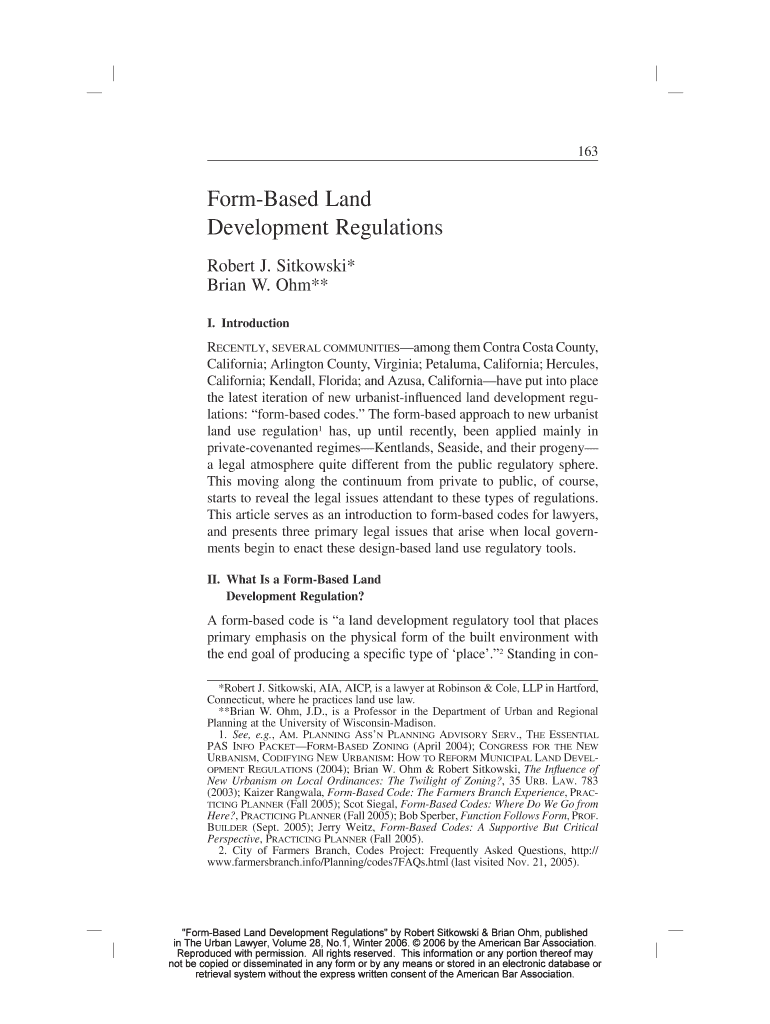







Definition and Meaning of Form-Based Land - si pages tcnj
Form-based land development regulations focus on the physical form of the built environment rather than specific land use. This approach, part of the new urbanist movement, seeks to create more predictable urban spaces by establishing a cohesive physical framework. Unlike conventional zoning that categorizes areas based on activity (commercial, residential, etc.), form-based codes prioritize the appearance, placement, and interaction of buildings and spaces. This shift enhances urban design by fostering visually appealing, pedestrian-friendly environments that reflect community aspirations.
How to Use the Form-Based Land - si pages tcnj
- Integrating into Design Plans: Before beginning a project, assess how the form-based codes apply to your area by reviewing local regulations. Ensure that your building designs and placements align with these codes to maintain compliance.
- Community Engagement: Utilize the form as a tool for public workshops, illustrating how proposed developments adhere to communal goals. Engage stakeholders by showing potential urban transformations in line with form-based criteria.
- Permit Application: When submitting building permits, reference specific sections of the code within your application. Highlight how your design conforms to the expected urban form, facilitating smoother approval processes.
Key Elements of the Form-Based Land - si pages tcnj
- Regulating Plan: This map-based plan provides an overview of the urban design framework, highlighting areas subject to specific form-based regulations.
- Building Form Standards: Detailed criteria for building heights, facades, setbacks, and alignment ensure architectural harmony throughout the neighborhood.
- Public Space Standards: Guidelines for streets, parks, and other outdoor areas emphasize connectivity and community interaction.
- Architectural Standards: These requirements focus on the aesthetic and functional aspects of building design, promoting a visually cohesive environment.
- Street and Drainage Plans: Often included to reinforce the interconnected nature of urban infrastructure, aligning with form-based goals.
Important Terms Related to Form-Based Land - si pages tcnj
- Transect: A system that categorizes different environments ranging from natural areas to urban cores. Each segment of the transect incorporates suitable land use and form-based codes.
- Contextual Zoning: Adjustments to form-based codes that consider the unique characteristics of a local environment, ensuring rules fit the community’s existing context.
- Frontage Type: Refers to the relationship between buildings and the street, including entrances, stoops, and porches, key to maintaining pedestrian-friendly environments.
Who Typically Uses the Form-Based Land - si pages tcnj
- Urban Planners: They employ these forms to align city developments with local vision and goals, ensuring new projects fit harmoniously within the existing urban fabric.
- Architects and Developers: These professionals need to understand and apply form-based codes to design projects that comply with regulations while achieving desired aesthetic outcomes.
- Local Government Officials: Responsible for evaluating permit applications and development proposals against form-based codes to ensure compliance and uphold community standards.


Legal Use of the Form-Based Land - si pages tcnj
- Authorization: Form-based codes must be legally authorized by local ordinances, and any changes typically require a public hearing process.
- Discretionary Approvals: While form-based regulations provide a clear framework, they may allow for discretionary decisions regarding unique project features.
- Delegation: Often, responsibility for enforcing these codes is delegated to local planning offices or specialized zoning committees.
State-Specific Rules for Form-Based Land - si pages tcnj
- Variance Procedures: States may have specific procedures for requesting variances from form-based codes, requiring demonstration of unique site conditions that justify deviation.
- Adoption Processes: Procedures for adopting form-based codes can vary, with some states requiring broader public consultation and more rigorous review processes than others.
- Municipal Autonomy: In certain states, cities may have more latitude to customize and implement form-based codes, reflecting local urban planning priorities.
Examples of Using the Form-Based Land - si pages tcnj
- Mixed-Use Developments: In urban areas, form-based codes facilitate mixed-use developments that combine residential, retail, and office spaces, fostering vibrant, walkable communities.
- Historic Preservation: These codes can guide renovations and new constructions in historic districts, maintaining architectural heritage while encouraging modern functionality.
- Suburban Transformation: In transitioning suburban areas, form-based land development codes can be used to create denser, more interconnected communities, reducing car dependency.
Steps to Complete the Form-Based Land - si pages tcnj
- Review Local Codes: Begin by analyzing the form-based land development codes applicable to your area.
- Pre-Application Meeting: Arrange a meeting with local planning authorities to clarify requirements and confirm understanding.
- Prepare Design Proposals: Develop design plans that align with the specified form-based criteria.
- Submit Application: Provide a detailed application, including site plans and design specifications, illustrating adherence to form-based codes.
- Respond to Feedback: Engage with any feedback or revisions suggested by reviewing officials to align more closely with code expectations.
- Final Approval: Once all criteria are met and revisions made, obtain final approval to proceed with construction or development.