






Definition and Meaning
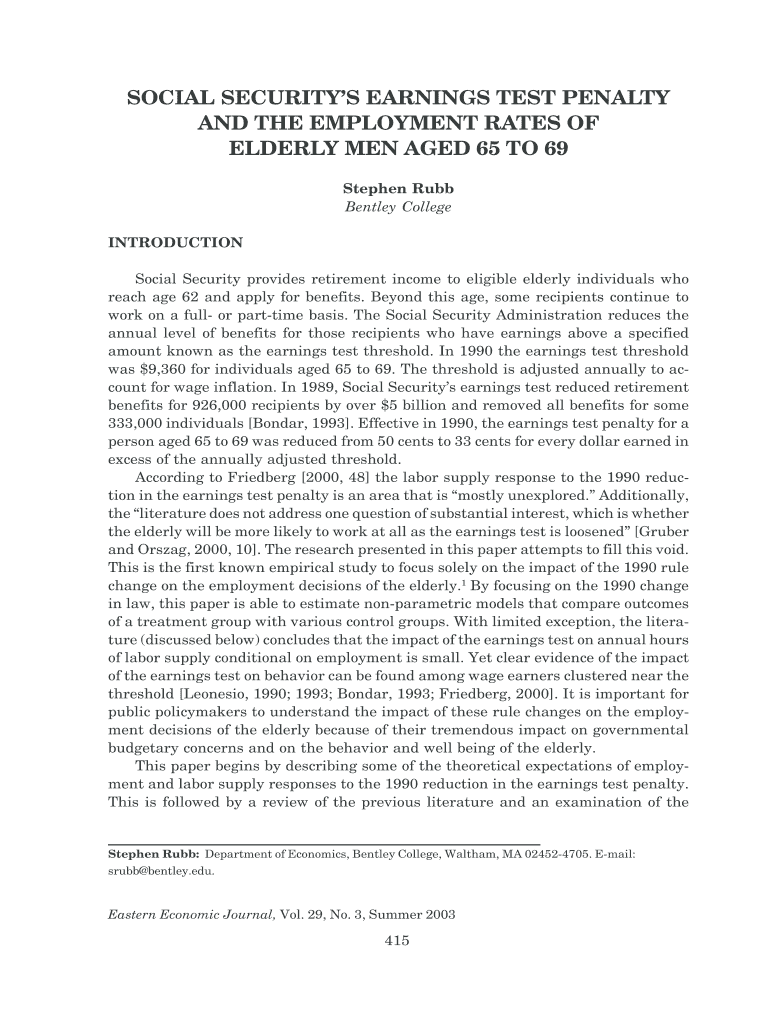
The Social Security earnings test penalty refers to the reduction in Social Security benefits for individuals who continue to work and earn income above a specified limit after reaching retirement age. The test primarily affects those who claim benefits before reaching their full retirement age but continue to have substantial earnings. The primary aim is to encourage beneficiaries to balance work and retirement, ensuring that Social Security funds remain robust for future retirees.
Earnings Limits and Reduction Rates
- Annual Earnings Limit: Social Security sets a limit for annual earnings, above which the earnings test penalty applies. This limit is adjusted annually for inflation.
- Reduction Rates: When earnings exceed the set threshold, benefits may be reduced by a specific rate. Typically, for every two dollars earned above the limit, one dollar of benefits is withheld.
Key Elements of the Earnings Test
Understanding the main components of the earnings test can help beneficiaries make informed decisions about retirement and employment.
Retirement Age Considerations
- Full Retirement Age (FRA): Defined by Social Security, it varies depending on the year of birth. It is pivotal as penalties differ based on whether earnings occur before or after this age.
- Impact on Benefit Amounts: Post reaching FRA, the earnings test no longer applies, and earlier withheld benefits could adjust the monthly payout for a potential increase.
Types of Income Considered
- Wages and Salary: Includes all income from employment, bonuses, and commissions.
- Exclusions: Includes investment income, pensions, and annuities, which do not affect the earnings test.
Steps to Complete Related Forms
While exploring the earnings test penalties, understanding how to manage related paperwork is crucial.
Relevant Forms and Documentation
- SS-5 Form: Used for applying or updating Social Security information, which can be critical in addressing discrepancies.
- SSA-1: Used for applying for retirement benefits.
Submission Process
- Online Submission: Most forms can be submitted through the Social Security Administration's online portal for ease and speed.
- Mail or In-Person: Availability in local Social Security offices, especially useful for those who prefer direct interaction.
Who Typically Uses the Social Security Earnings Test Penalty
Understanding the demographics impacted by the earnings test provides insight into its application and necessity.


Typical Beneficiaries Affected
- Younger Retirees: Individuals opting for benefits before the full retirement age and continuing to work.
- Working Beneficiaries: Those who derive substantial income through part-time or continued full-time work even after starting to receive benefits.
Important Terms Related to the Earnings Test
Familiarity with key terminology aids in navigation and comprehension of the mechanics behind the earnings test.
Essential Vocabulary
- Benefit Withholding: Refers to temporary suspension or reduction of benefits due to earned income above the threshold.
- Statutory Payment: The fixed, legislated amount credited to beneficiaries post-withholding adjustments.
State-Specific Rules and Exceptions
Though Social Security is federally administered, some states may have unique provisions impacting beneficiaries.
Variability and Local Considerations
- State Taxation: Some states tax Social Security benefits, potentially impacting net income calculations.
- Local Programs: Benefits or incentives offered at the state level for older workers can shift economic decisions.
Examples of Using the Earnings Test
Providing real-world scenarios can elucidate how the earnings test functions in practical terms.
Common Situations
- Early Retirements: Individuals may collect benefits at age 62, continuing a consultancy, affecting their payout.
- Regular Adjustments: A person reducing work hours to stay below thresholds and minimize penalty impact.
Legal Use and Compliance
Maintaining awareness about legal obligations associated with the earnings test ensures compliance.
Federal Mandates
- Reporting Obligations: Consistent reporting of earnings to Social Security to avoid penalties and legal complications.
- Recourse Options: Potential credits or adjustments in the benefit calculation once reaching full retirement age, mitigating earlier reductions.
Penalties for Non-Compliance
Failing to adhere to reporting and earnings guidelines can result in additional penalties.
Consequences and Remedies
- Overpayment Recovery: Social Security may recover overpaid benefits, emphasizing accurate and timely income reporting.
- Appeals Process: Mechanisms for disputing assessments perceived as incorrect or unfair.
Application Process and Approval Time
Understanding the procedural elements of applying for Social Security benefits while considering earnings assists in avoiding delays.
Initiation and Duration
- Application Timeline: Typical wait times from application to receiving benefits vary, usually taking several months.
- Early vs. Deferred Applications: Applying before or after the full retirement age significantly impacts processing and benefit structures.