






Key Elements of the Biology 3200 - Cell Biology Course
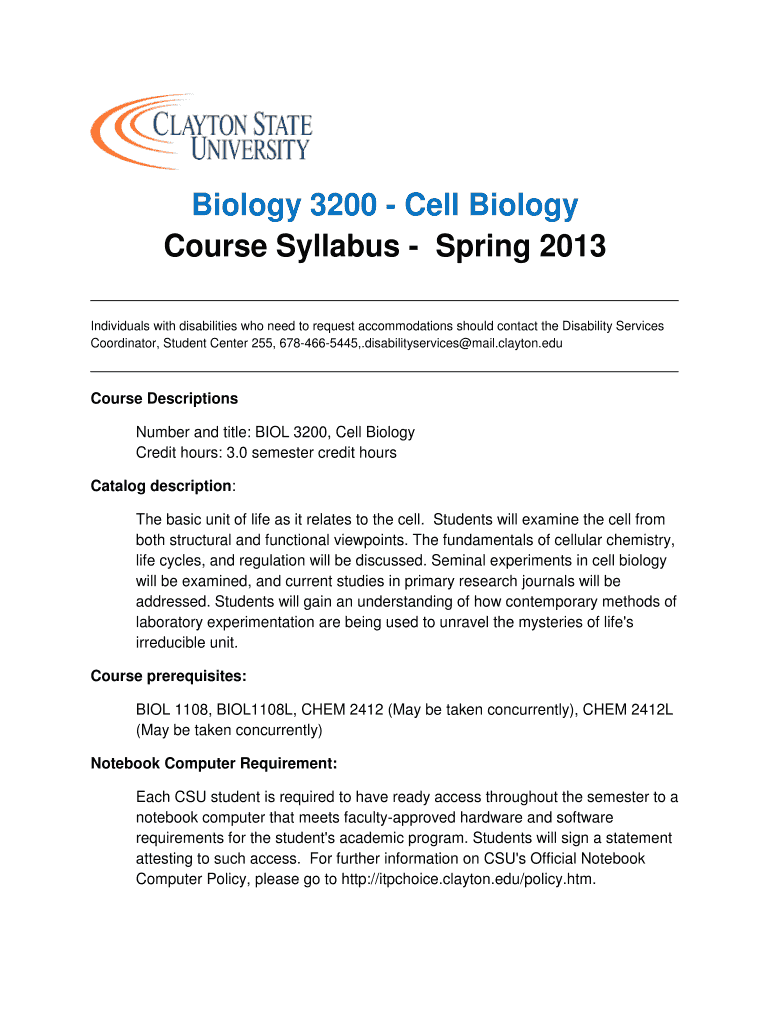
Biology 3200 - Cell Biology at Clayton State University is structured to provide an in-depth understanding of cellular structures and functions. The course delves into critical areas such as cellular chemistry and intercellular communication. It offers a comprehensive syllabus that details the core topics and the sequence in which they are covered throughout the semester.
- Course Structure: The curriculum covers various cell biology aspects, focusing on cellular systems and their roles in broader biological processes.
- Core Topics: These include the study of cellular structures, functions, and complex biochemical processes that sustain cellular activities.
- Communication Mechanisms: Emphasizes cellular communication both within single cells and between different cell types, essential for maintaining life processes.
How to Use the Biology 3200 - Cell Biology Syllabus
Utilizing the syllabus effectively ensures that students remain aligned with course objectives and assignments. Here's how to leverage the syllabus for academic success:
- Weekly Planning: Use the syllabus to plan weekly studies and manage time effectively, ensuring all topics are understood before progressing.
- Assignment Tracking: Keep track of due dates for assignments, quizzes, and exams to avoid missing critical assessments.
- Resource Allocation: Identify and allocate appropriate resources like textbooks and academic journals listed in the syllabus to maximize learning.
Important Terms Related to Biology 3200 - Cell Biology
Understanding specific terminology associated with cell biology is essential for mastering the course. Here's a breakdown of crucial terms:
- Cellular Structure: Involves components such as the nucleus, mitochondria, ribosomes, which are critical for cellular function.
- Cellular Chemistry: Chemical processes and reactions that occur within cells, including enzyme functions and metabolic pathways.
- Signal Transduction: The process by which cells respond to signals or stimuli by converting them into cellular responses.
Steps to Complete the Biology 3200 - Cell Biology Course
Successfully completing the course involves a series of strategic steps designed to ensure comprehension and application of knowledge.
- Familiarize with Syllabus: Start by thoroughly reviewing the syllabus to understand the course requirements and timeline.
- Attend Lectures: Regular attendance is crucial as it helps in grasping complex topics discussed in class.
- Active Participation: Engage in classroom discussions and group works to enhance understanding through different perspectives.
- Complete Assignments Timely: Ensure all assignments are completed by the due date to avoid penalties and maximize learning opportunities.
- Seek Feedback: Regularly consult with instructors for feedback on areas requiring improvement.
Who Typically Uses the Biology 3200 - Cell Biology Syllabus
The course is designed for students pursuing careers in biological sciences and related fields. The syllabus serves various audiences:
- Undergraduates Majoring in Biology: Primarily targets these students, providing foundational knowledge necessary for advanced studies.
- Pre-Med Students: Offers essential insights into cellular systems, a critical area for medical studies.
- Biotechnology Enthusiasts: Those interested in biotechnology applications will find the course valuable for understanding cellular processes at a molecular level.


Legal Use of the Biology 3200 - Cell Biology Course Materials
The course materials are copyrighted by Clayton State University and must be used in accordance with academic integrity guidelines.
- Proper Citations: When using course materials in assignments or research, proper academic citation is mandatory.
- Non-Commercial Use: These materials are intended for educational purposes only and should not be used for commercial gain.
Examples of Using the Biology 3200 - Cell Biology Course
Various scenarios illustrate the practical application of this course:
- Research Projects: Students may leverage course knowledge to conduct independent research on cellular biology, contributing to scholarly publications.
- Laboratory Work: Application of theoretical knowledge to laboratory experiments, enhancing hands-on experience.
- Interdisciplinary Studies: The concepts learned can be applied in interdisciplinary areas like bioinformatics, enhancing analytical skills.
Versions or Alternatives to the Biology 3200 - Cell Biology Course
Students may explore other course offerings or resources for broader understanding:
- Specialized Modules: Clayton State University might provide specialized modules in molecular biology, offering deeper insights into specific areas.
- Online Courses: Platforms like Coursera or edX offer similar cell biology courses, supplementing classroom learning with diverse perspectives.
Business Entity Types Benefiting from Biology 3200 - Cell Biology Knowledge
Understanding cellular biology is valuable across various business entities, particularly those in the scientific and medical sectors.
- Biotechnology Firms: Employ knowledge from this course for developing cellular processes and products.
- Pharmaceutical Companies: Leverage cell biology expertise for drug development and research.
- Environmental Agencies: Implement skills in studying biological impacts and developing ecological solutions.