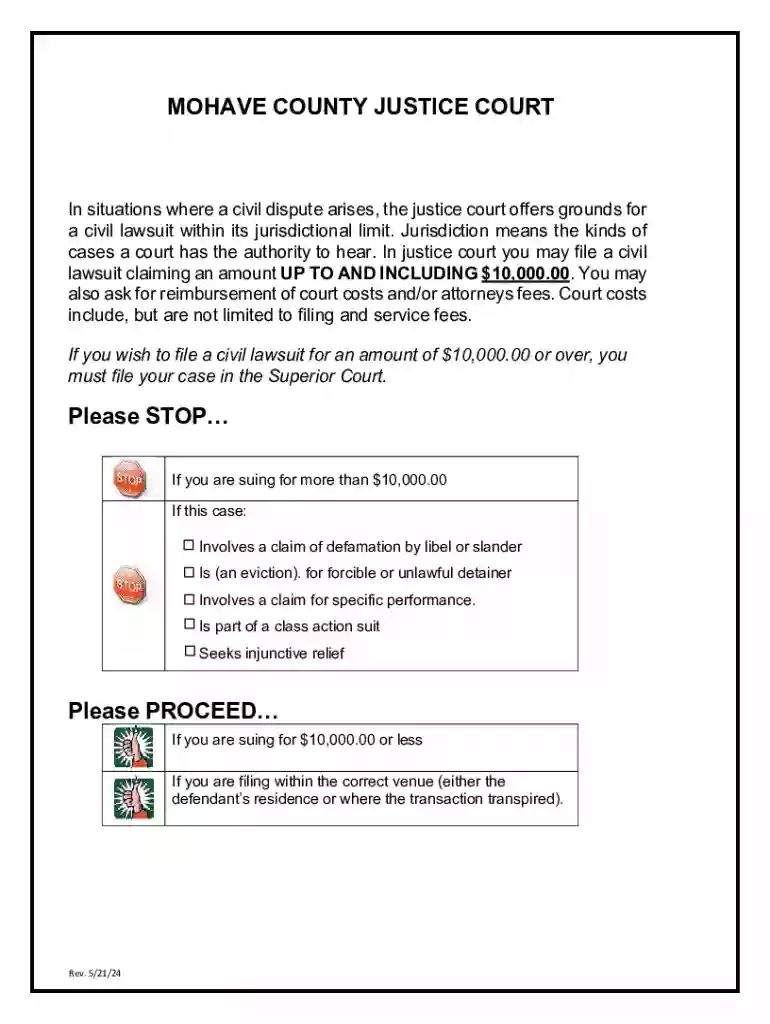
Civil Complaint and Summons 2026

Get Form
Civil Complaint and Summons Preview on Page 1

Here's how it works

01. Edit your form online
Type text, add images, blackout confidential details, add comments, highlights and more.

02. Sign it in a few clicks
Draw your signature, type it, upload its image, or use your mobile device as a signature pad.

03. Share your form with others
Send it via email, link, or fax. You can also download it, export it or print it out.

What is a Civil Complaint and Summons?

A civil complaint and summons are integral components of initiating a civil lawsuit. The civil complaint outlines the plaintiff's allegations against the defendant, establishing the factual and legal basis for the claim. This document must include the parties involved, a detailed description of the dispute, and the specific relief or damages sought by the plaintiff. The summons, on the other hand, is a legal notice issued to the defendant, informing them of the lawsuit and requiring their presence in court. In essence, the civil complaint is the formal presentation of the plaintiff's case, while the summons ensures the defendant is officially notified of the legal action against them.

Importance and Purpose

  • Provides the legal framework for the dispute, detailing the issues and claims being brought forth.
  • Ensures the defendant is aware of the claims made against them and provides them with an opportunity to respond.
  • Initiates the legal process, allowing the court to officially address and adjudicate the matter.
  • Serves as a public record of the legal proceedings.

How to Obtain the Civil Complaint and Summons

To procure a civil complaint and summons, potential litigants can follow several pathways. These forms are typically available through local courthouse websites or directly from the court clerk's office. In many jurisdictions across the United States, downloadable versions are accessible online, allowing for ease of preparation and submission. Additionally, some states offer comprehensive self-help guides online that include templates and instructions for filling out these forms. It is crucial to verify the local court's requirements, as forms and procedures can differ based on jurisdiction.

Steps to Acquire

  1. Visit your local courthouse website or the court clerk's office in person.
  2. Access downloadable forms, if available online.
  3. Follow any instructions provided to ensure the correct form is obtained.
  4. Confirm jurisdiction-specific requirements to ensure compliance.

Steps to Complete the Civil Complaint and Summons

Completing a civil complaint and summons requires precision and attention to legal detail. Begin by filling out the plaintiff and defendant's full legal names and any relevant contact information. The plaintiff must then articulate their complaint, including a fact-based account of the incident and the legal grounds for the claim, usually specified in bullet points for clarity. Attach any pertinent documents or evidence supporting the claims. For the summons, ensure the correct court information is listed, and verify all deadlines for response and appearance are mentioned. Review the completed documents carefully or seek legal counsel to ensure accuracy and completeness before submission.

Detailed Process

  1. Identify Parties: Clearly state the legal names and addresses of the plaintiff and defendant.
  2. Detail the Complaint:
    • Outline the factual basis for the complaint.
    • Specify damages or relief sought.
    • Identify legal grounds, referencing applicable laws or statutes.
  3. Attach Supporting Documents: Include relevant contracts, communications, or other evidence.
  4. Fill Out the Summons: Provide all court-related information and specify response deadlines.
  5. Review for Accuracy: Double-check details, or consult with legal professionals to confirm.

Who Typically Uses the Civil Complaint and Summons?

The civil complaint and summons are primarily utilized by individuals or entities seeking legal redress for disputes in civil court. This tool is commonly used by:


  • Individuals: For personal grievances or disputes needing judicial intervention.
  • Businesses: Address contractual disagreements or collect debts.
  • Attorneys: Legal professionals representing clients in a range of civil matters.
  • Organizations: Nonprofits or other entities pursuing legal action on policy or contract issues.
decoration image ratings of Dochub

Common Scenarios for Use

  • Contractual Disputes: When a party breaches a contract agreement.
  • Property Issues: Such as boundary disputes or unlawful premises occupation.
  • Torts: Personal injury or negligence claims.
  • Employment Conflicts: Wrongful termination or discrimination cases.

Key Elements of a Civil Complaint and Summons

Understanding the core elements of these legal documents is vital in ensuring their proper execution. The civil complaint should explicitly state the plaintiff's cause of action, including factual allegations, the applicable legal basis, and the sought relief. The summons must clearly notify the defendant of the action, listing court details and mandatory response dates. Accompanying documentation must be accurately referenced and correctly formatted.

Essential Components

  • Parties Involved: Complete identification of all parties.
  • Statement of Claim: A detailed account of the facts and allegations.
  • Legal Grounds: Citation of legal theories or laws supporting the case.
  • Requested Relief: Description of damages or specific performance sought.
  • Court Information: Jurisdiction-specific details to ensure proper filing.
  • Deadlines and Instructions: Clear timelines for the defendant's response.

State-Specific Rules for the Civil Complaint and Summons

While the basic structure of a civil complaint and summons remains consistent, each U.S. state may have unique rules and procedures governing their use. Differences can include variations in filing fees, required form content, jurisdictional limits, and service methods. It is essential for filers to familiarize themselves with their specific state's guidelines to ensure compliance and to avoid costly delays.

Considerations

  • Jurisdictional Limits: Some states set monetary limits on claims filed in small claims or justice courts.
  • Filing Guidelines: Requirements for electronic vs. paper filing.
  • Service of Process Rules: Specific methods allowed for serving documents.
  • State-Specific Forms: Check for any forms unique to your jurisdiction.

Examples of Using the Civil Complaint and Summons

There are numerous real-world scenarios where the civil complaint and summons play a crucial role in resolving disputes. For instance, a landlord might use these forms to initiate eviction proceedings against a tenant who breaches their lease agreement. Alternatively, a business may file a complaint for non-payment against another company, utilizing the summons to formally notify the defendant of court proceedings.

Illustrative Cases

  • Eviction Proceedings: Landlords facing tenant breaches of lease terms.
  • Debt Recovery: Companies seeking repayment from defaulting entities.
  • Defamation Claims: Individuals alleging harm to their reputation.
  • Contract Enforcement: Parties wanting specific performance for contract breaches.

Legal Use of the Civil Complaint and Summons

The legal application of civil complaints and summonses is critical for maintaining structure within the justice system. These tools facilitate the orderly resolution of disputes by legally obliging the defendant to respond to claims within a set timeframe. Proper use is dictated by rules set forth in local and state statutes, ensuring that legal proceedings are conducted fairly and efficiently.

Legal Framework

  • Mandatory Compliance: Defendants must respond within specified deadlines.
  • Court Procedures: Defined processes for submission and response.
  • Fair Notice: Guarantees the defendant is fully aware of the legal action taken.
  • Judicial Oversight: Managed under court supervision for procedural integrity.
be ready to get more

Complete this form in 5 minutes or less

Get form

Got questions?

We have answers to the most popular questions from our customers. If you can't find an answer to your question, please contact us.
Contact us
Yes. Filing your complaint starts your case, but the summons is the document that is issued under the courts authority that notifies your defendant they are being sued and that they need to take action.
1:05 3:11 The short answer is no you wont go to jail just for ignoring a civil summon. However there areMoreThe short answer is no you wont go to jail just for ignoring a civil summon. However there are other serious consequences. You should be aware. Of if you ignore the summons.
One may feel one has a dispute with a business person or a family member-but once the summons is issued it is the full power of the law and the courts that is brought to bear in the dispute and it is absolutely vital to treat it seriously, file a response within the time limitsor face the consequences.
It is not an order, so you do not have to do what it says. But, if you ignore a summons, you will likely lose the case against you. The court will usually decide the lawsuit in favor of the person suing you. The court could decide that you have to pay money or that you must stop doing something.
1:32 3:11 To summarize court summons are generally public records. But access can be restricted if the case isMoreTo summarize court summons are generally public records. But access can be restricted if the case is sealed or confidential. The specific rules vary by jurisdiction.

Security and compliance

At DocHub, your data security is our priority. We follow HIPAA, SOC2, GDPR, and other standards, so you can work on your documents with confidence.
Learn more
ccpa2
pci-dss
gdpr-compliance
hipaa
soc-compliance