






Definition & Meaning
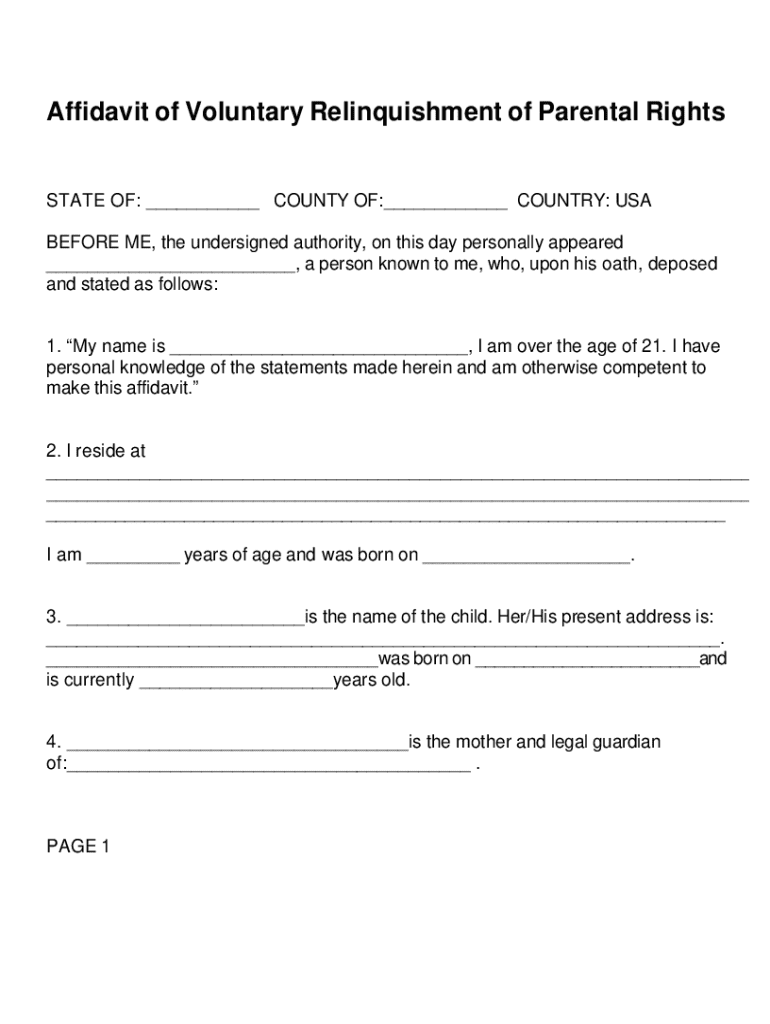
An Affidavit of Voluntary Relinquishment of Parental Rights is a legal document used by a parent (the affiant) to formally declare their decision to voluntarily surrender parental rights regarding a child. This document is crucial in family law proceedings where a parent chooses to terminate their legal obligations and rights towards their biological or adopted child. The affidavit includes comprehensive information about the affiant, the child, and the understanding of the legal implications of relinquishing parental rights.
Components of the Affidavit
- Personal Information: Name, address, and relationship to the child.
- Child Details: Name, age, and current legal guardianship status.
- Statement of Voluntary Relinquishment: Acknowledgment that the decision is made willingly and without pressure.
- Legal Implications: Understanding of the termination of rights, such as custody and decision-making.
Notarization and Witnessing
The affidavit must be notarized and witnessed to ensure authenticity and voluntary execution. This is a legal safeguard that confirms the affiant's understanding and agreement with the terms outlined in the document.
Steps to Complete the Affidavit
-
Gather Necessary Information: Collect personal details, including those of the child, and any pertinent legal documents or court orders related to custody.
-
Drafting the Affidavit: Clearly outline your intent to relinquish parental rights, ensuring that the document reflects a voluntary decision.
-
Review Legal Implications: Consult with a legal advisor to understand the outcomes of relinquishing parental rights, especially concerning future contact or responsibilities towards the child.
-
Notarization and Witnessing: Once the document is drafted, get it notarized and ensure it is signed in the presence of required witnesses.
-
Submit to Court: File the notarized affidavit with the appropriate family court for legal acknowledgment and processing.
Additional Considerations
- Revocation Period: Some jurisdictions allow a brief period during which the decision to relinquish rights can be revoked.
- Legal Counsel: Engage an attorney specializing in family law to avoid errors or misunderstandings in the document's legal significance.
Key Elements of the Affidavit
Essential Clauses
- Voluntary Relinquishment: A definitive statement indicating the parent is willingly surrendering rights without duress.
- Irrevocability: Once executed and filed, the affidavit may become irrevocable after a certain period, barring any extraordinary court intervention.
- Acknowledgment of Legal Waiver: Recognition that the parent waives all future claims and rights to the child, including custody, visitation, and inheritance rights.
Required Endorsements
- Notarial Seal: Ensures the document's legality and authenticity.
- Witness Signatures: Confirms the document was signed in good faith and after full disclosure.
Legal Use of the Affidavit
The affidavit serves primarily in family court settings where a legal transfer of parental responsibilities is necessary. This can occur during:
- Adoption Proceedings: Facilitate the adoption of a child by establishing clear legal grounds for termination of the biological parent's rights.
- State Custody: When a child is being placed under state care and the parent decides to terminate rights voluntarily.
State-Specific Guidelines
Different states have unique laws governing the execution and filing of the affidavit. It’s essential to familiarize oneself with local regulations to ensure compliance.
- Timeframe for Revocation: States like Texas and California have specific periods during which the affidavit can be revoked.
- Specific Notarization Requirements: Variations exist in the number of witnesses or type of notarial procedures required.
How to Obtain the Affidavit
Sources for the Form
- State Family Court: Most courts provide templates or forms upon request.
- Legal Aid Services: Organizations focusing on family law may offer assistance in drafting and completing the affidavit.
Self-Preparation vs. Legal Assistance
Although self-preparation is possible, enlisting the help of a lawyer ensures that all legal requirements are met, reducing the likelihood of rejection during the court’s review process. It is also advisable to use reputable document management tools like DocHub, which streamline the editing and signing process.
Important Terms Related to the Affidavit
Critical Definitions
- Affiant: The individual voluntarily relinquishing parental rights.
- Revocation: The legal process through which the affidavit can be annulled within a specific time frame.
- Custody: Legal responsibility for the child, which includes making decisions about their welfare and upbringing.
- Notarization: The act of officially certifying a document to verify its authenticity.
Understanding these terms is vital for navigating the legal framework surrounding parental rights relinquishment and ensuring informed decision-making.
State-Specific Rules
Variations to Consider
Each state enforces unique guidelines for the voluntary relinquishment of parental rights. Factors such as:
- Revocation Periods: Time allowance for a parent to withdraw their affidavit varies by state.
- Documentation Requirements: States may require additional affidavits or legal documents, especially if the child is under state protection.
Knowing these distinctions helps in preparing a compliant affidavit that aligns with state laws, preventing delays or rejections in court proceedings.
Examples of Using the Affidavit
Practical Scenarios
-
Adoption Facilitation: A biological parent relinquishing rights to allow a stepparent or relative to legally adopt the child.
-
State Custody Cases: Where a parent agrees to surrender rights due to incapacity to care for the child, thus allowing the state or foster care to take responsibility.
These examples illustrate the affidavit's flexibility in different legal situations surrounding child welfare and custody.