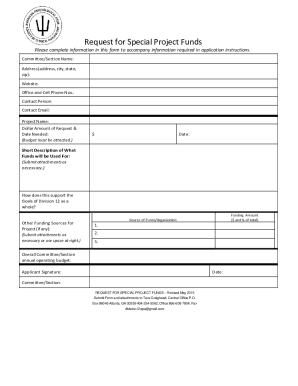
Definition and Meaning of the Research and Development Form
The research and development form is a structured document designed to streamline the process of requesting research and testing services within an organization. Typically employed by departments engaged in innovation or product development, this form serves various functions, such as detailing the specific services requested, outlining the objectives of the research, and defining the scope of proposed projects. Often, it includes fields for providing originator details, service descriptions, priority levels, and required evaluations, making it an invaluable tool for maintaining consistency and clarity in research requests.
These forms can vary in complexity, depending on the specific needs of the organization. They can be used to help coordinate efforts between departments, guide project managers in resource allocation, and ensure that all necessary information is available for decision-makers. By fostering clear communication, the form enhances the efficiency of research and development activities and prevents potential misunderstandings or omissions during the request process.
Steps to Complete the Research and Development Form
-
Identify the Requirement: Begin by clearly stating the specific research or testing service required. This involves detailing the scope, objectives, and desired outcomes for the project. Clearly defined goals aid in aligning expectations and enhance communication across teams.
-
Originator Information: Provide the contact information of the individual or department requesting the service. Accurate details, such as name, designation, department, and contact number, ensure that the request can be traced and followed up efficiently.
-
Service Description: Outline the nature of the service being requested. In this section, offer a brief yet comprehensive description of the tasks or experiments that need to be carried out, including any specific methodologies or technologies required.
-
Set Priority Levels: Indicate the urgency of the request. This aids in resource allocation and scheduling, enabling the research team to manage workloads effectively and ensure that high-priority projects are addressed in a timely manner.
-
Management Recommendations: Include any advice or directives from management that can impact the execution of the project. This may involve budget considerations, strategic alignments, or compliance needs.
-
List Evaluation Criteria: Specify the metrics or standards that will be used to assess the project’s success or efficacy. Establishing clear evaluation criteria helps guide project execution and facilitates meaningful analysis during post-project reviews.
-
Document Testing Outcomes: After the project is complete, use this section to record the results and outcomes of the requested services. This documentation provides valuable insights for future projects and helps justify decisions made based on the research conducted.
-
Approval Signatures: Ensure the form includes fields for necessary authorizations and approvals, often from senior management or department heads, confirming that the information provided is accurate and the project has been sanctioned.
Key Elements of the Research and Development Form
-
Purpose and Objectives: Outlining the intended purpose and key objectives ensures clarity and alignment with broader organizational goals.
-
Project Timeline: Detail the expected start and completion dates to enable effective scheduling and resource planning.
-
Resource Requirements: Identify any specific resources required such as software, hardware, or personnel, ensuring all necessary components are available.
-
Risk Assessment: Note potential risks or challenges that could impact the project, along with mitigation strategies to address these concerns.
Legal Use of the Research and Development Form
Within the United States, using a well-structured research and development form can help companies maintain compliance with federal and state regulations governing innovation and workplace safety. By detailing the objectives, processes, and resources, the form acts as a traceable document that auditors or regulatory bodies can review, if necessary. Additionally, the form aids in documenting due diligence in handling proprietary or sensitive information, aligning with confidentiality and intellectual property laws.
Who Typically Uses the Research and Development Form
This form is predominantly utilized by organizations with dedicated research and development departments, including industries like pharmaceuticals, technology, and manufacturing. Key users include project managers, research scientists, and product developers who require structured documentation to initiate and direct research activities. Their engagement with the form ensures that projects adhere to organizational standards and operational protocols.


How to Use the Research and Development Form
To efficiently employ the form, users must ensure its accurate and thorough completion. Users should regularly update the form with any changes to project scope or objectives and obtain the necessary approvals before proceeding. It is also essential to revisit the form during and after project execution to verify discrepancies, update outcomes, and document lessons learned.
Digital vs. Paper Version of the Research and Development Form
Digital versions of the research and development form offer flexibility and easier access, enabling users to fill, submit, and store forms electronically. These forms can be seamlessly integrated into digital document management systems, offering real-time collaboration and version control. Paper forms, while traditional, may be needed in environments where digital tools are inaccessible or impractical due to security or compliance reasons. Whichever format is chosen, consistency in usage is key to leveraging the form's full potential.
Important Terms Related to the Research and Development Form
-
Feasibility Study: An analysis to assess the viability of the project.
-
Prototype Development: The process of creating an initial model to test concepts.
-
Intellectual Property (IP): Legal rights over creations of the mind, related to inventions, designs, and artistic works.
-
Milestone: Specific points in the project timeline representing significant phases or achievements.
Understanding these terms facilitates clearer communication and more efficient completion of the research and development form.