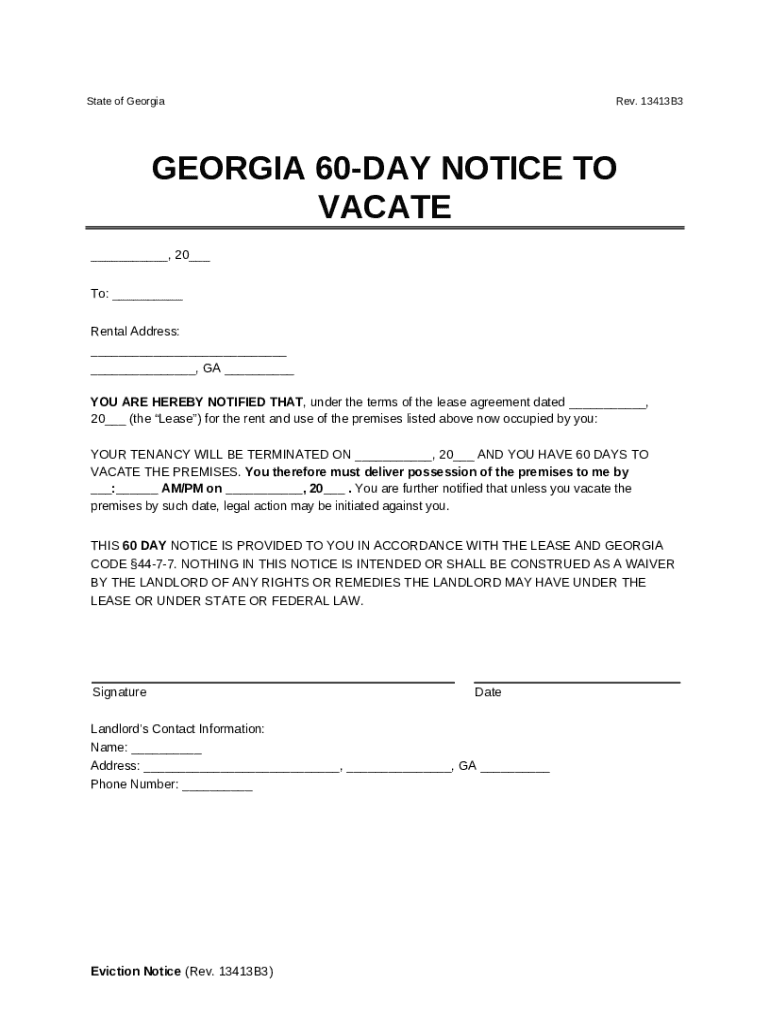







Definition and Purpose of the Georgia 60-Day Notice to Vacate
The Georgia 60-Day Notice to Vacate is a legal document used by landlords to formally inform tenants of the termination of their tenancy agreement. It serves as a written notification that the tenant must vacate the rental property within 60 days from the date the notice is issued. This type of notice is typically used in a month-to-month tenancy arrangement but may also apply in other rental agreements where a 60-day notice period is stipulated. It is crucial for both landlords and tenants to understand the implications and legal requirements associated with such a notice to avoid potential conflicts or legal disputes.
Steps to Complete the Georgia 60-Day Notice to Vacate
-
Identify the Tenancy Period: Confirm whether the lease agreement requires a 60-day notice and if the tenant is on a month-to-month arrangement or similar terms.
-
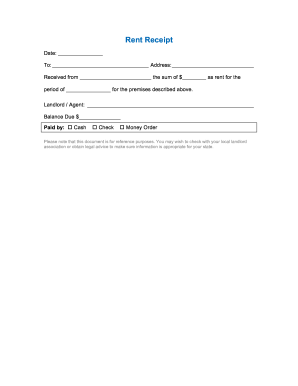
Prepare the Notice: Include specific details such as the tenant's names, the property address, the date of the notice, and the exact date by which the tenant must vacate the premises.
-
Landlord and Tenant Information: Clearly list the landlord’s contact information and ensure the landlord’s signature or the signature of an authorized representative.
-
Proof of Service: Attach a section that details how and when the notice was delivered to the tenant, whether by personal delivery, mail, or other accepted methods.
How to Use the Georgia 60-Day Notice to Vacate
-
For Landlords: This notice allows landlords to regain possession of their property within a specified timeframe if they plan to sell the property, conduct renovations, or if the tenant has breached specific terms of the lease agreement.
-
For Tenants: Receiving this notice gives tenants time to make moving arrangements, ensuring they have sufficient notice to search for a new home and organize their relocation.
Key Elements of the Georgia 60-Day Notice to Vacate
-
Notification Period: Clearly specified 60-day timeframe within which the tenant must vacate.
-
Reason for Termination: Even if not legally required, stating the reason for vacating can provide clarity and transparency.
-
Legal Consequences: Information on potential legal actions or eviction proceedings if tenants do not comply with the notice.
Legal Use of the Georgia 60-Day Notice to Vacate
Under Georgia law, landlords must adhere to specific legal processes when issuing a 60-day notice, ensuring it complies with state statutes and local regulations. The notice must be clear, unambiguous, and delivered in a verifiable manner. Non-compliance by landlords can lead to legal challenges, potentially delaying the eviction process.
State-Specific Rules Governing the Notice
Georgia has specific rules that govern the issuance and execution of a 60-day notice to vacate. These rules ensure fair treatment of tenants while protecting the rights of landlords. The notice must comply with Georgia’s residential landlord-tenant laws, which set forth the required timeframe and acceptable methods of serving notices.
Important Terminology in the Notice
-
Lease Agreement: A legal contract between a landlord and tenant outlining terms and conditions of tenancy.
-
Termination Date: The last date by which the tenant is required to leave the property.
-
Proof of Service: Documentation or evidence showing that the notice was delivered to the tenant.
Variations and Alternatives to the 60-Day Notice
While the 60-day notice is standard in many month-to-month tenancy agreements, variations such as a 30-day notice may be used in different circumstances or states. Understanding when and how to issue the correct notice according to specific lease terms can prevent misunderstandings.
Examples of Using the Georgia 60-Day Notice to Vacate
Examining scenarios where the Georgia 60-day notice is used can provide clarity:
-
Landlord Selling Property: A landlord planning to sell a rental property may issue a 60-day notice, ensuring it is vacant for potential buyers.
-
Major Renovations: If significant renovations are needed that require the property to be unoccupied, the landlord might issue a 60-day notice.
-
Lease Violation: In cases of repeated lease violations that cannot be resolved through other means, landlords may opt to issue this notice as a final resort.
Understanding these scenarios ensures that both parties are prepared for the transition and aware of their legal rights and obligations.