Definition and Importance of a Health Care Directive
A Minnesota health care directive is a legal document that allows individuals to outline their preferences for medical treatment and appoint a trusted person to make health care decisions on their behalf if they become unable to do so. This document is crucial as it helps ensure that a person's health care wishes are respected and followed, even if they cannot communicate them themselves. The directive provides guidance to both family members and medical professionals, reducing the potential for disputes or uncertainty during critical situations.
Key Features of a Health Care Directive
- Health Care Agent: This is an individual appointed to make decisions on behalf of the person creating the directive.
- Medical Preferences: Detailed instructions about desired medical treatments and interventions or refusals thereof.
- End-of-Life Decisions: Options for life-sustaining treatments, pain management, and organ donation preferences.
- Resuscitation Orders: Directions about whether to pursue CPR or other life-saving measures.
- Regular Updates: Advises individuals to review and update the document periodically as personal wishes or health circumstances evolve.
How to Use the Minnesota Health Care Directive Planning Toolkit
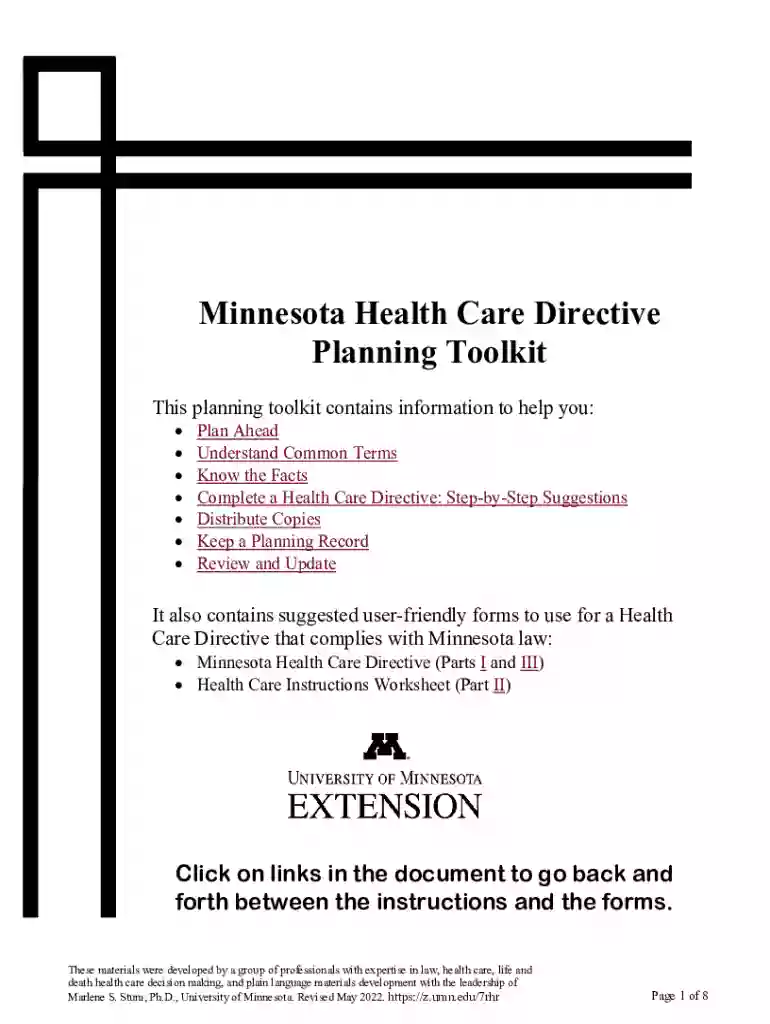
The Minnesota Health Care Directive Planning Toolkit is designed to guide individuals through the process of creating or updating a health care directive. It provides structured steps and tips to develop a comprehensive and legally valid directive.
Using the Toolkit Effectively
- Read the Instructions: Thoroughly understand each section before beginning the form.
- Reflect on Your Wishes: Take time to consider your health care preferences and discuss them with family members or advisors.
- Choose a Health Care Agent: Select a trusted person who is capable of understanding and advocating for your medical choices.
- Detail Your Preferences: Clearly articulate medical treatments you want or refuse.
- Review for Legal Validity: Ensure all sections are completed according to Minnesota state laws for health care directives.
- Communicate: Share your completed directive with your health care agent, family, and medical providers.
Steps to Complete the Minnesota Health Care Directive Planning Toolkit
Completing a health care directive involves several detailed steps to ensure it meets your needs and legal standards.
Step-by-Step Process
- Download or Access the Toolkit: Obtain the toolkit either online or through a participating organization.
- Preliminary Planning: Consider your values, beliefs, and treatment preferences.
- Fill Out Personal Information: Enter identification and contact details.
- Select a Health Care Agent: Provide their name, relationship, and contact information.
- Specify Instructions: Clearly describe your medical treatment preferences and any specific conditions.
- Legal Requirements: Sign the document in presence of a notary or witnesses to ensure legal enforceability within Minnesota.
- Review and Adjust: Reassess your directive after significant life events or changes in health status.
- Distribute Copies: Share the final version with your agent, family members, and doctors.
Key Elements of the Minnesota Health Care Directive Planning Toolkit
The Minnesota Health Care Directive Planning Toolkit covers several essential elements that guide the creation of a detailed and personalized directive.
Core Components
- Directive Instructions: Step-by-step guidance on document completion.
- Forms and Templates: Pre-prepared forms to input personal information and medical instructions.
- Educational Content: Explanations of legal terms, medical terminology, and end-of-life care options.
- Checklists: Tools to ensure all necessary steps are completed.
- Emergency Contacts: Sections to list contacts for quick reference in medical situations.
State-Specific Rules for the Minnesota Health Care Directive Planning Toolkit
Understanding Minnesota’s specific legal requirements is crucial to ensuring the directive is valid and enforceable.
Important State Regulations
- Witnessing and Notarization: The directive must be either witnessed by two adults or notarized to be valid.
- Age Requirements: The creator of the directive must be at least 18 years old.
- Revocation and Changes: Directives can be revoked or altered at any time as long as the individual is competent.
- Scope of Authority: Clearly defined limits and responsibilities for health care agents.
Legal Use of the Minnesota Health Care Directive Planning Toolkit
The legal standing of the Minnesota Health Care Directive allows it to be a powerful tool in advocating for an individual's desired medical treatment.
Legal Considerations
- Adherence to Laws: Must comply with relevant state laws to ensure it is enforceable.
- Binding Nature: Interpreted by health care professionals to follow the documented wishes.
- Court Recognition: Legally recognized by courts should any disputes arise.
- Confidentiality: Protected under patient privacy laws to maintain the privacy of personal health preferences.
Examples of Using the Minnesota Health Care Directive Planning Toolkit
Providing specific examples can illustrate how the toolkit can serve different needs and preferences.
Real-World Scenarios
- Scenario 1: An elderly woman with early-stage dementia who appoints her daughter as her health care agent and outlines her preferences for non-invasive end-of-life care.
- Scenario 2: A young man recovering from a serious accident who specifies certain therapies and appoints his brother to make decisions if he is re-hospitalized.
- Scenario 3: A person with terminal cancer uses the directive to refuse aggressive treatments and opts for palliative care only, ensuring this choice is legally documented.