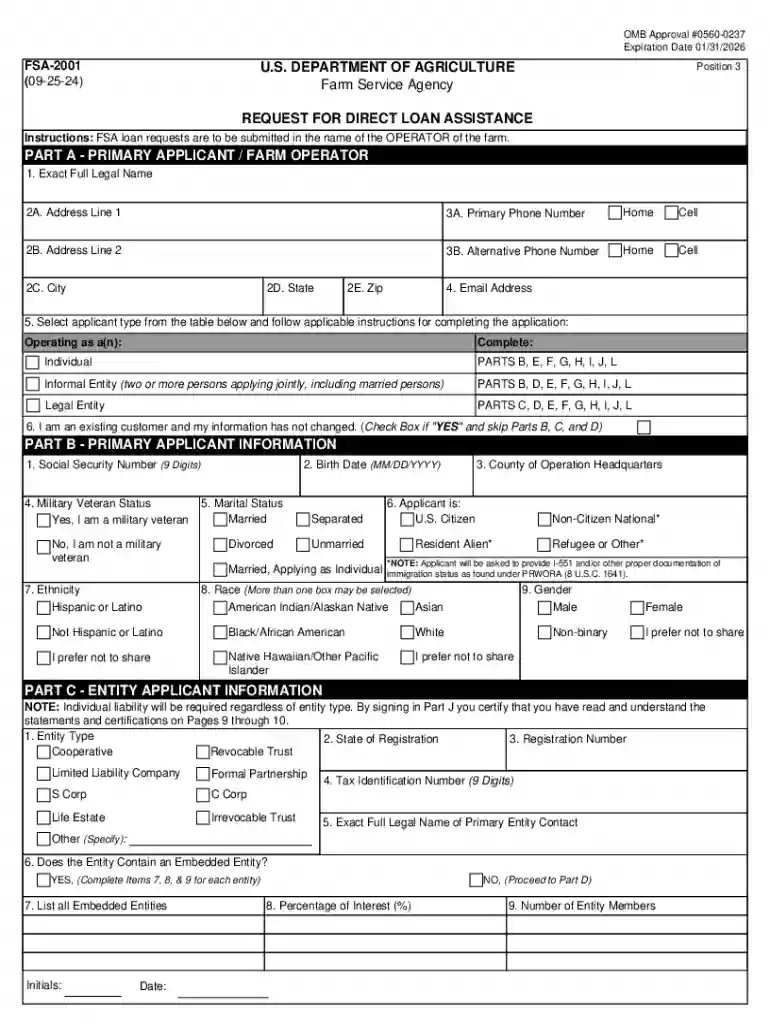
Definition and Meaning of Fsa-2001
The Fsa-2001 form is a vital document used to apply for direct loan assistance from the U.S. Department of Agriculture's Farm Service Agency. It is specifically designed for farmers and ranchers seeking financial aid to support their agricultural operations. The form serves multiple purposes—including applying for various loans such as farm ownership, operating loans, and emergency loans.
Types of Loans Available
- Farm Ownership Loans: These loans are intended for purchasing or expanding farmland, building or improving facilities, and purchasing easements or rights of way.
- Operating Loans: These provide funds to cover annual expenses like purchasing livestock, feed, equipment, seed, and other essential items for farming operations.
- Emergency Loans: These loans assist farmers recovering from natural disasters or catastrophic events that affect their agricultural production.
Completing this form accurately is critical to ensure eligibility and streamline the process of obtaining necessary funds.
Steps to Complete the Fsa-2001
Filling out the Fsa-2001 requires attention to detail to ensure all required information is provided accurately.
- Obtain the Form: Acquire a copy of the Fsa-2001 from the USDA's official website or a local FSA office.
- Applicant Identification: Fill in personal details like name, address, social security number, and other identifiers.
- Loan Information: Specify the type of loan you are applying for and the amount requested. Provide a clear description of how the funds will be used.
- Financial Disclosures: Include comprehensive financial information, such as income statements, asset details, and existing debts.
- Supporting Documentation: Attach necessary documents, including tax returns, business plans, or environmental assessments.
- Sign and Date: Ensure that the form is signed and dated properly before submission.
Required Documents for Submission
Completing the Fsa-2001 involves gathering various documents that verify financial status and eligibility.
- Identification Documents: Government-issued ID, such as a driver's license or passport, to confirm your identity.
- Financial Records: Recent tax returns, balance sheets, and cash flow statements to demonstrate financial capacity and obligations.
- Business Plan: A detailed outline that highlights your farming operations, goals, and how the loan will support your activities.
- Environmental Assessments: If applicable, provide assessments that evaluate the environmental impact of your farming practices.
Legal Use of the Fsa-2001
Use of the Fsa-2001 must comply with federal regulations and guidelines.
- Compliance with Laws: Adhere to anti-discrimination laws and regulations that ensure fair treatment of all applicants.
- Ethical Use: Ensure information provided is truthful and accurate, as false submissions may result in penalties.
- Authorization: Only authorized personnel should complete sections requiring certification of information provided.
Key Elements of the Fsa-2001
Understanding the crucial components of the Fsa-2001 can improve the application process.
- Applicant Section: This part collects personal data and must be filled out accurately.
- Loan Details: Detailed information on the loan type and amount.
- Financial Information: Extensive disclosure of financial status, including income, assets, liabilities, and credit history.
- Supporting Documents: Attach any relevant supplemental documents to aid in the review process.
State-Specific Rules for the Fsa-2001
While the Fsa-2001 follows federal guidelines, some variations exist based on state regulations.
- Local Requirements: Certain states may have additional documentation or assessments specific to environmental impacts.
- Submission Channels: Options for submitting forms can vary, with some states providing additional local office support.
- Agricultural Conditions: Consideration for state-specific agricultural conditions that may influence loan approval processes.
Examples of Using the Fsa-2001
Practical scenarios of how the Fsa-2001 can be used in real-world situations.
- Farmer A: A small dairy farmer uses the Operating Loan from the form to purchase feed and equipment to expand their operations.
- Rancher B: Applies for an Emergency Loan following a severe drought that adversely impacts cattle health and pasture conditions.
- Grower C: Utilizes a Farm Ownership Loan to acquire additional land for expanding organic vegetable production.
These scenarios illustrate how the Fsa-2001 supports different agricultural needs and enhances rural farming operations.