






Definition & Meaning
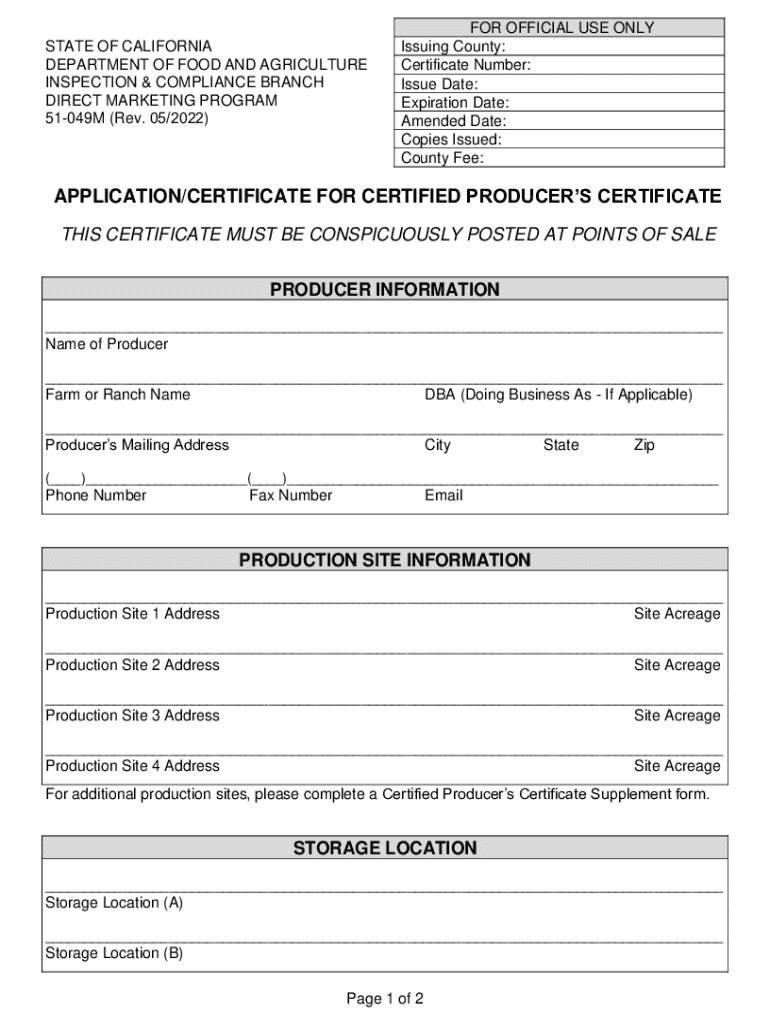
The Certified Producer's Certificate (CPC) Application issued by the California Department of Food and Agriculture (CDFA) is a crucial document for farmers who want to sell their own agricultural products directly to consumers. This form certifies that the producer's goods are in compliance with state regulations concerning agricultural practices. Displaying the certificate at the point of sale is mandatory, ensuring transparency and consumer trust regarding the source of the products.
How to Use the Certified Producer's Certificate Application
To use the CPC Application effectively, producers must accurately fill out the required sections with detailed information about their production sites, types of commodities, and storage locations. The completed form should reflect the producer's current farming activities. Once submitted and approved, the certificate should be prominently displayed at sales locations, such as farmers' markets, to validate the legitimacy of the produce being sold.
How to Obtain the Certified Producer's Certificate Application
To obtain the CPC Application, producers can visit the official CDFA website where the form is available for download. Alternatively, local county agricultural commissioners' offices may provide physical copies. Applicants should ensure that they have the latest version of the application form to avoid submission issues. Verification with local offices might be necessary to confirm any specific county requirements.
Steps to Complete the Certified Producer's Certificate Application
- Gather Necessary Information: Include personal details, locations of production sites, and storage facilities.
- Detail Production Activities: List all agricultural products grown and intend to sell.
- Check Compliance: Ensure that all products and practices fall within state agricultural regulations.
- Submit Application: Send the completed form via mail or online submission if the option is available in the county.
- Receive Approval: Upon receiving the certificate, verify its accuracy and correct any errors immediately.
Who Typically Uses the Certified Producer's Certificate Application
Farmers and agricultural producers across California who wish to sell their produce directly to consumers typically use the CPC Application. This includes individuals selling at certified farmers' markets, roadside stands, and other direct-to-consumer venues. These producers range from small family-owned farms to larger agribusinesses seeking to solidify their market presence.


Important Terms Related to the Certified Producer's Certificate Application
- Production Site: The location where agricultural products are grown.
- Storage Location: Facilities where harvested goods are kept until sale.
- Commodity: The specific type of agricultural product produced and sold.
- Point of Sale: The location where the direct sale transaction takes place.
Key Elements of the Certified Producer's Certificate Application
- Producer Information: Names, addresses, and contact details of the producers.
- Site Locations: Exact addresses of production and storage locations.
- Commodities List: Comprehensive list of all products intended for sale.
- Compliance Statement: A declaration of adherence to state agricultural regulations.
State-Specific Rules for the Certified Producer's Certificate Application
California's CPC Application is governed by state laws, requiring producers to comply with specific agricultural practices. These rules are aimed at ensuring the quality and safety of produce sold to the public. Counties may have additional requirements in place, necessitating producers to check with local agricultural commissioners for specific guidelines relevant to their region.
Penalties for Non-Compliance
Non-compliance with the Certified Producer's Certificate regulations can result in severe penalties, including fines or revocation of the certificate. Producers found selling uncertified products or failing to display their certificate at the point of sale may face enforcement actions by the CDFA or local authorities. It’s essential for producers to maintain compliance to avoid these repercussions and preserve consumer trust.