01. Edit your form online
Type text, add images, blackout confidential details, add comments, highlights and more.

Type text, add images, blackout confidential details, add comments, highlights and more.

Draw your signature, type it, upload its image, or use your mobile device as a signature pad.

Send it via email, link, or fax. You can also download it, export it or print it out.
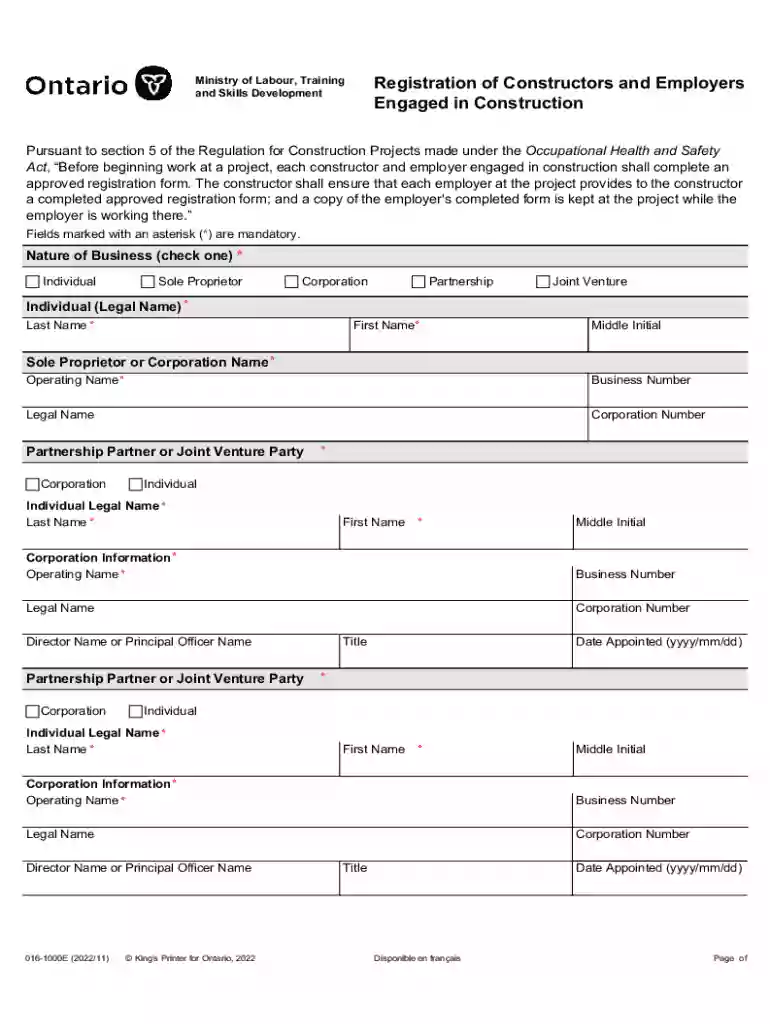
The "Registration of Constructors and Employers Engaged in Construction" is a foundational process mandated by the Occupational Health and Safety Act to ensure that constructors and employers operating within the construction sector meet specific safety and legal standards before starting a project. It requires the completion of a registration form that captures crucial information related to business identity, project specifics, and authorization confirmation. This form serves as a compliance tool to maintain safety regulations and risk management strategies, ensuring that construction project activities align with legal requirements.
Gather Required Information: Collect all essential business information, including the legal name, address, contact information, and details about the business entity type. You will also need specific project details such as location, estimated duration, and types of work to be performed.
Access the Registration Form: Obtain the approved registration form from the relevant authority, which can typically be downloaded from government or regulatory websites or requested in person.
Complete Mandatory Fields: Fill out the form carefully, ensuring that all mandatory fields, such as business identity, project details, and authorization confirmation, are completed. Pay special attention to any requirements pertaining to safety protocols or health regulations that must be acknowledged or confirmed.
Review and Confirm: Double-check all entered information for accuracy and completeness. Incomplete or incorrect information may lead to processing delays or potential penalties.
Submit the Form: Submissions can often be made online, via mail, or in person, depending on the regulatory body's process. Ensure that any additional supporting documents, if required, are included in your submission.
Await Confirmation: After submission, wait for confirmation of registration, which will often involve receiving a registration number or certificate proving compliance.
Business Information: Includes the legal name, address, and contact details of the constructor or employer. Details about the business structure, such as whether it is an LLC, corporation, or partnership, are critical.
Project Details: Comprehensive information about the construction project. This includes the physical location, project scope, estimated start and completion dates, and any high-risk activities to be conducted.
Authorization and Compliance: An official section acknowledging adherence to safety standards and occupational health regulations. Signature fields for responsible parties confirm accountability and authorization.
Safety Protocols: Information regarding the safety measures to be implemented on the site, including protective equipment and emergency response plans.
Registering constructors and employers engaged in construction projects is crucial for several reasons:
Legal Compliance: Ensures adherence to governmental regulations, avoiding legal consequences and potential fines.
Risk Management: Helps in anticipation and mitigation of potential risks and safety hazards, fostering a safer work environment for all personnel involved.
Project Accountability: Establishes a clear record of the parties responsible for project execution, promoting accountability and efficient management.
Proof of Business Identity: Documents such as business licenses or articles of incorporation to verify the legal status of the business.
Insurance Certificates: Evidence of appropriate insurance coverage for liability and workers' compensation.
Project Contracts: Agreements or contracts related to the construction project, detailing the scope and responsibilities.
Safety Plans: Comprehensive safety and emergency plans that outline how health and safety standards will be maintained on-site.
Online Submission: Many jurisdictions allow the form to be submitted electronically through their official websites, providing a user-friendly interface and email confirmation.
Mail: A traditional method, where forms and required documents are sent via postal mail to the designated regulatory office.
In-Person: Submission can be made directly at regional offices for a more hands-on approach, sometimes preferred for immediate queries and confirmations.
Failure to register or comply with the registration requirements can result in:
Fines and Sanctions: Financial penalties imposed by regulatory bodies for not adhering to legal obligations.
Project Delays: Work stoppage orders that can halt project progress until compliance is achieved.
Legal Action: Potential lawsuits or legal actions resulting from failure to meet occupational health and safety standards.
The registration process and requirements can vary significantly between states. Some may have additional safety regulations, environmental considerations, or local workforce laws that impact registration. Therefore, it's important for constructors and employers to familiarize themselves with the rules specific to the state in which the construction project is located, ensuring full compliance with all local requirements.
We've got more versions of the Registration of Constructors and Employers Engaged in Construction form. Select the right Registration of Constructors and Employers Engaged in Construction version from the list and start editing it straight away!
| Versions | Form popularity | Fillable & printable |
|---|---|---|
| 2022 | 4.4 Satisfied (51 Votes) |
At DocHub, your data security is our priority. We follow HIPAA, SOC2, GDPR, and other standards, so you can work on your documents with confidence.