




01. Edit your home health skilled nursing visit note examples online
Type text, add images, blackout confidential details, add comments, highlights and more.

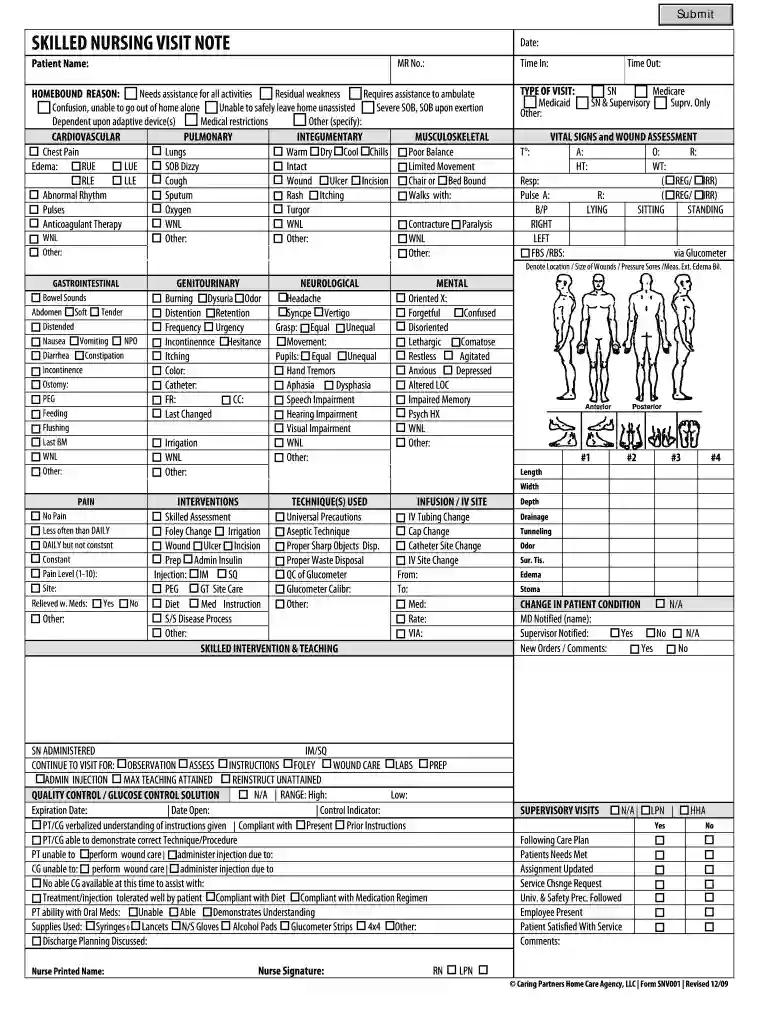
Type text, add images, blackout confidential details, add comments, highlights and more.

Draw your signature, type it, upload its image, or use your mobile device as a signature pad.

Send home health nursing notes examples via email, link, or fax. You can also download it, export it or print it out.
Home health skilled nursing visit notes are essential documents used by healthcare professionals to record details of patient assessments and care provided during home health visits. These notes are critical in various aspects of healthcare, ensuring continuity of care, facilitating communication among team members, and maintaining regulatory compliance.
In these notes, nurses document the patient’s medical history, current condition, vital signs, and any interventions performed during the visit. The information collected serves not only as a record for future visits but also as a central part of the patient's overall care plan. Articulating details about health assessments and patient education provided during visits is vital as it helps healthcare teams to coordinate care effectively.
Key elements often included in these notes are:
Creating comprehensive nursing visit notes requires a careful approach to ensure that all relevant details are accurately captured. Below are key components that should be included in every skilled nursing visit note:
Patient Information:
Assessment Data:
Nursing Interventions:
Care Plan Updates:
Signatures:
Home health skilled nursing visit notes come in various formats, each tailored to meet the unique needs of patients and specific care settings. Below are a few examples of note formats often used:
A properly structured nursing visit note not only aids in understanding the patient's circumstances but also plays a significant role in ensuring legal and professional standards are met. Consider the following structural components:
The SOAP (Subjective, Objective, Assessment, and Plan) format allows for clarity and organization within the documentation:
Some nursing notes may be written in a narrative style, detailing the visit in a more freeform approach. This format can allow for a comprehensive view of the patient's experience and the context of care.
Accurate nursing documentation is critical for several reasons:
Below are strategies and tips to enhance the quality of home health skilled nursing visit notes:
These strategies can greatly enhance the overall documentation process and ensure that home health nursing notes serve their intended purpose effectively.
At DocHub, your data security is our priority. We follow HIPAA, SOC2, GDPR, and other standards, so you can work on your documents with confidence.



Jan 3, 2024 Two common acronyms to remember how to write nursing notes are SOAPIE Subjective, Objective, Assessment, Plan, Intervention, Evaluation andRead more
Back-up/training statement signed and dated by the primary caregiver, i.e., In the event a nursing shift is not covered, I will be responsible for taking careRead more


