






Definition and Meaning
Kinship care refers to a situation where a child is placed under the care of relatives, or close family friends, rather than in traditional foster care settings. This arrangement is often preferred for maintaining familial bonds and continuity in the child’s life. Non-kinship care, on the other hand, places children in foster care with caregivers who have no prior relationship with the child.
Importance in Child Welfare
Kinship care has gained recognition in child welfare systems due to its perceived benefits, including emotional stability and a sense of identity for children. It aligns with federal and state initiatives that prioritize keeping children within their family systems whenever feasible. Non-kinship care is utilized when no suitable kinship option is available, providing a necessary alternative for the immediate safety and care of the child.
How to Use the Form
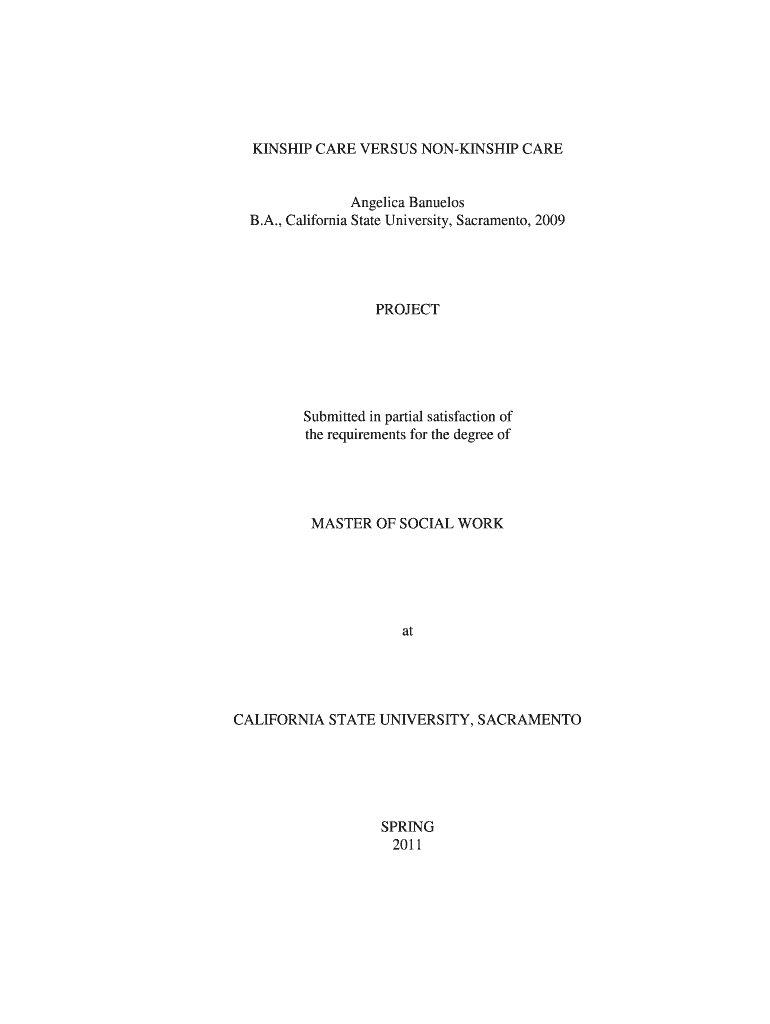
The "Kinship Care Versus Non-Kinship Care - csus-dspace calstate" document is primarily used by professionals in the child welfare sector. It assists social workers in assessing the suitability of care arrangements for children in need of protection. Engagement with the form involves assessing caregiver background, the child's relationship with potential caregivers, and the emotional and psychological readiness of all parties involved.
Utilization Steps
- Initial Assessment: Evaluate the child's current situation and determine the possibility of kinship placement.
- Caregiver Evaluation: Review background checks, home studies, and compatibility between the child and potential caregivers.
- Documentation: Complete sections of the form that detail findings and recommendations for either kinship or non-kinship care.
- Review and Approval: Submit for supervisory review to ensure compliance with legal and agency standards.
Important Terms Related to the Form
Understanding specific terminology is essential for using this document correctly and effectively.
- Kinship Care Giver: The family member or close friend taking responsibility for the child's care.
- Home Study: An evaluation of the caregiver's home environment.
- Placement Appropriateness: The suitability of the care arrangement in meeting the child's needs.
Legal Use of the Form
The form aligns with legal mandates that prioritize family-based placements for children separated from their parents. It adheres to the Adoption and Safe Families Act (ASFA), which encourages familial placements while ensuring child safety and well-being.
Compliance Requirements
- Timeliness: Ensure reports and evaluations are completed within the stipulated timelines to prevent placement delays.
- Accuracy: The information must be comprehensive and accurately reflect the situation to facilitate appropriate decisions.
Key Elements of the Form
Essential Components
- Child's Information: Demographics and background.
- Assessment of Care Options: Detailed examination of potential kinship and non-kinship placements.
- Caregiver Evaluation: Results from background checks, personal interviews, and home evaluations.
- Final Recommendation: Summarized advice based on findings for either kinship or non-kinship care.
Steps to Complete the Form
Completing the form requires careful attention to the child’s needs and the capabilities of potential caregivers.
- Child's Background Information: Gather all necessary data about the child.
- Care Giver Interviews: Conduct and record evaluations with potential caregivers.
- Submit Required Documentation: Ensure all supporting documents, such as home studies, are appended.
- Final Review and Submission: Cross-check the form for completeness and submit it to the reviewing authority.
Examples of Using the Form
The form is employed in various scenarios within child welfare systems:
- Case Studies: Evaluations where children have both relatives and non-relatives as care options. The form helps assess the most suitable caregivers.
- Policy Reviews: Used by agencies to align practices with new state guidelines favoring kinship care.
Required Documents
To ensure completeness, several documents might be needed alongside the form.
- Identification: Birth certificates or social security numbers for both child and caregivers.
- Background Checks: Police checks and clearance forms for potential caregivers.
- Home Study Reports: Documents assessing the suitability of the living environment.
State-Specific Rules
Each state may have its own specific rules and interpretations of kinship and non-kinship care which can influence how the form is used and what additional documentation might be necessary.
Examples of Variability
- California: Has specific guidelines for prioritizing kinship placements, requiring detailed follow-up and documentation.
- New York: Requires specific consent forms for non-kinship placements, ensuring that all parties are aware of the legal implications.
This structured and detailed content provides comprehensive insights into the "Kinship Care Versus Non-Kinship Care - csus-dspace calstate" document, tailored for professionals engaged in child welfare assessments and decisions following child removal from home environments.