
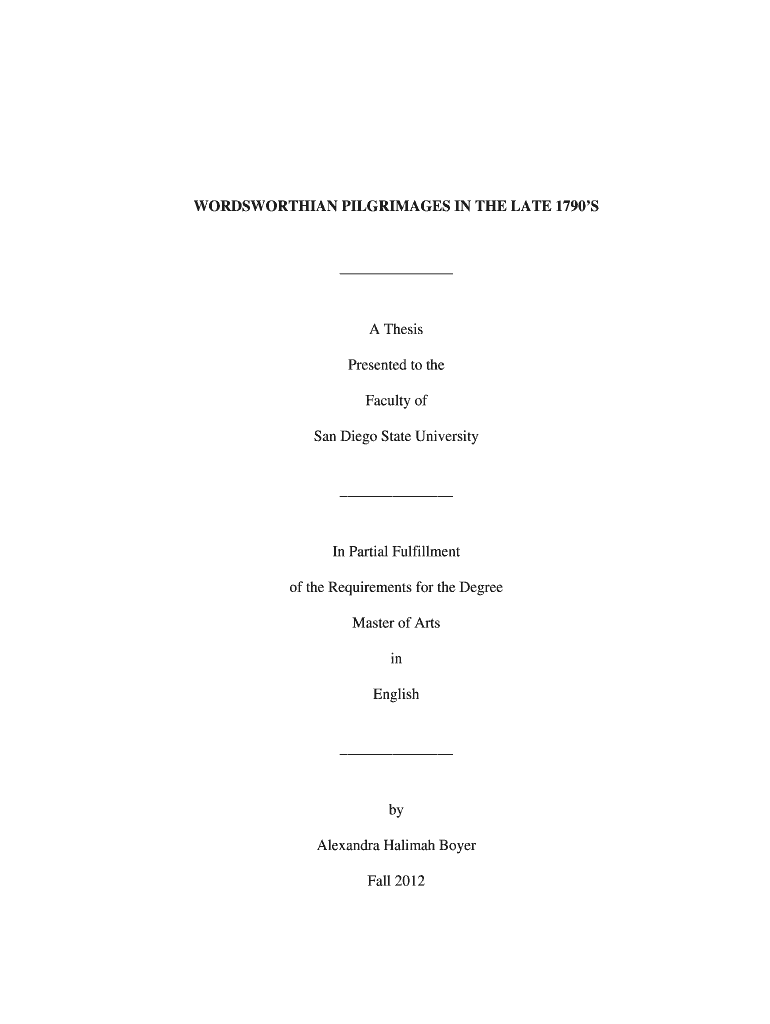







Definition and Meaning
"Wordsworthian Pilgrimages in the Late 1790s - sdsu-dspace calstate" is a reference to a scholarly thesis that explores the transformation in William Wordsworth's poetry and thought from 1792 to 1798. This period was crucial in Wordsworth's career, representing a shift from personal introspection to a broader understanding of human connections and nature. The thesis analyzes how Wordsworth's experiences during a politically turbulent time influenced his literary works, particularly highlighting his seminal poems such as "The Borderers" and "Tintern Abbey."
Steps to Complete the Thesis Review
- Access the Thesis: Begin by locating the complete thesis through academic databases like SDSU DSpace or CalState archives.
- Read Key Sections: Focus on the introduction for context, the main body for detailed analysis, and the conclusion for a summary of findings.
- Take Notes: As you progress, make detailed notes on the primary themes, significant arguments, and key textual analyses presented.
- Highlight Works: Pay special attention to Wordsworth's works that are pivotal to the thesis, such as "The Borderers."
- Discuss Critical Concepts: Identify and discuss important literary transitions noted in the thesis.
- Summarize Understandings: Conclude by summarizing the primary shifts in Wordsworth's poetry as analyzed in the thesis.
How to Obtain the Thesis
- University Database Access: Access "Wordsworthian Pilgrimages in the Late 1790s" through institutional access on SDSU DSpace or other affiliated university libraries.
- Request Through Interlibrary Loan: For those not directly affiliated with a supporting institution, an interlibrary loan can be requested.
- Purchase or Subscription: Consider purchasing access or a subscription to the database offering the thesis.
Key Elements of the Thesis
- Analytical Focus: Examines the evolving themes in Wordsworth’s work amidst political and personal upheavals.
- Literary Works Analyzed: Important works include "The Borderers" and "Lyrical Ballads," reflecting on Wordsworth's philosophical transformations.
- Historical Context: Provides insight into how the socio-political climate of the late 1790s influenced the poet’s trajectory.
Who Typically Uses the Thesis
- Literature Students and Academics: Those studying English literature, particularly the Romantic era, will find it essential.
- Researchers: Scholars focusing on literary transformations in the context of socio-political issues.
- Educators: Professors and teachers looking to deepen curriculum content on Romantic poetry.


Important Terms Related to the Thesis
- Romanticism: Understanding how Wordsworth's works fit into the broader context of Romanticism.
- The Sublime: A pivotal theme in Wordsworth’s poetry, often highlighting the grandeur of nature.
- Empathy and Compassion: Core aspects of the poet’s later works analyzed in the thesis.
Examples of Using the Thesis
- Curriculum Development: Incorporating findings from the thesis to create a module on Romantic poetry.
- Research Papers: Drawing on the thesis to support a research paper or article on Wordsworth’s role in the Romantic movement.
- Literary Critiques: Using the insights from the thesis to critique other works of Wordsworth not covered in depth.
Versions or Alternatives to the Thesis
- Related Theses: Look for other theses analyzing Wordsworth’s transformations, potentially from a different literary or historical perspective.
- Published Articles: Scholarly articles that review or critique specific elements of Wordsworth’s works covered in the thesis.
- Books on Romantic Poetry: Comprehensive books covering the scope of the Romantic era, with sections focusing on Wordsworth’s impact.
State-by-State Access Differences
- California-Specific Access: Californian institutions may provide easier access through the CalState archives.
- Other States: Consider differences in interlibrary loan services or partnerships with Californian universities to gain access.
Software Compatibility
- Document Viewing Software: Ensure access to document viewing applications like Adobe Reader or similar to open and read the thesis.
- Citation Tools: Use citation software compatible with Word or PDF documents for organizing references from the thesis.




