






Definition and Meaning
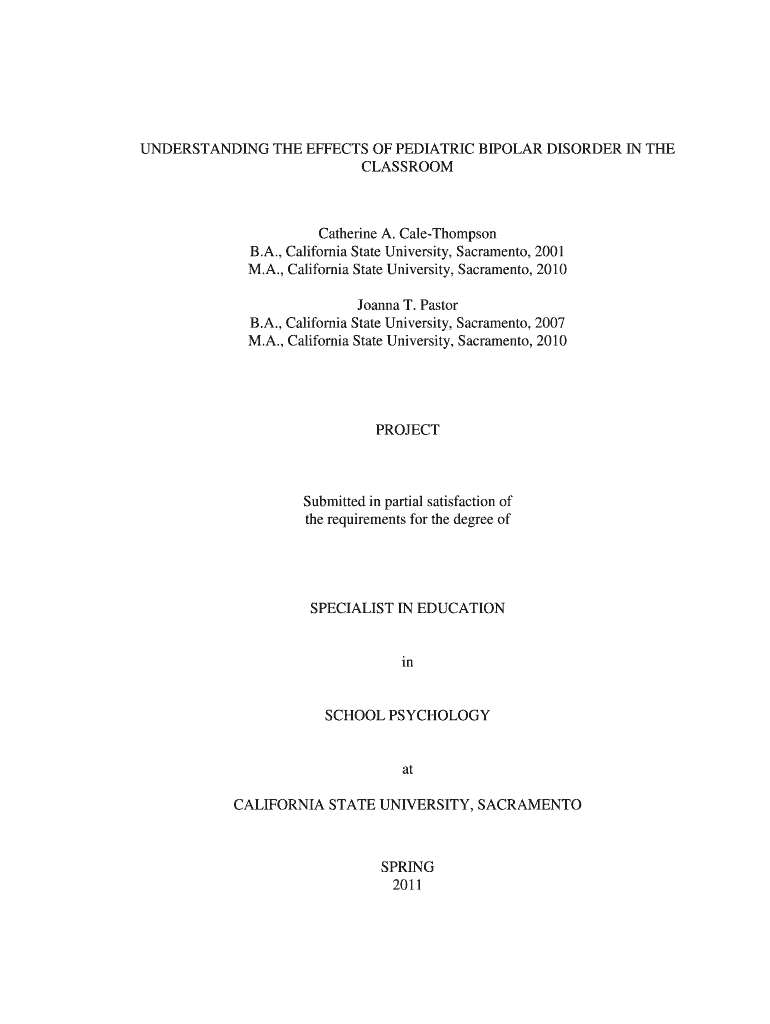
"Understanding the Effects of Pediatric Bipolar Disorder in the Classroom" is a document that provides a detailed overview of how pediatric bipolar disorder (PBD) affects students in educational settings. It explores the disorder's symptoms, such as mood swings and irritability, and how these impact learning and social interactions within a classroom environment. The document emphasizes the importance of equipping educators with the necessary knowledge to recognize and manage PBD symptoms effectively.
Key Elements of the Document
The document, authored by Catherine A. Cale-Thompson and Joanna T. Pastor, outlines several critical components, including:
- Symptom Identification: Clear explanations of behavioral and emotional signs that may indicate the presence of PBD in students.
- Classroom Strategies: Practical approaches for teachers to accommodate students with PBD, promoting a supportive learning atmosphere.
- Collaborative Approach: The importance of cooperation among educators, parents, and healthcare providers to address the needs of students with PBD.
Importance of Understanding PBD in Education
Understanding the impact of PBD is essential for developing effective teaching strategies that ensure inclusive education. Recognizing symptoms early allows for timely intervention, which can significantly improve a student's academic performance and social well-being. It also helps mitigate potential disruptions in the classroom, creating a more harmonious learning environment for all students.
Steps to Implement Classroom Strategies
- Training Workshops: Organize professional development sessions to educate educators about PBD symptoms and management techniques.
- Individualized Education Plans (IEPs): Collaborate with school psychologists to develop tailored learning plans for affected students.
- Regular Communication: Establish ongoing communication channels with parents and healthcare providers to monitor students' progress and adjust strategies as needed.
Who Typically Uses This Document
This document is primarily geared toward:
- Educators and School Staff: Teachers, counselors, and administrative staff who interact directly with students and need to recognize PBD symptoms.
- Parents and Guardians: To understand how PBD affects their children’s school experiences and to collaborate with schools for better outcomes.
- Mental Health Professionals: Offering insights into educational challenges and strategies for students with PBD.
Practical Examples of PBD Management
- A teacher notices a student displaying significant mood shifts and seeks guidance on whether these may relate to PBD.
- An educator implements a flexible seating arrangement to help a student with PBD manage their attention and focus.
- A school collaborates with a student's psychiatrist to create a support plan that includes regular check-ins and adjustments to teaching methods.
Obtaining the Document
The document may be accessible through educational resources or academic repositories like csus-dspace calstate, where scholarly work is shared. Checking with educational research institutions or online academic libraries can provide access to this valuable resource.
Digital vs. Paper Version
The document may be available in both digital and paper formats. The digital version allows for easy access and distribution among educators, while the paper version could be beneficial for those who prefer a tangible copy for reference during workshops or meetings.
Eligibility Criteria for Using the Document
There are no strict eligibility criteria, but individuals involved in the education and care of children with potential mental health issues would benefit most. This includes:
- Educators: Particularly those in primary and secondary education settings.
- Mental Health Professionals: Supporting students within or outside of school environments.
- Parents and Guardians: Looking to better understand and support their children’s educational journey concerning PBD.