






Definition of Health Care Access and Utilization Differences
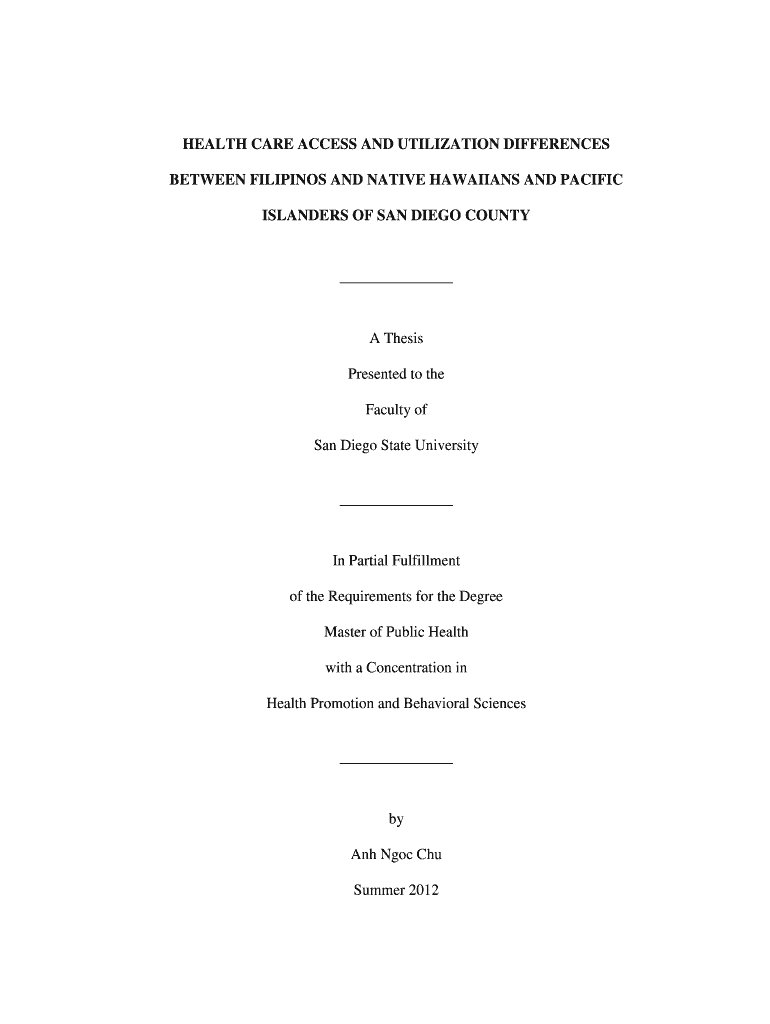
The term "Health Care Access and Utilization Differences" generally refers to the variations in how different populations can obtain and use health care services. It includes factors such as availability of insurance, usual sources of care, and barriers like transportation or financial constraints. For the document titled "HEALTH CARE ACCESS AND UTILIZATION DIFFERENCES - sdsu-dspace calstate," these differences are crucial in understanding how Filipinos and NHPI populations in San Diego County access health services.
How to Utilize the Document on Health Care Access
Utilizing the "HEALTH CARE ACCESS AND UTILIZATION DIFFERENCES - sdsu-dspace calstate" involves a detailed review of the study's methodologies and findings. This document provides insights into the disparities and can be used by health professionals and policymakers to develop targeted strategies aimed at reducing these disparities. By understanding the nuances, stakeholders can create more effective health programs and policies.
Steps to Complete a Health Care Access Report
- Data Collection: Gather data on health services usage among the target populations.
- Community Needs Assessment: Conduct surveys or focus groups to identify barriers to accessing care.
- Data Analysis: Use statistical tools to interpret the findings and identify trends.
- Report Writing: Prepare a comprehensive document that outlines methods, findings, and recommendations.
- Review: Have the report reviewed by peers or stakeholders to ensure accuracy and completeness.
- Publication: Submit the final report to relevant repositories or journals for dissemination.
Key Elements of the Document
- Disparities Identified: The document specifically reviews access disparities between Filipino and NHPI groups.
- Socioeconomic Influences: Income and education are pivotal factors affecting access.
- Transportation and Insurance: These are critical areas where disparities manifest.
- Policy Recommendations: Based on findings, the document likely suggests policy changes or interventions.
Important Terms Related to the Document
- Disaggregation: Breaking down data by specific demographics to capture nuances.
- Insurance Coverage: Availability and extent of health insurance among populations.
- Usual Source of Care: Consistent access to a healthcare provider or facility.
- Socioeconomic Factors: Social and economic conditions affecting individuals’ lives.
Legal Use and Compliance
Legal compliance with the document requires following any recommendations or interventions, particularly if they involve changes to public policy. It's important for entities using the document to adhere to legal standards in data handling and privacy, especially when dealing with health data.
Who Typically Uses the Document
The primary audience includes:
- Health Policy Makers: To inform policy development and decision-making.
- Public Health Researchers: For comparative analyses and broader public health studies.
- Community Health Organizations: To tailor programs that meet specific community needs.


State-Specific Rules for Health Access
While the document is specific to San Diego County, state-specific rules could play a role in its findings. For example, California health laws regarding coverage mandates, Medi-Cal expansions, and other state-specific programs may influence the disparities highlighted in the document.
State-by-State Differences
Considering the document’s findings for San Diego County, one might examine how these disparities compare to those in other states. This would be important for benchmarking and understanding whether these issues are localized or reflect broader national trends.