






Definition & Meaning
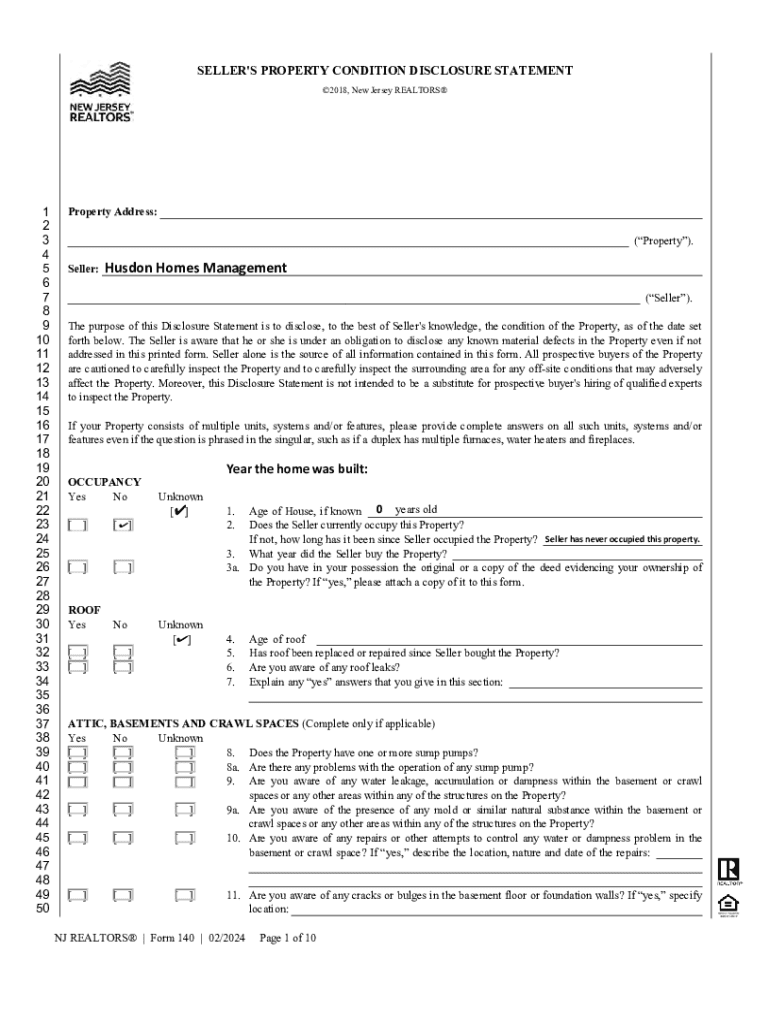
The New Jersey #140 - Seller Property Disclosure NJ - SPD is a crucial document used in real estate transactions within the state of New Jersey. It serves the purpose of providing potential buyers with detailed information about the condition of a property. The disclosure focuses on outlining any known material defects that could affect the property's value or desirability. This form is an essential tool in ensuring transparency between the seller and potential buyers, helping to build trust and facilitate an informed purchase decision.
The disclosure statement includes various categories such as property structures, utilities, and environmental hazards. Sellers are obligated to fill out the form to the best of their knowledge, offering insights into aspects like structural integrity, plumbing, electrical systems, and any past repairs or renovations. While the seller's disclosures aim to provide accuracy, they don't serve as a warranty of the property's condition. Buyers are still encouraged to conduct independent inspections for a comprehensive assessment.
Steps to Complete the New Jersey #140 - Seller Property Disclosure NJ - SPD
-
Personal Information Section: Start by entering the seller's name, contact information, and the address of the property being sold. It's vital to ensure that all information is both accurate and up-to-date.
-
Property Structure Details: Describe various components of the property such as the roof, foundation, and any included appliances. Include information on the age, condition, and maintenance history of these elements.
-
Utilities and Systems: Document the status of essential systems like plumbing, electrical, heating, and cooling. Note any recent upgrades or known issues that could impact functionality or safety.
-
Environmental Disclosures: Indicate whether the property is affected by environmental hazards, such as lead paint, radon, or asbestos. Mention any environmental testing or mitigation efforts that have been undertaken.
-
Flood Zone and Insurance Information: Specify if the property is located in a designated flood zone, which may affect insurance requirements and premiums. Include details about any flood insurance policy in place.
-
Completion and Signature: After all sections are thoroughly filled out, the seller must sign and date the document to confirm the accuracy of the information provided. Additionally, the buyer's acknowledgment of receiving the disclosure may also be required.
Key Elements of the New Jersey #140 - Seller Property Disclosure NJ - SPD
-
Material Defects: This section requires the seller to disclose any known defects affecting the property. Material defects might include foundation issues, roofing leaks, or plumbing problems.
-
Property Improvements: Details about past improvements or renovations, including permits acquired, can give buyers insight into the property's history and current value.
-
Occupancy and Use: Sellers must clarify the current and previous use of the property, such as residential, rental, or commercial. This context helps buyers understand its potential.
-
Legal Obligations: The document highlights the seller's legal responsibility to provide truthful information. Misrepresentation can result in legal consequences, making accurate disclosure imperative.
Important Terms Related to New Jersey #140 - Seller Property Disclosure NJ - SPD
-
Material Defects: These refer to any issues that could significantly affect the property's value or pose a safety risk to its occupants.
-
Environmental Hazards: Factors like asbestos, radon, and lead paint that might present health risks.
-
Flood Zone: Designated areas prone to flooding, influencing property insurance and maintenance costs.
-
Warranty: While the SPD offers transparency, it does not constitute a warranty; buyers still bear responsibility for thorough inspections.
State-Specific Rules for the New Jersey #140 - Seller Property Disclosure NJ - SPD
New Jersey imposes specific requirements for seller disclosures during real estate transactions. The SPD must be provided before the transfer of property ownership. State law mandates that the seller divulge all known material defects, and failure to comply can lead to legal disputes and potential liability for the seller.
Legal Use of the New Jersey #140 - Seller Property Disclosure NJ - SPD
This document has significant legal implications, as it protects both buyers and sellers. It ensures that buyers are informed about the property's condition, while also providing sellers with a defense against potential claims of nondisclosure. The SPD must be filled out truthfully and in its entirety to avoid legal pitfalls.
Disclosure Requirements
Sellers are legally required to disclose any known issues that could affect the value or safety of the property. This includes structural problems, plumbing leaks, past pest infestations, or known hazards. Full disclosure ensures that buyers have a comprehensive understanding of what they are purchasing.
Examples of Using the New Jersey #140 - Seller Property Disclosure NJ - SPD
Consider a seller who recently replaced a portion of the roof following storm damage. The disclosure should include this information, detailing the extent of the repairs and the presence of any warranties. Similarly, if an environmental assessment revealed high radon levels and abatement measures were taken, these factors should be carefully documented in the SPD.
Who Typically Uses the New Jersey #140 - Seller Property Disclosure NJ - SPD
This form is predominantly utilized by property sellers and real estate agents in New Jersey. It's a crucial component of residential real estate transactions, ensuring transparency and trust between parties. Buyers also utilize the form to understand a property before completing the purchase.
By fulfilling these obligations, both buyers and sellers foster a smoother and more transparent real estate transaction process.