







Definition and Meaning
The "Waikato-Tainui Remaining Claims Deed of Mandate" refers to the formal document that authorizes and empowers Waikato-Tainui to negotiate remaining treaty claims with the Crown or government entities. This deed serves as a legal tool granting Waikato-Tainui the authority to represent their members in treaty settlement processes, ensuring that their claims are discussed and resolved within an officially recognized framework. It is a key instrument used in the context of negotiating outstanding grievances related to historical treaties and agreements.
How to Use the Waikato-Tainui Remaining Claims Deed of Mandate
Understanding the practical application of the Waikato-Tainui Remaining Claims Deed of Mandate is crucial for its effective use. This document is typically employed within negotiation settings where Waikato-Tainui engages with governmental representatives to finalize settlements on outstanding claims. Its use involves:
- Presenting the Deed: Serving as the foundational document that establishes Waikato-Tainui's authority to engage in negotiations.
- Guiding the Process: Ensuring that all discussions and resolutions align with the mandates and conditions established in the document.
- Documenting Agreements: Recording any progress or agreements achieved during negotiation sessions.
Steps to Complete the Waikato-Tainui Remaining Claims Deed of Mandate
Completing the Waikato-Tainui Remaining Claims Deed of Mandate involves a series of steps to ensure its readiness for official use:
- Consultation with Tribal Members: Engage with tribal members to gather input and support for the claims process.
- Draft Preparation: Develop an initial draft that outlines the specifics of the claims and desired outcomes.
- Legal Review: Have the draft reviewed by legal experts to ensure compliance and accuracy.
- Approval by Tribal Authorities: Present the draft to tribal leaders and governing bodies for their approval.
- Submission: Formally submit the completed deed to the appropriate governmental bodies for acknowledgment.
Key Elements of the Waikato-Tainui Remaining Claims Deed of Mandate
The deed contains several essential components that define its structure and enforceability:
- Authority Clause: Details the legal basis for Waikato-Tainui to represent its members.
- Scope of Claims: Defines the specific claims being pursued and their historical context.
- Negotiation Framework: Outlines the procedures and principles guiding negotiation activities.
- Representation Details: Identifies the individuals and entities authorized to act on behalf of Waikato-Tainui.
Eligibility Criteria
Determining who is eligible to be represented under the Waikato-Tainui Remaining Claims Deed of Mandate is critical. Eligibility generally includes:
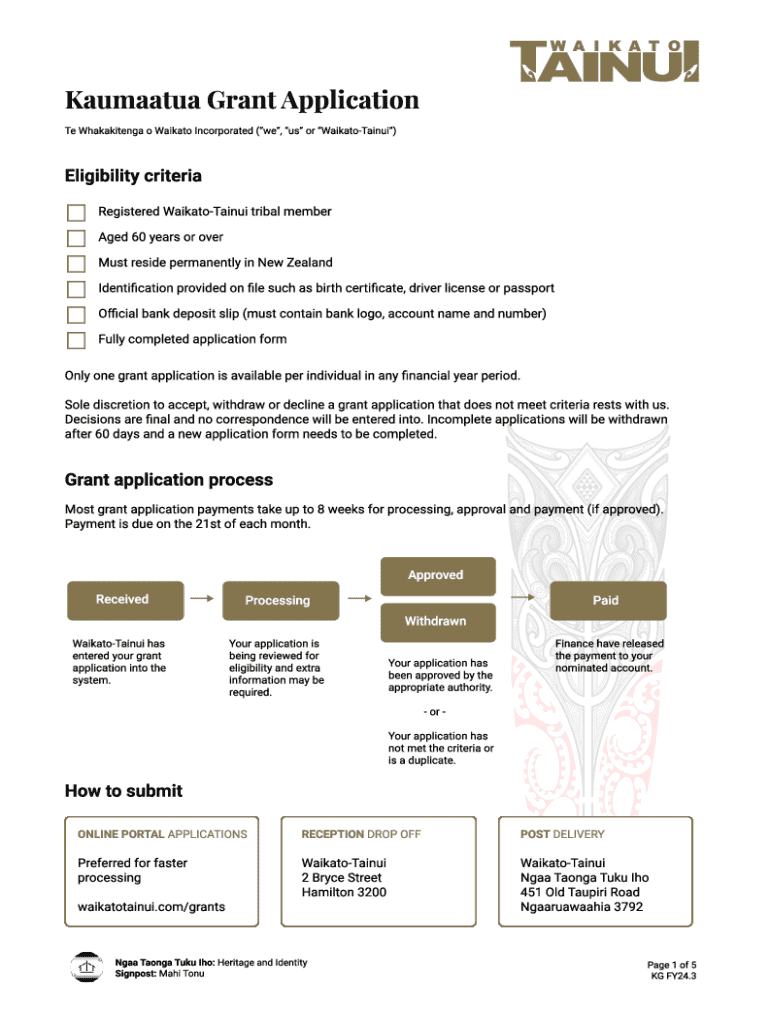
- Tribal Membership: Registration as a Waikato-Tainui tribal member.
- Residency Requirements: Some criteria may apply regarding residency within certain regions or countries.
- Age Criteria: There may be age restrictions or qualifications for participants involved in claims processes.


Application Process and Approval Time
The process of applying for and gaining approval for using the Waikato-Tainui Remaining Claims Deed of Mandate involves several steps:
- Initial Consultation: Engaging tribal members to confirm their support for pursuing claims.
- Formal Application Submission: Completing and submitting application forms to designated authorities.
- Review and Verification: Authorities conduct thorough reviews and verification of claims.
- Approval and Notification: Authorities grant approval and notify Waikato-Tainui of the mandate's activation.
Form Submission Methods
To facilitate the pursuit of claims, submission methods for the Waikato-Tainui Remaining Claims Deed of Mandate include:
- Online Portals: Using digital platforms for electronic submissions.
- Mailing: Sending physical documents through postal services.
- In-Person Delivery: Hand-delivering documents to official offices.
Legal Use of the Waikato-Tainui Remaining Claims Deed of Mandate
The legality of the Waikato-Tainui Remaining Claims Deed of Mandate is pivotal in affirming its enforceability in negotiations. This involves:
- Legal Recognition: Acknowledgement by government entities as a binding document.
- Compliance with Regulations: Adhering to legal standards and regulations governing treaty negotiations.
- Enforceability: Ensuring that agreements reached under the deed are legally binding and respected by all parties involved.




