






Definition and Meaning
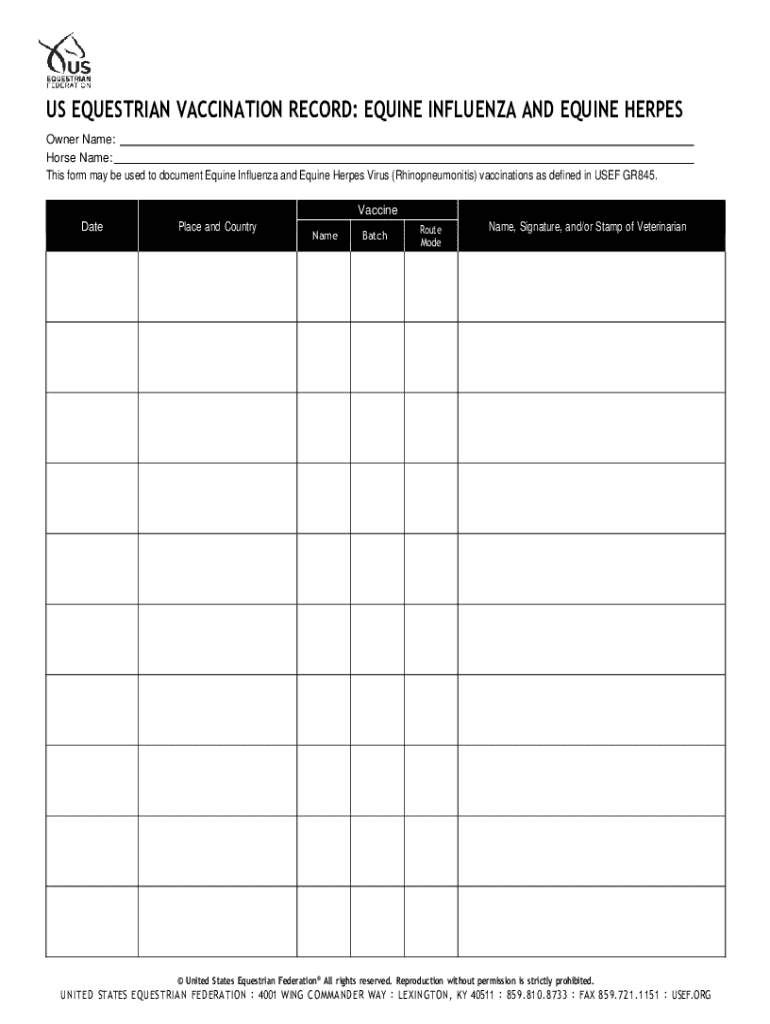
The "vaccination record: equine influenza and equine herpes - USEF" is a specialized document used by horse owners in the United States to record and verify their horses' vaccinations against equine influenza and equine herpesvirus. This form is compliant with the United States Equestrian Federation (USEF) guidelines outlined in GR845, ensuring horses participating in equestrian events maintain up-to-date vaccinations critical for health and safety.
Practical Relevance
- Equine Influenza: A highly contagious viral respiratory infection in horses, necessitating regular vaccinations for control.
- Equine Herpesvirus (EHV): A disease that can result in respiratory illness, neurological disorders, and pregnancy complications in horses, managed through consistent vaccination.
Key Details
- Owner and Horse Information: Documenting owner and horse details ensures accurate identification in compliance with USEF standards.
- Vaccine Details: Captures critical information about the specific vaccines administered, ensuring thorough documentation of each vaccination event.
- Veterinarian Verification: Essential for validating the accuracy and authenticity of the vaccination record, aligning with USEF requirements.
How to Obtain the Vaccination Record: Equine Influenza and Equine Herpes - USEF
Accessing the Form
To obtain the vaccination record, horse owners generally contact the USEF directly or consult with their veterinarians, who may provide a standardized template. These forms are often distributed through:
- Veterinary Clinics: Many clinics provide these records to ensure clients maintain accurate vaccination documentation.
- USEF Events: Forms may be available at competitions or official equestrian events.
Important Considerations
- Digital Availability: Some veterinary services offer digital versions compatible with document management platforms like DocHub, facilitating easy editing and storage.
- Request Process: It may involve submitting a request to the USEF or affiliated bodies for specific versions compliant with the latest regulations.
Steps to Complete the Vaccination Record: Equine Influenza and Equine Herpes - USEF
Filling Out the Form
-
Owner and Horse Details:
- Provide full owner names and contact information.
- Include accurate horse identification, such as name, breed, and registration number.
-
Vaccination Information:
- Clearly specify the type and batch of vaccines administered.
- Record the date and location of vaccine administration for accuracy.
-
Veterinarian Section:
- Ensure your veterinarian verifies the vaccination details, signing and dating this section to confirm compliance.
Submission and Verification
- After completion, the form must be submitted to the USEF or the relevant authority overseeing the horse's participation in events.
- Regular updates are necessary to reflect continuous vaccine compliance.
Why You Should Use the Vaccination Record: Equine Influenza and Equine Herpes - USEF
Ensuring Compliance and Safety
Maintaining a detailed vaccination record is not merely a procedural requirement; it is a protective measure for the equestrian community. Consistent use of this record provides:
- Proof of Immunization: Vital for participation in events and to avoid penalties.
- Health Assurance: Reduces the risk of disease outbreaks within equestrian facilities and events.
Legal Implications
Failing to maintain an accurate vaccination record can lead to exclusion from competitions and potential legal repercussions due to non-compliance with USEF regulations.
Key Elements of the Vaccination Record: Equine Influenza and Equine Herpes - USEF
Comprehensive Coverage
- Owner and Horse Information: Ensures correct identification.
- Vaccine Details: Includes vaccine types, manufacture dates, and dosages.
- Veterinarian Verification: Provides official attestation of vaccine compliance.
Personalization and Customization
- Forms can often be customized for specific events or requirements, reflecting different regulatory needs or personal preferences for documentation.
Examples of Using the Vaccination Record: Equine Influenza and Equine Herpes - USEF
Real-World Scenarios
- National Competitions: Horses entering competitions like the National Horse Show must present a compliant record to participate.
- Training Facilities: Regular checks occur to ensure all horses on-premises have valid vaccination documentation.
Practical Considerations
- Last-Minute Changes: Use digital tools to update records promptly, ensuring no disruptions to competition entries or facility accesses.
Legal Use of the Vaccination Record: Equine Influenza and Equine Herpes - USEF
Complying with Regulations
Abiding by vaccination documentation protocols is a legal requirement for horse owners under the jurisdiction of organizations like USEF. Failing to adhere can result in:
- Sanctions: Penalties for non-compliance or disqualification from events.
- Legal Challenges: Potential measures from regulatory bodies for breached compliance.
Protective Measures
- Thorough documentation protects against legal disputes regarding vaccination authenticity or health status of horses.