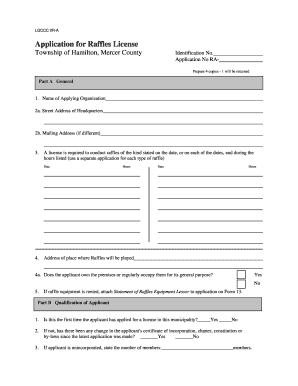
01. Edit your identity form application online
Type text, add images, blackout confidential details, add comments, highlights and more.

Type text, add images, blackout confidential details, add comments, highlights and more.

Draw your signature, type it, upload its image, or use your mobile device as a signature pad.

Send affidavit identity pdf via email, link, or fax. You can also download it, export it or print it out.
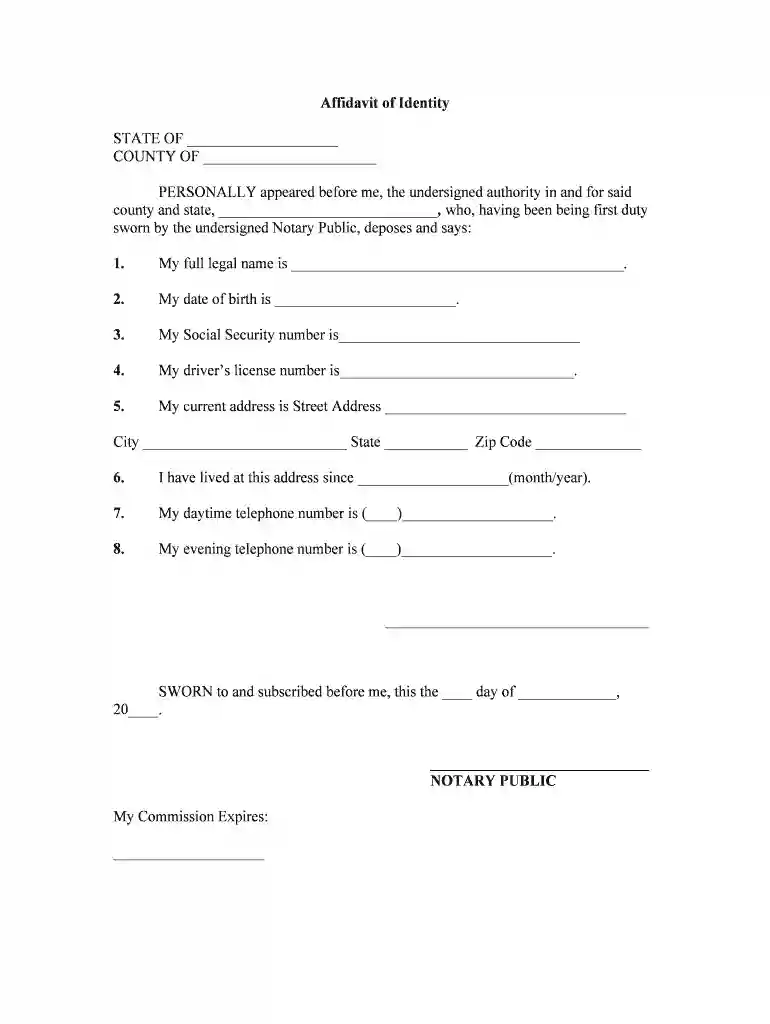
An identity form application is a document designed to verify a person's identity by gathering a variety of personal information. This form may include details such as a full name, date of birth, Social Security number, driver's license number, and current address. Often, it is used in legal or official settings, where accurate identification is imperative, such as when dealing with government agencies, financial institutions, or legal matters.
Identity forms are more comprehensive than mere identification cards as they can serve as legal declarations that are sometimes sworn before a Notary Public. In the United States, these applications are a crucial part of everyday bureaucratic processes and legal documentation requirements.
Using an identity form application involves filling out each section with accurate personal details. It is crucial to ensure all information is current and correctly inputted to avoid issues. Follow these general steps:
Read Instructions Carefully: Begin by understanding what information is requested and the purpose of the form. Each section may have specific requirements.
Complete Personal Information: Fill in fields like name, address, and date of birth. Double-check for accuracy.
Include Identification Numbers: Provide details such as your Social Security number or driver's license number.
Additional Details: Depending on the application, you might need to provide information about your employment or education background.
Sign and Date: Ensure you sign the form. For legal validity, it must be complete.
Submission: Submit the form as instructed, whether through mail, online, or in-person, possibly after it is notarized.
Obtaining an identity form application can vary based on what entity requires it. Common methods include:
Government Websites: Many identity forms are available on official government sites for free download.
Local Government Offices: Forms can often be collected from municipal buildings or departments.
Financial Institutions: Banks or financial organizations may provide specific identity forms for account creation or transactions.
Online Portals: Various legal document services offer downloadable versions for a fee.
In each of these cases, ensure that you access the correct version relevant to your state or situation.
To complete an identity form application, meticulously follow these steps to ensure that all necessary information is entered and the document is valid:
Gather Required Documents: Before starting, have all necessary documents, such as identification and proof of residence, on hand.
Review Requirements: Confirm the precise requirements of each field, especially those needing official documentation.
Fill Out Form Sections: Complete each section carefully, ensuring no fields are left blank unless specified as optional.
Check for Errors: Proofread for any inaccuracies or missing information to avoid processing delays.
Notarization: If required, schedule an appointment with a Notary Public to officially witness the signing of your form.
Submit the Form: Follow the submission instructions to hand in the form via the specified method, keeping a copy for your records.
Identity form applications are used by a wide range of individuals and entities, including:
Individuals: For personal identification purposes, such as applying for a loan or a government service.
Businesses: Corporations may use these forms for employee verification or client onboarding processes.
Legal Professionals: These forms often hold importance in legal proceedings to establish identity claims.
Government Agencies: To administer services and verify the identity of citizens or residents within their jurisdiction.
Each user type may have unique requirements, making the form a versatile tool for ensuring accurate identification across various scenarios.


The identity form application serves multiple legal purposes:
Verification of Identity: Official organizations, such as banks or government departments, use it to verify identities accurately.
Legal Declarations: Sworn affidavits of identity may require these forms as supporting documents.
Fraud Prevention: Ensures the person presenting the form is who they claim to be, reducing identity theft risks.
Record Keeping: Provides a paper trail for transactions, applications, or processes that require verified identity proof.
Understanding the legal implications of providing false information on these forms is vital, as inaccuracies can lead to legal repercussions or denial of service.
An identity form application typically includes several essential components:
Personal Information: Name, date of birth, and address.
Identification Numbers: Such as Social Security numbers or driver's license numbers.
Contact Information: Phone numbers and email addresses where applicable.
Signatures: The applicant's signature and, in some cases, a Notary Public's notarization to validate authenticity.
Additional Documentation: Sometimes, attachments like photocopies of ID cards or documents that confirm the provided information are necessary.
Each element is crucial for the comprehensive validation process expected by organizations requiring this form.
When filling out an identity form application, certain documents are usually needed to support the information provided:
Identification Proof: Passport, driver's license, or state ID card.
Proof of Residence: Utility bill, lease agreement, or bank statement.
Social Security Card: To confirm the Social Security number.
Supporting Documents: Any other documents relevant to the application, such as birth certificates or employment verification.
Providing these documents ensures that the form is complete and processes smoothly, avoiding potential delays or rejections.
We've got more versions of the identity form application form. Select the right identity form application version from the list and start editing it straight away!
| Versions | Form popularity | Fillable & printable |
|---|---|---|
| 2020 | 4.8 Satisfied (43 Votes) |
At DocHub, your data security is our priority. We follow HIPAA, SOC2, GDPR, and other standards, so you can work on your documents with confidence.