






Definition and Meaning
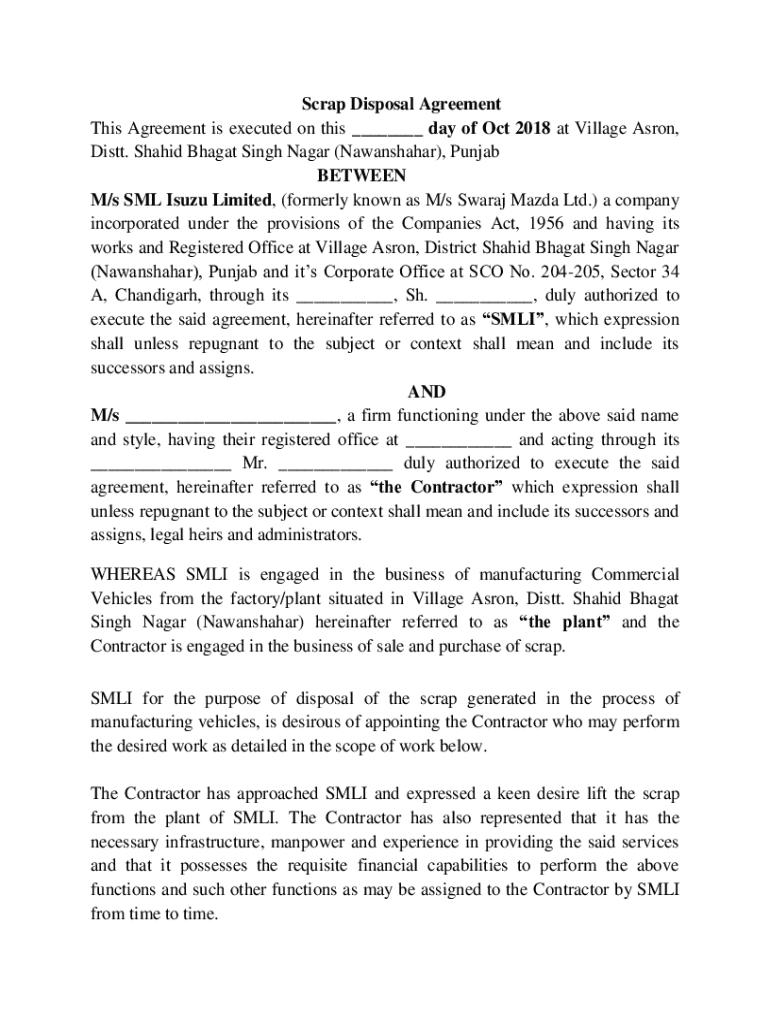
A scrap sale agreement format in India is a legal document used to formalize the sale and purchase of scrap materials between two parties. This agreement outlines the terms and conditions under which the scrap is sold, ensuring clarity and mutual understanding for both the seller and buyer. This document is essential for avoiding disputes and maintaining a transparent record of the business transaction. Typically, the agreement includes details about the type of scrap, its quantity, price, payment terms, and delivery schedules. It may also cover quality standards, loading and unloading responsibilities, and any applicable taxes or duties.
Importance of a Scrap Sale Agreement
- Protection for Both Parties: Clearly defines roles and responsibilities, reducing potential for disputes.
- Clarity in Transactions: Provides detailed insights into the terms of the sale, fostering mutual understanding.
- Legal Compliance: Ensures adherence to regulatory requirements and safeguards against potential legal issues.
Key Elements of the Scrap Sale Agreement
Critical components of this agreement include clauses that define the scope of the transaction and protect the interests of involved parties. The main elements are:
Description of Scrap
- Type and Quality: Specify the kind of scrap material being sold, such as metal, plastic, or paper, and the quality standards to be met.
- Quantity: Clearly mention the quantity in terms of weight or number of units.
Pricing and Payment Terms
- Price per Unit: State the agreed price per unit or ton, and the total price based on the quantity.
- Payment Conditions: Outline payment methods, timelines, and any advance payments or deposits required.
Delivery and Transportation
- Delivery Schedule: Specify delivery dates and locations.
- Transportation Responsibilities: Define which party will handle shipment logistics.
Steps to Complete the Scrap Sale Agreement
Completing a scrap sale agreement involves several steps to ensure accuracy and completeness. Here's a typical process:
- Drafting the Agreement: Start by drafting a generic template that covers all essential elements unique to your transaction.
- Negotiation: Discuss terms with the buyer/seller and make necessary alterations to the draft.
- Legal Review: Have a legal expert review the document for compliance with Indian laws and industry standards.
- Signatures: Both parties sign the agreement to validate the terms and assume respective obligations.
Detailed Checklist
- Verify the identification information of both parties.
- Ensure all clauses and terms are mutually agreed upon.
- Include contingencies for unforeseen circumstances, like natural disasters or sudden market changes.
Important Terms Related to the Scrap Sale Agreement
Understanding specific legal and industry-specific jargon is essential for both parties:
- Force Majeure: Conditions that excuse the parties from liability due to unforeseen events beyond their control.
- Letter of Credit: A financial instrument provided by buyer's bank to assure payment to the seller.
- Penalty Clause: Terms that penalize either party for non-compliance with the agreement, such as late delivery or payment defaults.
Usage in Contracts
- These terms are included to create clear mechanisms for managing risks and ensuring fair recourse in case of defaults or disagreements.
Legal Use of the Scrap Sale Agreement
In India, a scrap sale agreement is legally binding and enforceable in a court of law if it meets necessary statutory requirements.
Compliance Requirements
- Ensure compliance with the Indian Contract Act, 1872.
- Check for industry-specific regulations like the hazardous waste management rules when dealing with certain types of scrap.
State-Specific Rules for Scrap Sale Agreements
While the overall structure of the agreement remains consistent, specific stipulations may vary from state to state in India due to local laws or industry practices.
Example Differences
- Taxes and Levies: State-specific taxes could alter the total cost of scrap; some states have unique environmental levies.
- Transportation Norms: Regulations regarding transportation of scrap material can vary.
Examples of Using the Scrap Sale Agreement
Practical examples help illustrate common scenarios where this document is applied:
- Metal Scrap Deals: Companies engaged in the recycling of industrial waste may use this agreement to outline recurring monthly deliveries of steel scrap.
- E-Waste Transactions: Businesses working with electronic waste often set conditions regarding disposal and recycling responsibilities within their agreements.
Who Typically Uses the Scrap Sale Agreement
This agreement is primarily used by businesses that generate or recover scrap materials and those engaged in buying this material for recycling or reselling purposes.


Typical Users Include
- Manufacturers: Especially those with high waste output, like automobile or electronics manufacturers.
- Recyclers and Scrap Traders: Companies that specialize in recycling and reselling scrap materials.