






Definition and Meaning
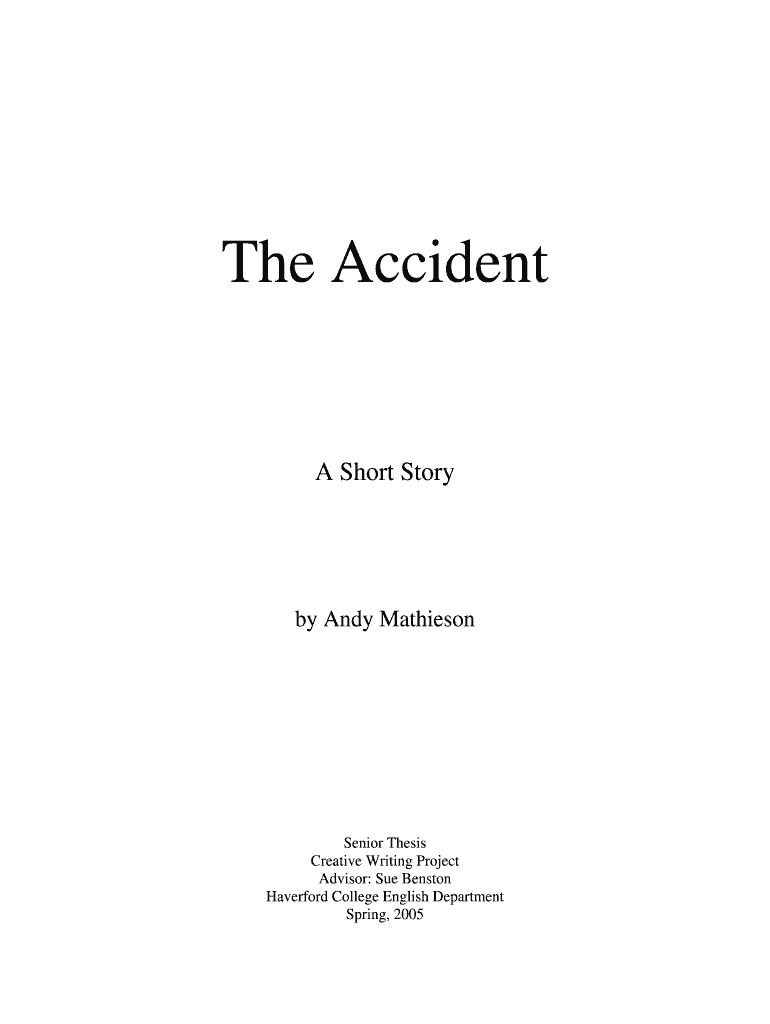
"The Accident - Senior Theses, Papers and Projects - Haverford College - triceratops brynmawr" refers to a collection of academic work conducted at Haverford College, focusing on the fictional piece "The Accident" by Andy Mathieson. This collection includes theses, papers, and projects that analyze and interpret themes such as guilt, responsibility, and redemption within the narrative. The association with "triceratops brynmawr" may point to the cross-collaboration or referencing within academic contexts between Haverford and Bryn Mawr College.
How to Use the Academic Collection
To engage with this collection, start by identifying the specific research areas that interest you the most. You can delve into different perspectives and analyses presented by students on "The Accident." Utilize these documents as a resource for understanding the depth of the narrative, its themes, and character developments. Accessing supplementary materials or faculty interpretations could further enrich your understanding.
Practical Use Cases
- Research Enhancement: Supplement your existing research with insights from this comprehensive collection.
- Literary Analysis: Gain diverse analytic perspectives for your literary criticism essays or projects.
- Coursework Support: Utilize these projects to aid in coursework that requires analysis of specific literary themes.
How to Obtain the Collection
The collection can potentially be accessed through Haverford College’s library system or digital archives. Check if the library offers electronic access for remote viewing or specific sessions for physical review.
Accessing Digital Resources
- Library Website: Visit the Haverford College library portal to search for digital records.
- Inter-Library Options: If enrolled in a partner institution, utilize inter-library loan systems.
Steps to Complete the Academic Document
Completing an academic document within this collection involves thorough research and structured writing. When contributing:
- Select a Focus: Choose a specific theme or character to analyze.
- Conduct In-Depth Research: Use existing college resources or external scholarly articles.
- Outline Your Paper: Create a detailed outline to organize your thoughts and research.
- Draft and Revise: Write your paper, following academic standards, and revise thoroughly.
Specific Tasks
- Gather supporting literature to bolster your argument.
- Cite references according to academic guidelines.
Who Typically Uses This Collection
This collection is commonly used by:
- College Students: Those studying literature or enrolled in related courses at Haverford College or Bryn Mawr College.
- Academic Researchers: Scholars conducting in-depth analyses of literary works and their social implications.
- Instructors and Professors: Faculty members preparing course materials or conducting literary research.
Key Elements of the Collection
Several core elements define "The Accident" collection:
- Character Studies: Focused examinations of character developments and their psychological motivations.
- Thematic Analyses: In-depth look into central themes such as redemption and guilt.
- Narrative Structure: Evaluation of storytelling techniques used within the narrative.
Supplementary Materials
- Critical essays on medieval influences.
- Insights into historical contexts affecting character actions.
Important Terms Related to "The Accident"
Understanding specific terms enhances comprehension of the themes within "The Accident":
- Redemption: The act of seeking forgiveness or making amends.
- Guilt: A feeling of responsibility or remorse from an offense.
- Responsibility: A duty or obligation to perform or complete a task.
Examples of Using the Academic Collection
Explore ways to leverage this collection effectively:
- Conduct a Comparative Study: Analyze "The Accident" alongside other works by Mathieson.
- Develop Multimedia Projects: Create presentations or videos that explore themes and character arcs.
Group Project Ideas
- Collaborative thesis focusing on "The Accident’s" portrayal of societal norms.
- Workshop discussions on moral complexities depicted in the story.