







Definition and Meaning
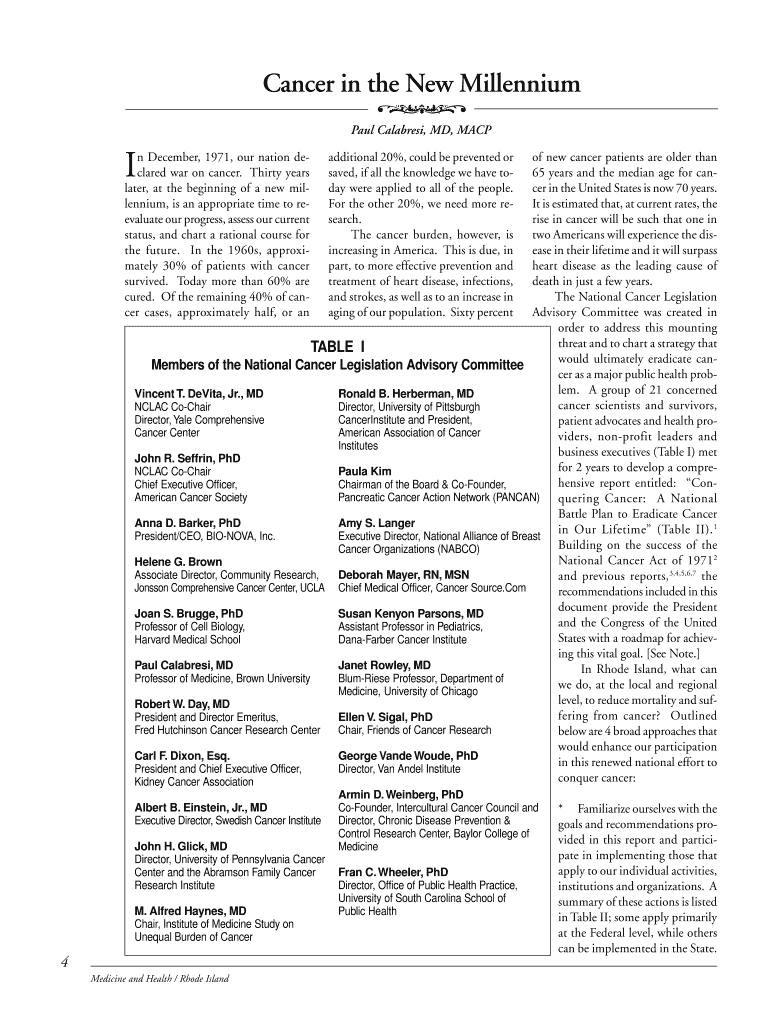
"Cancer in the New Millennium" is a reflective document authored by Paul Calabresi, MD, MACP, which delves into the advancements and ongoing challenges in cancer treatment since the official declaration of the 'war on cancer' in 1971. It emphasizes the progress in survival rates, which have notably improved from approximately 30 percent to over 60 percent. This document provides a comprehensive overview of the current landscape of cancer treatment and research initiatives.
How to Use "Cancer in the New Millennium"
This document serves as an informational guide for both medical professionals and policymakers. It outlines pivotal challenges and strategies in combating cancer. Stakeholders can leverage this resource to understand the historical context of cancer treatment progress and to explore contemporary strategies aimed at further improving patient outcomes.
Key Elements of "Cancer in the New Millennium"
The document highlights critical components necessary for addressing cancer in the contemporary era. This includes:
- Emphasis on research to uncover new treatment methods.
- Discussions on improving access to cancer care to ensure equitable treatment across demographics.
- Strategies for effective prevention measures to lower the incidence of cancer.
These elements are crucial in understanding the comprehensive approach proposed within the document to manage and mitigate the impact of cancer.
Steps to Complete Understanding of the Document
- Initial Review: Start by reading the introductory sections to grasp the overall goals and historical context provided by the document.
- Focus on Key Areas: Dive deeper into sections related to specific cancers like lung cancer, breast cancer, and colorectal cancer.
- Analyze Proposed Strategies: Pay close attention to the proposed strategies by the National Cancer Legislation Advisory Committee for a holistic understanding of future directions.
- Review Statistical Data: Examine the statistical data in the document to understand how survival rates and burden have shifted over time.
Who Typically Uses "Cancer in the New Millennium"
The primary users of this document include medical researchers, healthcare policymakers, oncologists, and students in medical fields. Additionally, advocacy groups focused on cancer awareness and patient support may find it useful for forming evidence-based campaigns and initiatives.
Important Terms Related to "Cancer in the New Millennium"
Understanding the technical terminology within the document is essential. Terms like "survival rates," "national cancer strategy," and "research funding" are recurrent and crucial for grasping the document's recommendations and focus areas.
Legal Use of "Cancer in the New Millennium"
While the document itself is informational, it carries weight in legislative and policy-making contexts. It can be used to support arguments for increased funding and resource allocation towards cancer research and treatment facilities in legislative sessions.
Examples of Using "Cancer in the New Millennium"
Healthcare advocacy groups have cited information from this document to push for policy changes that encourage more funding into cancer research. Similarly, medical institutions use it to guide curriculum updates to incorporate recent advancements in cancer treatment strategies into medical education.
Required Documents for In-Depth Analysis
To fully appreciate and analyze the recommendations in "Cancer in the New Millennium," accessing supplementary documents like the National Cancer Legislation Advisory Committee's proposals and reports on recent cancer research funding would be beneficial. These would provide contextual support and additional depth to the insights in the main document.




