







Definition and Meaning
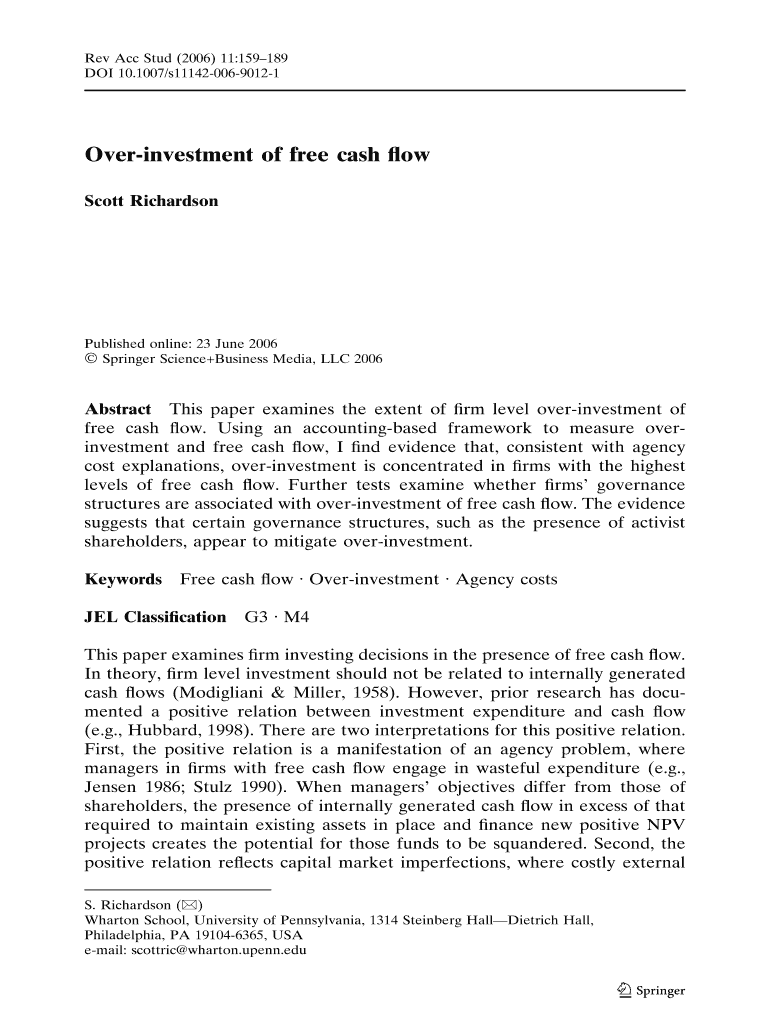
Understanding the concept of over-investment of free cash flow is essential within financial analysis and corporate governance. This term refers to a scenario where a firm invests its available free cash flow excessively, leading to inefficient allocation of resources. Often linked to agency cost theories, it suggests that managers may engage in unnecessary investments that do not add proportional value to the firm. This problem is commonly associated with publicly traded companies in the U.S., where governance plays a crucial role in controlling such practices.
Key Elements of Over-Investment of Free Cash Flow
Several elements contribute to the phenomenon of over-investment of free cash flow. High levels of available cash without a structured investment plan can lead to decision-making errors. Managerial incentives might not always align with shareholders' interests, prompting investments that serve managerial goals more than the firm's profitability. Effective governance structures, such as active shareholders, can aid in monitoring and evaluating investment decisions, reducing the likelihood of over-investment.
Governance Mechanisms
- Activist Shareholders: They can influence decision-making by holding managers accountable.
- Board Oversight: A balanced board can provide insights and oversight over investment choices.
- Executive Compensation: Aligning compensation with performance metrics related to investment efficiency can deter over-investment.
Examples of Using Over-Investment of Free Cash Flow
Several real-world scenarios illustrate over-investment issues:
- A tech firm with excessive cash reserves invests in unrelated ventures, affecting its core business focus.
- A manufacturing company expands its production without analyzing market demand, leading to increased costs without additional revenues.
These examples underscore the need for strategic planning and governance to manage free cash flow effectively.
Why Should You Understand Over-Investment of Free Cash Flow
Grasping the reasons behind over-investment of free cash flow can help stakeholders mitigate risks associated with inefficient investments. It enlightens shareholders about potential losses and informs governance reforms to align managerial actions with shareholder interests. Companies aware of the implications can devise strategies to balance investment activities, ensuring that all expenditures yield adequate returns.
Who Typically Faces Over-Investment Issues
Over-investment issues generally affect organizations with ample free cash flow and less rigorous governance frameworks. Large publicly traded companies in the U.S., especially those experiencing rapid growth or with high liquidity levels, are prone to this problem. This is because such firms may have fewer restrictions on spending and often possess varied investment opportunities that can distract from core business activities.
Important Terms Related to Over-Investment of Free Cash Flow
Understanding related terms clarifies the intricacies of over-investment:
- Agency Costs: Expenses related to resolving conflicts between managers and shareholders.
- Governance Structures: Frameworks that direct corporate strategies and financial practices.
- Capital Allocation: The process of budgeting financial resources for different business areas.
Business Types That Benefit Most from Understanding Over-Investment
Certain business types stand to gain from addressing over-investment issues. Firms in the technology and healthcare sectors, where innovation and strategic investment are paramount, can benefit significantly. Proper management of free cash flow can lead to better research and development outcomes, and improved product innovation in these sectors.
Who Issues Guidelines on Free Cash Flow
While there isn't a specific regulatory body that oversees free cash flow within corporations, several standards exist to guide firms. Organizations such as the Financial Accounting Standards Board (FASB) provide frameworks that influence how companies report and assess free cash. Financial governance and advisory firms often offer best practices for managing free cash flow efficiently, helping to prevent over-investment.




