






Definition & Meaning
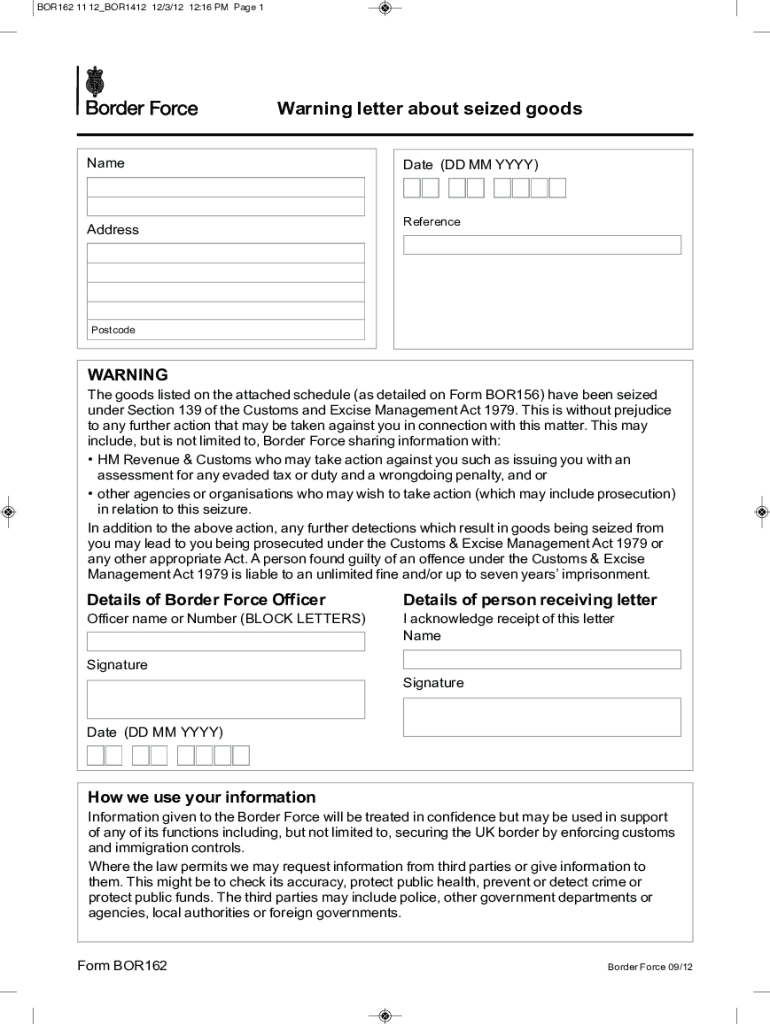
A warning letter regarding seized goods, often referred to within the context of WhatDoTheyKnow, is a formal document issued by customs authorities when goods are confiscated. It is typically sent to inform the recipient of the seizure, providing details about the goods in question and the legal basis for the seizure under the Customs and Excise Management Act 1979. The letter serves as a critical point of contact between the authorities and the individual, outlining potential consequences and further steps that might be taken, such as prosecution, significant fines, or imprisonment.
Key Elements of the Warning Letter
The warning letter contains several crucial elements that must be clearly understood:
- Identification of Goods: Detailed description of the confiscated items.
- Legal Basis: Reference to the specific laws and regulations violated, primarily the Customs and Excise Management Act 1979.
- Consequences: Information on potential penalties, which may include fines, imprisonment, or additional legal action.
- Next Steps: Advice on how to respond to the letter, including the possibility of appealing the seizure.
The structure and content of this letter are essential for ensuring that the recipient understands the gravity of the situation and the implications of non-compliance.
Steps to Complete the Process
Completing the process of responding to a seizure warning involves several steps:
- Review the Letter: Carefully read every part of the letter to ensure full understanding of the contents.
- Gather Evidence: Collect any relevant documentation or evidence that may support your position.
- Consult Legal Advice: Seek advice from a legal expert familiar with customs and excise laws.
- Respond Timely: Write and send a response within any given deadlines, ensuring all required documentation is attached.
- Follow up: Keep track of any correspondence from the issuing authority and respond accordingly.
This structured approach helps ensure that all necessary actions are taken to address the issue appropriately.
Important Terms Related to the Warning Letter
Understanding the terminology used in the warning letter is crucial:
- Seizure: The act of legally taking possession of goods due to a suspected violation.
- HM Revenue & Customs: The agency responsible for the collection of taxes and duties, as well as enforcing customs laws in the UK.
- Prosecution: Legal proceedings against the individual for suspected violations related to the seized goods.
- Fines and Penalties: Financial or other penalties imposed as a result of legal violations.
These terms often define the legal context and set the stage for understanding obligations and potential outcomes.
Legal Use of the Warning Letter
The warning letter serves several legal purposes:
- Notification: Officially informs the recipient of the seizure and the reasons behind it.
- Deterrence: Warns against potential future violations through the communication of severe penalties.
- Compliance Enforcement: Ensures adherence to customs laws by outlining what corrective actions need to be taken.
The letter is an integral part of both legal enforcement and compliance processes within customs law.
Examples of Using the Warning Letter
Real-world scenarios where a warning letter about seized goods is issued include:
- Importing Prohibited Items: Someone importing goods that are banned or restricted receives a warning letter.
- Undervaluing Imports: A recipient attempts to misdeclare the value of goods to avoid taxes and duties.
- Missing Documentation: Goods are seized because the necessary documentation was not provided at the time of import.
These examples highlight various situations where individuals might encounter such a letter, underlining the importance of compliance with customs regulations.
Penalties for Non-Compliance
Failing to comply with the instructions outlined in the warning letter can result in:
- Monetary Fines: Significant financial penalties imposed by the authorities.
- Legal Prosecution: Possible charges leading to court proceedings and criminal records.
- Incarceration: For severe violations, imprisonment is a potential outcome.
Understanding these possible consequences underscores the importance of acting on such a letter promptly and correctly.
Form Submission Methods
There are several ways to submit a response to a warning letter:
- Online: Through the official customs website or email, if specified.
- Mail: Sending a written response to the address provided in the letter.
- In-Person: Visiting a local customs office to provide documentation and discuss the case.
Each method has specific requirements for acceptance, and the chosen method should align with the instructions provided in the warning letter.
Software Compatibility
Handling these forms and accompanying documentation is streamlined with various software:
- DocHub: Facilitates document editing, signing, and form management.
- Microsoft Office Suite: Useful for drafting responses and managing related documents.
- PDF Editors: Essential for annotating and preparing digital responses if required by the customs authority.
These software solutions enhance the efficiency and accuracy of managing the related administrative tasks.