






Definition and Meaning of Costume Plot (Preliminary Notes) - 0 tqn
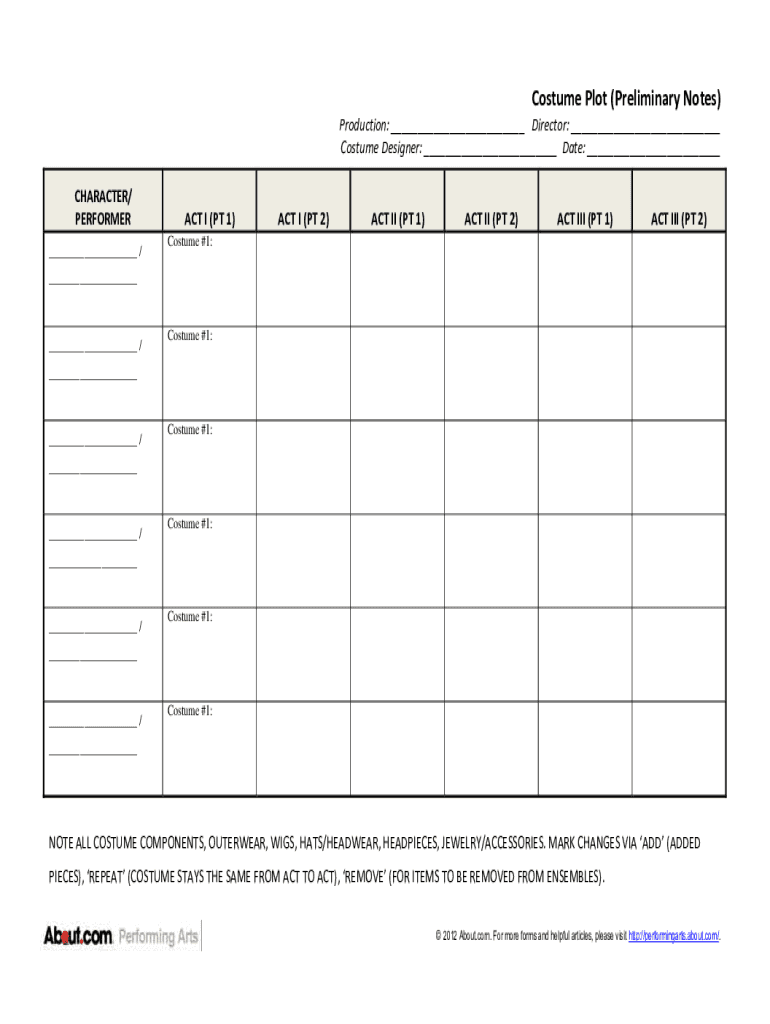
A costume plot in theatrical productions outlines the wardrobe requirements for each character across different scenes and acts. It serves as a blueprint detailing the components needed, such as outerwear, wigs, and accessories. The "Costume Plot (Preliminary Notes) - 0 tqn" specifically refers to the initial draft of this framework, providing preliminary notes essential for costume planning in productions. It helps the costume designer organize and plan the necessary costume changes efficiently, using markers like 'ADD', 'REPEAT', or 'REMOVE' to signify changes in the wardrobe.
How to Use the Costume Plot (Preliminary Notes) - 0 tqn
-
Review Character Details: Begin by familiarizing yourself with the characters in the script. Understand their personalities, roles, and transformations in the storyline to ensure precise costume choices.
-
Scene Analysis: Examine each scene to determine the specific setting, time period, and events that might influence costume requirements. Pay attention to script notes that may suggest particular wardrobe actions like quick changes or thematic colors.
-
Plot Costume Elements: Use the form to outline costume essentials for each character per scene. List out items like outerwear, accessories, etc., noting specific requirements for each.
-
Update with Revisions: As production develops, continually update the preliminary notes to reflect changes, additions, or budget adjustments. This ensures the entire production team is aligned on the costume plan.
Key Elements of the Costume Plot (Preliminary Notes) - 0 tqn
- Character Identification: Each entry begins with the character's name for whom the costume details apply.
- Scene and Act: Specify the scene and act the costume is designated for, ensuring clarity on when the outfit is used.
- Costume Components: Detail each component such as clothing items, wigs, and accessories required for the complete look.
- Change Indicators: Use terms like 'ADD', 'REPEAT', or 'REMOVE' to denote changes from previous costumes, aiding in visual continuity.
Steps to Complete the Costume Plot (Preliminary Notes) - 0 tqn
-
Preliminary Script Review: Begin by thoroughly reading the script to understand every character's journey and wardrobe needs.
-
Character Costume Brainstorming: With the script context in mind, brainstorm potential costume options for each character, considering historical accuracy and character nuances.
-
Populate the Plot Form: Enter the brainstormed costume details into the plot form, starting with the first act and character, and progress scene by scene.
-
Designation of Changes: Mark costume changes using indication terms to maintain consistency and track alterations efficiently.
Who Typically Uses the Costume Plot (Preliminary Notes) - 0 tqn
This plot form is primarily utilized by:
- Costume Designers: To organize and plan the costume needs for a production seamlessly.
- Stage Managers: To coordinate costume logistics and ensure all elements are ready for each performance.
- Directors and Producers: To review and approve the visual style and budget considerations associated with the costumes.


Important Terms Related to Costume Plot (Preliminary Notes) - 0 tqn
- Quick Change: A speedy costume change that requires efficiency and sometimes assistance backstage.
- Period Costumes: Clothing that is reflective of a specific historical era pertinent to the production's setting.
- Continuity: Consistency in costume presentation across scenes and acts to maintain visual harmony.
Legal Use of the Costume Plot (Preliminary Notes) - 0 tqn
While there are no legal restrictions tied strictly to utilizing a costume plot form, adhering to copyright laws when using proprietary sketches or patterns is crucial. Ensure all costume designs comply with performance licensing agreements, and acquire necessary permissions when using recognizable intellectual property in costumes.
Examples of Using the Costume Plot (Preliminary Notes) - 0 tqn
- Historical Drama: When depicting a 19th-century setting, the plot details costumes such as corsets and bonnets, ensuring period accuracy.
- Modern Comedy: In a contemporary setting, the plot specifies casual clothing and iconic color motifs for comedic effect.
- Fantasy Adventure: Costumes include elaborate wigs and armor components, with the plot ensuring coherence across fantastical elements.
Digital vs. Paper Version of the Costume Plot (Preliminary Notes) - 0 tqn
In today's digital age, costume plots can be managed either as digital documents or on paper:
- Digital Platform: Allows for easier updates, sharing, and collaboration, particularly beneficial for large productions with frequent design revisions.
- Paper Version: Offers a tangible method that can be preferred for quick annotations during rehearsals or production meetings.