






Definition & Meaning
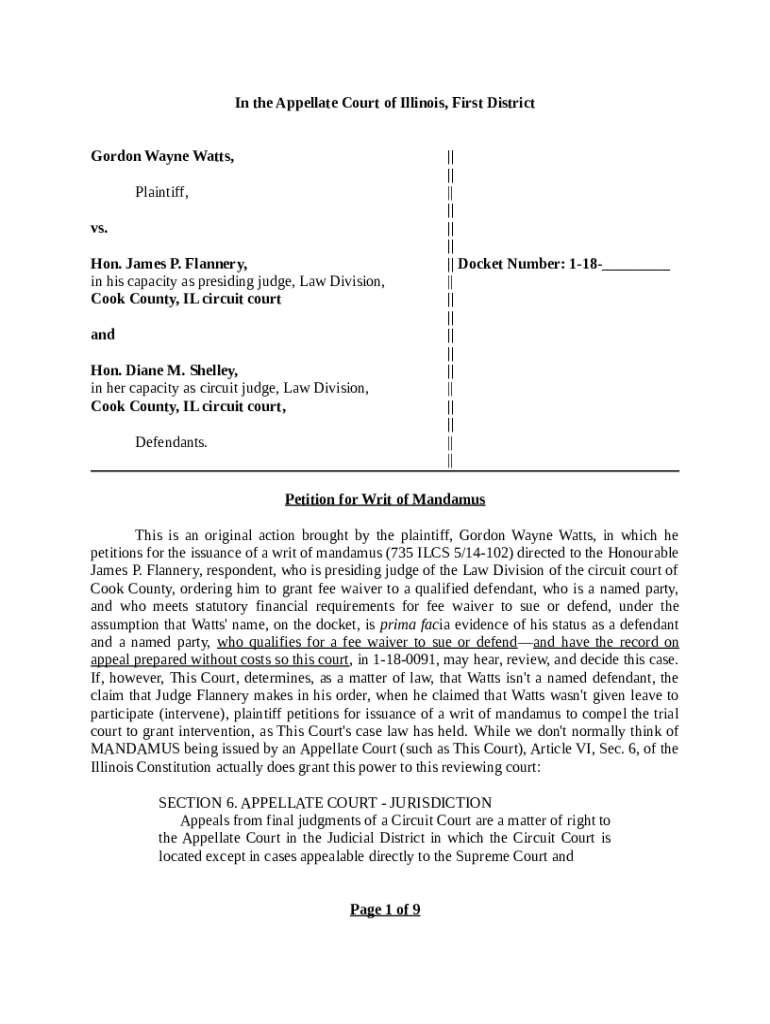
A "Petition for Writ of Mandamus" is a formal request directed to a court, seeking to compel a government official, agency, or lower court to fulfill a mandatory duty required by law. Mandamus is a unique legal instrument generally used when no other adequate remedy is available. It is crucial for situations where a lower court or public authority neglects or refuses to execute its legally obligated responsibilities. This writ plays an essential role in maintaining the proper function and jurisdictional boundaries of governmental and legal entities.
How to Use the Petition for Writ of Mandamus
To effectively use a Petition for Writ of Mandamus, certain criteria must be met. Petitioners must demonstrate a clear legal right to the action requested, and that there is no other adequate legal remedy available. The process begins with drafting the petition, which should include a concise statement of facts, legal arguments, and the specific relief sought. It is imperative to present compelling evidence and legal grounds for the necessity of the writ. Once drafted, the petition is filed in the appropriate appellate court for consideration. Successful petitions often require detailed attention to procedural rules and persuasive argumentation.
Steps to Complete the Petition for Writ of Mandamus
-
Research and Preparation
- Identify the legal duty being ignored or inadequately performed.
- Gather all relevant case laws and statutes supporting your argument.
-
Drafting the Petition
- Begin with a factual statement outlining your case.
- Clearly state the legal basis for the request.
- Request the specific action you wish the court to compel.
-
Filing the Petition
- File the petition with the appellate court having jurisdiction.
- Ensure compliance with all procedural requirements, such as service copies to all parties involved.
-
Await the Court’s Decision
- The court may require oral arguments or additional briefs.
- The decision will either grant or deny the writ based on the petition's merits.
Who Typically Uses the Petition for Writ of Mandamus
The petition is predominantly used by individuals or legal entities involved in court cases where a public official or lower court is perceived to be unlawfully abstaining from performing its statutory duties. It is often utilized by attorneys representing clients in complex legal disputes, where judicial inaction or incorrect application of law affects the outcome of a case. Additionally, corporations may resort to a writ of mandamus against regulatory agencies that fail to issue permits or licenses necessary for operations.


Key Elements of the Petition for Writ of Mandamus
- Statement of Facts: This section outlines the events and circumstances prompting the petition.
- Legal Authority: Citations of relevant statutes, regulations, or case law that support the duty believed to be ignored.
- Petitioner’s Right: Evidence and reasoning illustrating the petitioner’s vested interest and direct impact of the action sought.
- Lack of Alternatives: Demonstration that no other legal remedies are available, justifying the need for mandamus.
- Requested Relief: A clear description of the specific action requested from the court.
Legal Use of the Petition for Writ of Mandamus
Legally, a Petition for Writ of Mandamus acts as a check within the judicial system, ensuring that public officials and lower courts adhere to legal mandates. It focuses on upholding procedural justice by mandating the fulfilment of uncompleted duties. This legal instrument is often used in administrative law, civil rights, and other contexts where a failure in the execution of duty may critically impact a party’s rights. Its high threshold means that it should be invoked sparingly and only when the circumstances unequivocally justify it.
State-Specific Rules for the Petition for Writ of Mandamus
State laws may have particular statutes or court rules governing the filing and adjudication of mandamus petitions. Requirements, such as the level of detail needed in the petition and the procedural steps for filing, can vary between states. For instance, some states might require additional affidavits or supporting documents as part of the petition filing. Understanding state-specific nuances ensures compliance with legal standards and improves the likelihood of a favorable outcome. Many state appellate courts provide guidelines or templates on their websites to aid in accurate filing.
Examples of Using the Petition for Writ of Mandamus
One example involves a city council refusing to issue a business license despite an applicant meeting all specified requirements. The business owner may file a Petition for Writ of Mandamus to compel the council to act legally and issue the license. In another scenario, a petitioner might seek mandamus against a court that has unlawfully withheld a decision on a crucial motion, to expedite judicial processes and prevent undue prejudice. Historical case studies often illustrate mandamus as a remedy for correcting judicial errors or enforcing clear rights.