




01. Edit your ct contrast consent form online
Type text, add images, blackout confidential details, add comments, highlights and more.

Type text, add images, blackout confidential details, add comments, highlights and more.

Draw your signature, type it, upload its image, or use your mobile device as a signature pad.

Send ct consent form via email, link, or fax. You can also download it, export it or print it out.
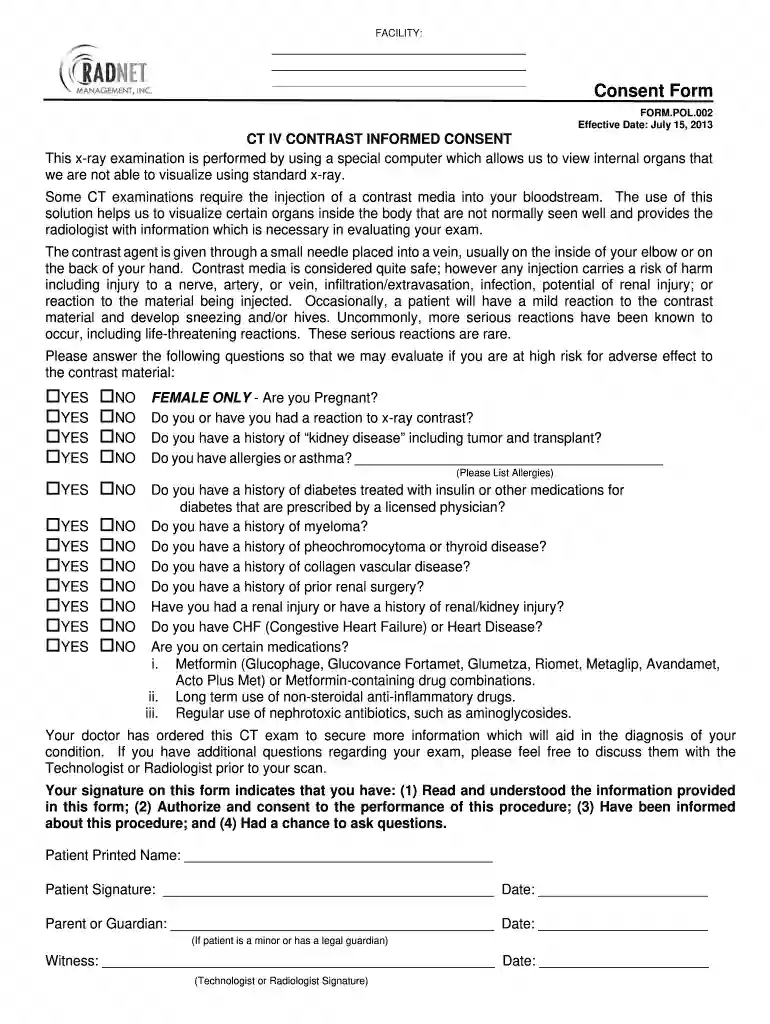
The CT contrast form, often known as the CT IV contrast examination consent form, is a critical document used in medical settings to ensure that patients are informed about the procedure involved in a CT scan with intravenous (IV) contrast. This form addresses essential elements such as the nature of the procedure, potential risks, and patient rights. It also collects necessary medical history and details, particularly regarding allergies and previous reactions to contrast media, which are vital for patient safety.
A comprehensive CT contrast form includes several important sections designed to ensure clear communication between healthcare providers and patients. Key sections typically encompass:
Completing the CT contrast form involves several steps to ensure accuracy and comprehensiveness:
Each step ensures that the form serves its purpose effectively, protecting both the patient and the medical facility.
Understanding the risks associated with the use of contrast media is critical for informed consent. Common risks include:
Healthcare providers should discuss these risks in detail, ensuring patients recognize potential outcomes before proceeding with the CT scan.
The CT contrast form must adhere to legal and ethical standards to ensure patient rights are respected. Important legal aspects include:
Compliance with these legal standards protects both patients and providers, fostering trust in the healthcare system.
The CT contrast form is primarily utilized in hospitals, outpatient imaging centers, and radiology clinics. Various scenarios highlight its essential role:
These use cases demonstrate the flexibility and importance of the CT contrast form across various medical scenarios.
In summary, the CT contrast form is an indispensable element of radiological practice, ensuring that patients provide informed consent for procedures involving IV contrast. It serves multiple functions, including facilitating communication between patients and healthcare providers, collecting vital medical history, and adhering to legal and ethical standards in patient care. Understanding the comprehensive depth of this form allows for better patient outcomes and fosters trust in medical practices focused on transparency and safety.
We've got more versions of the ct contrast consent form form. Select the right ct contrast consent form version from the list and start editing it straight away!
| Versions | Form popularity | Fillable & printable |
|---|---|---|
| 2013 | 4.8 Satisfied (172 Votes) |
At DocHub, your data security is our priority. We follow HIPAA, SOC2, GDPR, and other standards, so you can work on your documents with confidence.
Aug 22, 2025 Upon arrival to the department, the patient completes the Patient Screening Form For Iodinated Contrast. The RN/RT reviews the completed formRead more
WebAIM Contrast Checker: Verify text and button contrast. NVDA (Windows screen reader):. H = headings, D = landmarks, K = links, F = form fields. ProcurementRead more


