
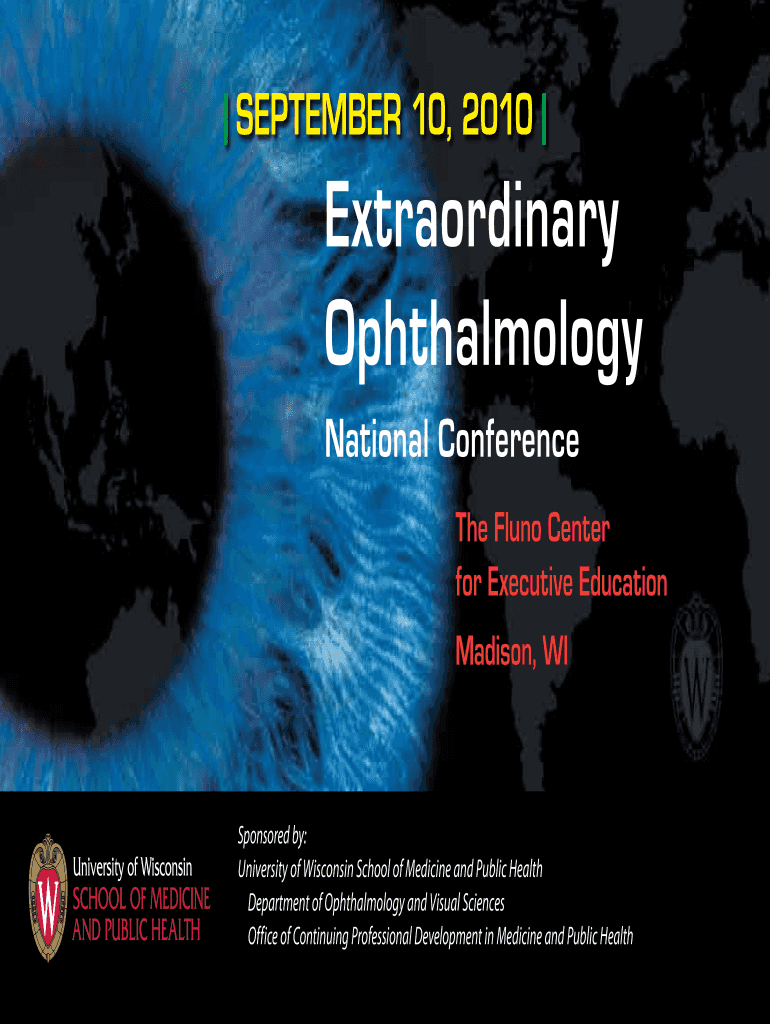







Definition & Meaning
The "Extraordinary Ophthalmology - University of Wisconsin Department - ophth wisc" document serves a specialized function in the field of ophthalmology. It is intended to facilitate crucial information exchange and operational processes among professionals within the University of Wisconsin's ophthalmology department. This document centralizes data related to groundbreaking advancements, clinical practices, and collaborative efforts in ophthalmology. Each section of the form is designed to capture specific information necessary for advancing research, educational endeavors, and clinical applications. As such, it acts as a pivotal resource for understanding and navigating the administrative and scientific landscape of ophthalmology at the University of Wisconsin.
How to Use the Extraordinary Ophthalmology Document
Utilizing this document demands a methodical approach to ensure all relevant information is captured accurately. Begin by familiarizing yourself with each section’s purpose. Researchers and clinicians often use this document to outline project proposals, record experimental protocols, and summarize findings from clinical trials. For those involved in educational roles, the document may be used to organize seminars, workshops, and symposia relating to vision science. By following structured guidelines provided within this resource, users can effectively align their contributions with departmental objectives, ensuring all communications adhere to the University of Wisconsin's precise standards.
Steps to Complete the Extraordinary Ophthalmology Document
-
Identification Information: Begin by filling out your personal and professional details, including your name, position, and contact information, to establish the source of the document.
-
Project Description: Provide a comprehensive overview of the project or research focus. Include objectives, methodologies, and anticipated outcomes.
-
Financial Details: If applicable, detail any financial aspects such as funding requirements or budget allocations. Include sponsors or grants that support the work.
-
Timeline and Milestones: Clearly lay out the timeline for your project, noting key milestones and expected completion dates.
-
Required Reviews and Approvals: Identify any necessary reviews or approvals needed from department heads or ethics committees.
-
Submission: Ensure all sections are complete and accurate before submitting through the appropriate channels as indicated in the document guidelines.
Who Typically Uses the Extraordinary Ophthalmology Document
This document is primarily used by individuals associated with the University of Wisconsin, particularly within its ophthalmology department. Faculty members, including professors and lecturers, utilize it to advance their teaching and research efforts. Graduate students and postdoctoral fellows may also engage with this document when contributing to research projects or preparing for presentations at conferences. Additionally, administrative staff find it useful for managing program logistics, funding applications, and compliance with academic and regulatory standards.


Key Elements of the Extraordinary Ophthalmology Document
- Research Components: Sections dedicated to ongoing research, detailed project descriptions, and evidence-based findings.
- Clinical Practices: Guidance on clinical protocols, patient care advancements, and treatment methodologies.
- Educational Initiatives: Information on courses, workshops, and training programs offered by the department.
- Funding Opportunities: Listings of available grants, scholarships, and financial resources essential for supporting research and educational activities.
- Compliance and Ethical Considerations: Guidelines for maintaining ethical standards in both research and clinical practice.
State-Specific Rules for the Extraordinary Ophthalmology Document
Because this document is utilized within the University of Wisconsin, it is tailored to comply with state-specific rules and regulations concerning medical research and practice. This includes adherence to Wisconsin’s state laws governing healthcare practices and patient privacy. Moreover, any research involving human subjects must comply with state-approved Institutional Review Board (IRB) guidelines to ensure that ethical standards are maintained. These state-specific elements are integral to designing research and education programs that align with local regulations and public health requirements.
Legal Use of the Extraordinary Ophthalmology Document
The legal use of this document lies in its capacity to streamline and legitimize university-related activities specific to ophthalmology. It facilitates compliance with academic standards, legal requirements for medical research, and ethical protocols. The document supports the transparent operation of department functions and serves as a formal record of research proposals, findings, and clinical advancements. As such, it plays a crucial role in ensuring that all activities within the department are both legally sound and compliant with wider academic and medical expectations.
Required Documents
To effectively utilize the "Extraordinary Ophthalmology - University of Wisconsin Department - ophth wisc" document, several supporting documents may be required. This could include:
- Research Proposals: Detailed plans outlining the scope, methodology, and objectives of any scientific inquiry.
- Institutional Review Board Approvals: Formal permissions for conducting studies involving human participants.
- Grant Applications: Documentation of financial support applied for or received to fund research initiatives.
- Curriculum Vitae: Current resumes showcasing the qualifications and expertise of individuals contributing to the project.
- Letters of Support: Endorsements from academic or corporate sponsors who advocate for the research or educational activity.




