






Definition and Meaning
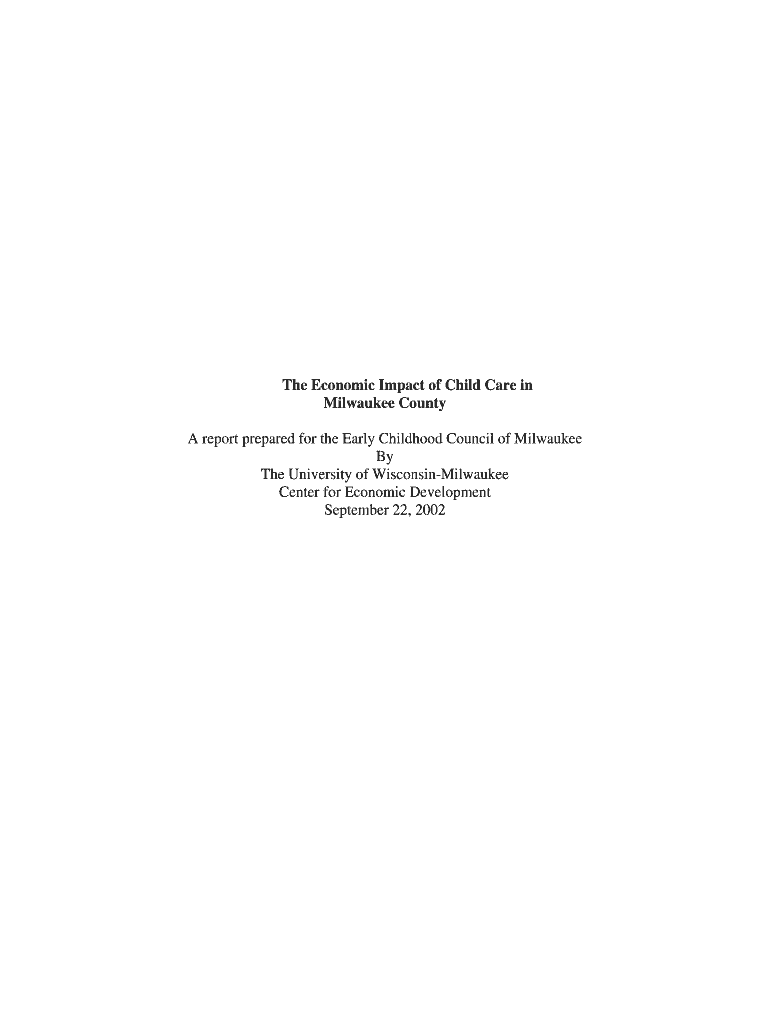
The Economic Impact of Child Care in Milwaukee, a detailed report from the University of Wisconsin-Milwaukee, examines the pivotal role of regulated child-care services in supporting the local economy. Through this analysis, it outlines how this industry generates significant gross receipts, supports thousands of jobs, and facilitates workforce participation for many parents. This comprehensive study not only highlights the economic footprint of child care but also brings attention to the sector's challenges, such as low wages and high turnover among workers.
Key Elements of the Report
- Industry Impact: Child care in Milwaukee generates about $203.7 million in gross receipts and supports over 7,200 jobs.
- Economic Contribution: The total economic impact is estimated at $351 million annually, emphasizing child care's influence on the local economy.
- Workforce Participation: Approximately 21,000 parents can participate in the labor force due to accessible child-care services.
- Challenges: The industry faces substantial issues like low wages and high turnover, affecting the quality of care provided.
Steps to Complete an Analysis Using this Report
- Gather the Report: Obtain the full study from the UW-Milwaukee Center for Economic Development.
- Review Key Data: Examine the gross receipts, job support figures, and total economic impact outlined in the report.
- Analyze Workforce Data: Consider the number of parents enabled to work due to child care.
- Assess Challenges: Look into the problems highlighted, such as employee wages and turnover rates.
- Consider Recommendations: Reflect on the report's suggestions for public investment and enhancements in worker compensation and training.
Who Typically Uses This Report
- Policy Makers: To understand the vital role of child care in economic planning and labor markets.
- Economists: For detailed metrics and analysis of local economic impacts.
- Social Workers: Who are interested in community well-being and family support systems.
- Educators: Looking to understand the broader implications of child care on society.
- Local Government Officials: To evaluate and strategize on funding and resource allocation.
Examples of Utilizing the Report
- Policy Formulation: Developing strategies for increasing public investment in child care.
- Community Programs: Designing initiatives that enhance worker compensation and improve service quality.
- Economic Studies: Academic research that further explores local economic ripple effects due to child care.
- Advocacy Campaigns: Supporting movements that seek better wages and work conditions for child-care workers.
Legal Use and Compliance
Understanding the legal framework guiding child-care operations in Milwaukee is essential for compliance. The report underscores the need for legislative support to address industry challenges, providing data that advocates may use to push for policy changes that support improved labor conditions and investment.
Required Documents for Relevant Analysis
- Full Report: The complete analysis from UW-Milwaukee to fully understand the economic impact.
- Local Economic Data: Additional statistics that reflect broader economic conditions in Milwaukee.
- Legislative Documents: Data on existing child-care policies for comprehensive legal compliance assessment.
Application Process and Approval Time for Funding
For organizations seeking funding or investment, understanding the application process and timeline for obtaining resources for child-care initiatives is critical. The report can be a supporting document in demonstrating the need and potential impact of investments, providing evidence for funding bodies.
Software Compatibility
Using productivity tools such as DocHub can facilitate the management of reports, allowing for easy editing, annotation, and sharing. This ensures comprehensive documentation of findings and enhances collaboration among stakeholders involved in community economic development and child-care advocacy.
Business Types that Benefit Most
- Child-Care Providers: Direct beneficiaries due to the potential for increased investment and support.
- Local Businesses: Indirect benefits through enhanced employee participation and overall economic stimulation.
- Non-Profits: Engaged in family support and child-care advocacy.
- Educational Institutions: That rely on child-care systems to support students and staff with children.
State-Specific Rules
Understanding Wisconsin-specific regulations governing child-care operations is vital for using this report effectively. This may involve consulting with legal experts or state guidelines for compliance and leveraging the report's findings to advocate for necessary changes at the state level.