







Definition & Meaning
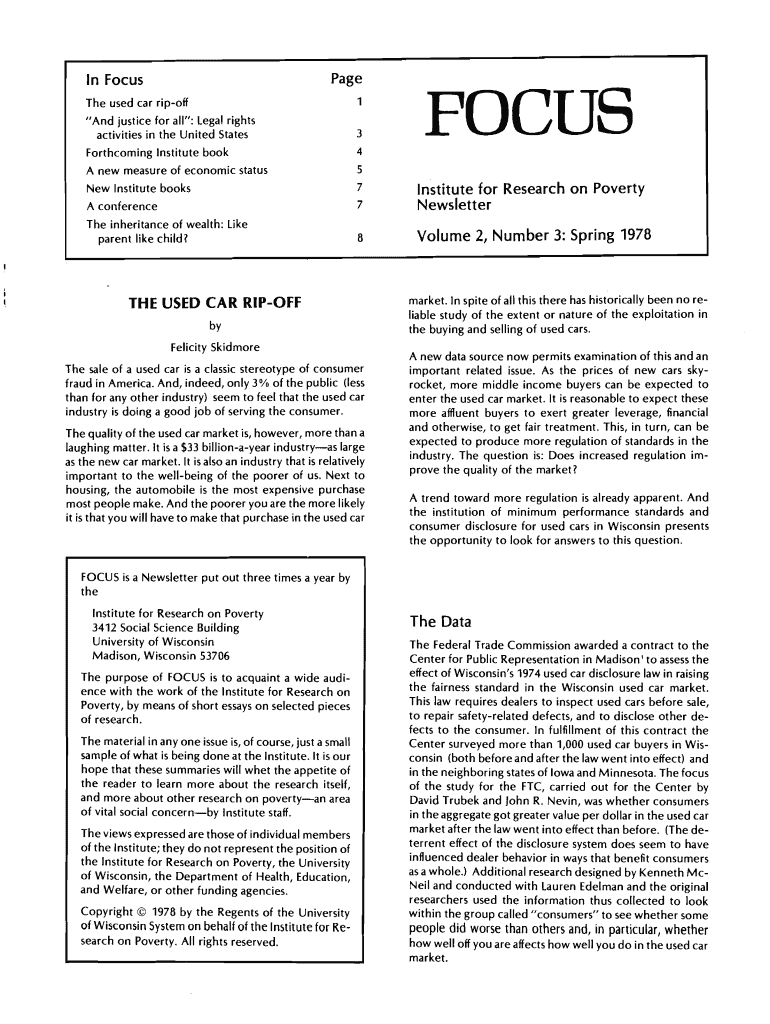
The used car rip-off refers to the experience of overpaying for a used car, a situation often faced by buyers with limited resources. This term highlights an issue particularly significant in discussions about economic disparities and consumer rights. "The used car rip-off - irp wisc" combines this concept with a specific focus on the implications of Wisconsin's 1974 used car disclosure law. This law aimed to create a more equitable market by mandating sellers to disclose certain information about the cars they sell. Despite improvements in transparency for all income levels, the law did not fully address the pricing disparities between economically disparate groups.
How to Use the The Used Car Rip-Off - irp wisc
Understanding how to utilize the insights from the used car rip-off context can guide consumers in making more informed purchasing decisions. Buyers are encouraged to educate themselves on car reporting options available in Wisconsin, ensuring sellers provide all necessary disclosures. When negotiating, it's beneficial to reference the disclosure law to affirm your right to transparent information. Engaging local consumer advocacy groups for additional resources and support can also enhance your negotiation leverage, ensuring a fair purchase price.
Steps to Complete the The Used Car Rip-Off - irp wisc
- Research the Car: Before approaching a seller, gather information about the car model and its average market price. Use online databases and local resources.
- Request Full Disclosures: According to Wisconsin law, sellers must disclose specific details. Ensure these are provided and validate them through third-party reports.
- Negotiate the Price: Use the information from your research and disclosures as leverage to negotiate a fair price.
- Seek Expert Advice: If unsure, consult with a consumer rights lawyer or a financial advisor familiar with Wisconsin's car market regulations.
- Finalize the Purchase: Once satisfied with the terms, complete the purchase with all necessary paperwork and ensure all legal guidelines per the law are met.
Important Terms Related to The Used Car Rip-Off - irp wisc
- Disclosure Law: A regulation requiring transparent communication regarding a car’s condition, history, and any potential issues.
- Consumer Advocacy: Organizations or initiatives that protect consumers' rights by providing assistance and resources for resolving disputes.
- Market Fairness: The goal of creating equal purchasing power and access among different socioeconomic groups in the marketplace.
State-Specific Rules for the The Used Car Rip-Off - irp wisc
Wisconsin’s disclosure law is unique in its attempt to level the playing field for all car buyers. Under this law, sellers must provide a comprehensive report on the car's condition and history. Any failure to comply can result in legal repercussions, offering a rare tool for car buyers to ensure they are not victimized by inflated prices or undisclosed defects. Buyers in Wisconsin are encouraged to insist on full compliance to avoid potential pitfalls associated with used car purchases.
Legal Use of the The Used Car Rip-Off - irp wisc
Legally leveraging the used car rip-off involves understanding and applying Wisconsin’s disclosure law to protect consumer rights. This includes being aware of your right to transparent vehicle information and using this to challenge unfair pricing or deceptive practices. Legal recourse is available for those who find sellers in violation of these laws, making it vital for consumers to document their purchasing process comprehensively.
Examples of Using the The Used Car Rip-Off - irp wisc
- Case Study 1: A low-income buyer used Wisconsin’s disclosure requirements to demand a detailed report on a used car, which revealed concealed damages and led to a significantly reduced price.
- Case Study 2: An advocacy group used aggregated data on reported used car sales to highlight disparities in pricing, prompting lawmakers to consider amendments to further protect consumers.
Key Elements of the The Used Car Rip-Off - irp wisc
- Transparency in Information: Ensuring complete and honest disclosure from sellers.
- Economic Equity: Striving for equal pricing across different income groups.
- Advocacy and Legal Support: Utilizing legal pathways and support to rectify injustices faced during the purchase.
- Market Analysis: Using knowledge of legal requirements to inform better purchasing decisions and overcome potential seller manipulation.
Disclosure Requirements
Disclosure requirements are at the core of Wisconsin’s legislation concerning used car sales. Sellers must provide a vehicle history report, documenting any accidents, repairs, or major replacements. They must also list the vehicle’s current condition regarding key systems like the engine, transmission, brakes, and suspension. These requirements are put in place to prevent sellers from masking issues that could influence a buyer’s decision, ensuring all parties engage in fair and informed transactions.




