DV-100 S 2026

Get Form
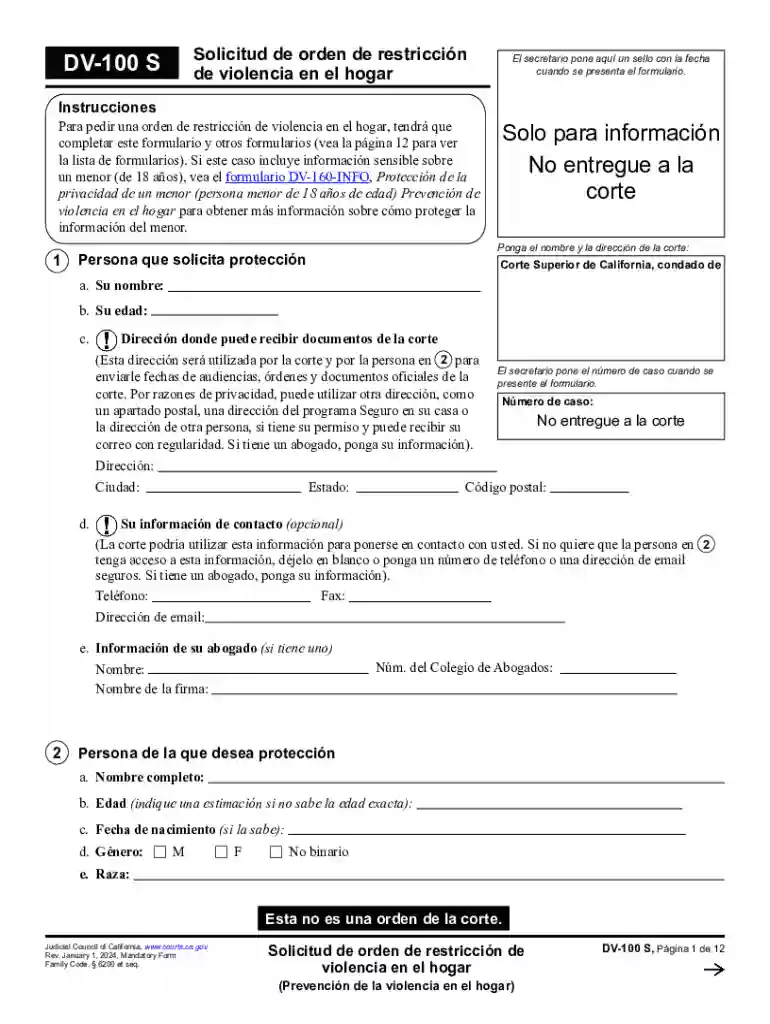
DV-100 S Preview on Page 1

Here's how it works

01. Edit your form online
Type text, add images, blackout confidential details, add comments, highlights and more.

02. Sign it in a few clicks
Draw your signature, type it, upload its image, or use your mobile device as a signature pad.

03. Share your form with others
Send it via email, link, or fax. You can also download it, export it or print it out.

Definition and Meaning of the DV-100 S

The DV-100 S form is a specific legal document used in the state of California for requesting a domestic violence restraining order. Its primary function is to provide a structured format for individuals seeking protection from abuse. The form compiles essential information about the applicant, the person against whom protection is sought, and any incidents of abuse. Typically, the DV-100 S delineates the nature and extent of the protection being sought, ensuring that legal processes are followed accurately and efficiently.

How to Use the DV-100 S

Using the DV-100 S form involves understanding the procedures for completing and submitting the document to the appropriate authorities. It requires the applicant to fill out their personal information accurately, describe the incidents of violence in detail, and specify the type of restraining order requested. The form must be completed with clarity to convey the need for protection effectively, which includes detailing past incidents and any known threats from the respondent.

Steps for Completion:

  1. Applicant Information: Start by entering personal details such as your name, address, and contact information.
  2. Respondent's Details: Provide the same level of detail for the person against whom the order is sought.
  3. Description of Incidents: Use this section to clearly and accurately describe all relevant incidents of abuse, including dates and locations.
  4. Type of Protection: Specify the types of protective orders needed, such as a no-contact order or custodial provisions.
  5. Submission: Once the form is filled out, submit it to the relevant family court office for review.

How to Obtain the DV-100 S

The DV-100 S can typically be obtained from several sources, ensuring accessibility for individuals in need.

  • Online Resources: Most state court websites offer the form in a downloadable format.
  • Local Courthouses: Physical copies can be picked up in person from family court locations throughout California.
  • Legal Aid Societies: Many organizations offer assistance in obtaining and filling out these forms for those who require support.

Important Terms Related to the DV-100 S

Understanding the terminology used in the DV-100 S form can help ensure accurate completion and comprehension.

  • Restraining Order: A legal order issued to protect an individual from harassment or harm.
  • Applicant: The person seeking protection through the restraining order.
  • Respondent: The individual against whom the restraining order is being requested.
  • No-Contact Order: A specific type of order prohibiting any form of contact between the applicant and respondent.
  • Custody Arrangement: Orders related to the temporary guardianship or visitation rights of children involved in the situation.

Legal Use of the DV-100 S

The DV-100 S form is legally binding within the state of California. The application process involves court evaluations, where the judge assesses the claims and evidence presented. Once a judge grants a restraining order, it carries legal weight, and any violation of its terms is subject to penalties, which may include fines or imprisonment. The form is structured to align with California's domestic violence laws, ensuring compliance with both state and federal guidelines.

Steps to Complete the DV-100 S

Comprehensive steps to effectively complete the DV-100 S are as follows:

  1. Read Instructions Thoroughly: Familiarize yourself with the entire form before beginning to fill it out.
  2. Detailed Descriptions: Provide clear, concise, and truthful details of all incidents, including times, dates, and witnesses.
  3. Gather Evidence: Collect any evidence that may support your claims, such as photographs, text messages, and witness testimonies.
  4. Review and Edit: Check for errors or omissions that might affect the understanding or legality of the document.
  5. Attach Supplemental Documents: Include any necessary attachments or evidence that support your request.

Key Elements of the DV-100 S

Several key sections must be appropriately filled in the DV-100 S:

  • Personal Information: Both applicant and respondent sections must be complete and accurate.
  • Incident Reports: Clear recounting of the events that led to filing for protection.
  • Type of Protection Sought: Specific requests like full non-contact vs. limited contact orders.
  • Additional Orders: Any special custody arrangements, if relevant, or additional prohibitive requests.

State-Specific Rules for the DV-100 S

Certain state-specific guidelines dictate how the DV-100 S is processed:

  • California Jurisdiction: This form is only applicable within the boundaries of California state law.
  • Court Processing Times: Processing varies by county but typically requires a short waiting period for temporary orders.
  • Supporting Documentation: California courts often require more exhaustive supporting documentation for final orders.

Filing Deadlines and Important Dates

Timing is crucial when filing the DV-100 S:

  1. Temporary Orders: Often granted on an expedited basis, usually within 24-48 hours.
  2. Final Hearings: Scheduled promptly, often within weeks, to determine the permanence of orders.
  3. Expiration Dates: Temporary orders expire after a set period unless a final order is granted.

Examples of Using the DV-100 S

Several scenarios illustrate how the DV-100 S is used:

  • Domestic Disputes: A person facing ongoing domestic violence can file, detailing specific instances to support their case.
  • Custody Conflicts: Parents attempting to protect themselves and their children from an abusive partner.
  • Stalking Cases: Individuals experiencing harassment benefit from documenting ongoing threats or intimidation.

This structured guide ensures that users understand the DV-100 S form’s function and can navigate its complexities to secure necessary legal protections.

be ready to get more

Complete this form in 5 minutes or less

Get form

Got questions?

We have answers to the most popular questions from our customers. If you can't find an answer to your question, please contact us.
Contact us
A domestic violence restraining order is against someone youve dated or had an intimate relationship with, including a spouse or domestic partner. It can also be against a relative if they are your child, parent, sibling or grandparent.
Many times, we see clients that have both a Domestic Violence Protective Order (DVPO) and criminal charges for the same incident. However, a DVPO is a civil matter that should be handled by an attorney with civil experience. The plaintiff will file a DVPO at the courthouse and will be heard the same day.
If you received any of these forms, someone asked for a restraining order against you: Notice of Court Hearing (form DV-109) Request for Domestic Violence Restraining Order (form DV-100) Temporary Restraining Order (form DV-110)
In California, you face domestic violence (DV) charges for allegedly physically harming an intimate partner. According to Penal Code 13700, intimate partners include your current or former: spouse, fianc(e), or registered domestic partner, co-parent, or. boyfriend or girlfriend, whether you live together or not.
5k run to support victims of domestic violence in the LA, OC and Southern California counties. A morning well spent in trying to get some steps in but also raise awareness for victims of violent crime.

Security and compliance

At DocHub, your data security is our priority. We follow HIPAA, SOC2, GDPR, and other standards, so you can work on your documents with confidence.

Learn more
ccpa2
pci-dss
gdpr-compliance
hipaa
soc-compliance
be ready to get more

Complete this form in 5 minutes or less

Get form

People also ask

Domestic violence is a pattern of abusive behavior in any relationship that is used by one partner to gain or maintain power and control over another intimate partner.

Related links