
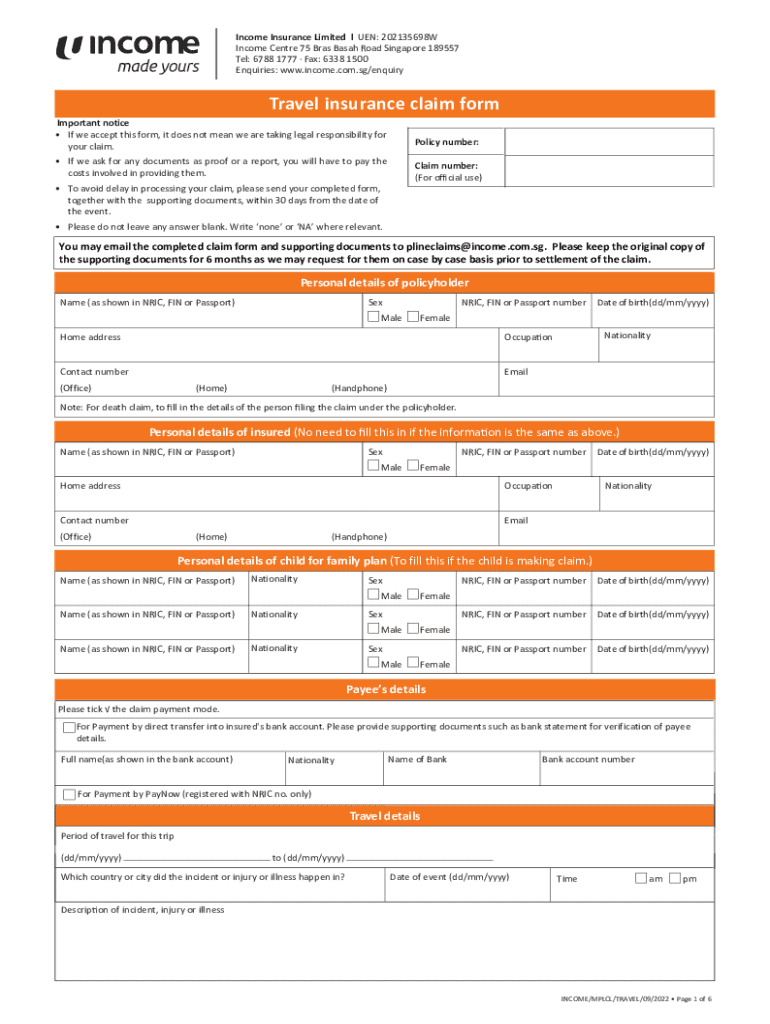







Definition and Importance of Travel-Insurance-Claim202104V1
Travel-insurance-claim202104V1 is an essential document for individuals seeking to make claims under their travel insurance policies. This form is used to process claims related to travel-related incidents, such as trip cancellations, medical emergencies, or loss of baggage. Completing this form accurately and comprehensively is crucial to ensure the claim is processed swiftly. The document requires detailed information about the policyholder, incident details, and any relevant supporting documentation to substantiate the claim. Understanding the form's structure and providing precise information can significantly expedite the claim approval process.
How to Use the Travel-Insurance-Claim202104V1
-
Review the Form: Start by carefully reading through the entire form to understand what information is required. Pay attention to each section's specific needs, and ensure you have gathered all necessary details before you begin filling it out.
-
Gather Supporting Documents: Before you start, assemble all relevant documents, such as medical records, flight itineraries, and receipts for expenses incurred. These documents will be crucial in verifying the details provided in your claim.
-
Complete Personal Information: Fill out your personal information accurately, including your full name, contact information, and policy number. This ensures that your claim is linked correctly to your insurance policy.
-
Describe the Incident: Provide a comprehensive explanation of the incident that led to your claim. Include dates, locations, and any parties involved. This section is vital for justifying the claim.
-
Attach Documentation: Securely attach copies of all supporting documents to your claim form. Ensure that these documents are clear and legible to prevent any delays in processing.
-
Submit the Form: Follow the instructions for submission, which may include options for online submission, mail, or in-person delivery. Confirm the submission method accepted by your insurance provider.
How to Obtain the Travel-Insurance-Claim202104V1
- Insurance Provider: Typically, the form is provided by your travel insurance provider upon request. It can be downloaded from their website or mailed to you upon contacting their customer service.
- Online Access: Many insurers offer the travel-insurance-claim202104V1 form on their websites, available for direct download. You may need to log into your policy account for access.
- Agent Assistance: Contacting your insurance agent or broker can also be an effective way to obtain the form, along with guidance on completing it.
Steps to Complete the Travel-Insurance-Claim202104V1
-
Identify Required Sections: Different sections of the form will ask for specific information such as travel details, reason for claim, and personal identification.
-
Fill in Each Section: Use clear and precise language when filling out the form. Ensure all fields are completed to avoid processing delays.
-
Double-Check Information: Before submitting, review every section to confirm that all details provided are accurate and truthful.
-
Include Additional Information: Where applicable, provide further explanations or details that could support your claim, such as contextual factors regarding the incident.
-
Signing the Form: Sign the form where required. An unsigned form may be considered incomplete and could delay processing.
Key Elements of the Travel-Insurance-Claim202104V1
- Policyholder Information: Details identifying the claimant and verifying their insurance coverage.
- Incident Description: A detailed account of the incident prompting the claim.
- Supporting Documentation: Proof supporting the occurrence and expenses related to the incident.
- Claimant Declaration: A signed statement confirming the truthfulness and accuracy of the provided information.
Required Documents for Travel-Insurance-Claim202104V1
- Proof of Travel: Itinerary, boarding passes, or travel reservations.
- Medical Reports: If applicable, medical records and bills should be included.
- Receipts: Documentation showing personal expenses incurred due to the incident.
- Correspondence Proofs: Emails or written communications relevant to the claim, such as cancellation confirmations.
Form Submission Methods
- Online Submission: Most insurance providers offer a portal on their website for secure online submissions of the completed form and supporting documents.
- Mail Submission: Completed forms can be mailed along with the necessary attachments to the address specified by the insurer.
- In-Person Submission: For those who prefer face-to-face interactions, forms can often be submitted in person at an insurance office or agency.
Legal Use and Compliance for Travel-Insurance-Claim202104V1
This form must be filled out with honesty and precision as it carries legal implications. Giving false information can lead to claim denial and potential legal action. Compliance with the policy terms and adherence to deadlines specified by your insurance provider is crucial for a successful claim process. It is recommended to read the policy documents carefully to understand the conditions under which the form should be used.




