




01. Edit your form online
Type text, add images, blackout confidential details, add comments, highlights and more.

Type text, add images, blackout confidential details, add comments, highlights and more.

Draw your signature, type it, upload its image, or use your mobile device as a signature pad.

Send it via email, link, or fax. You can also download it, export it or print it out.
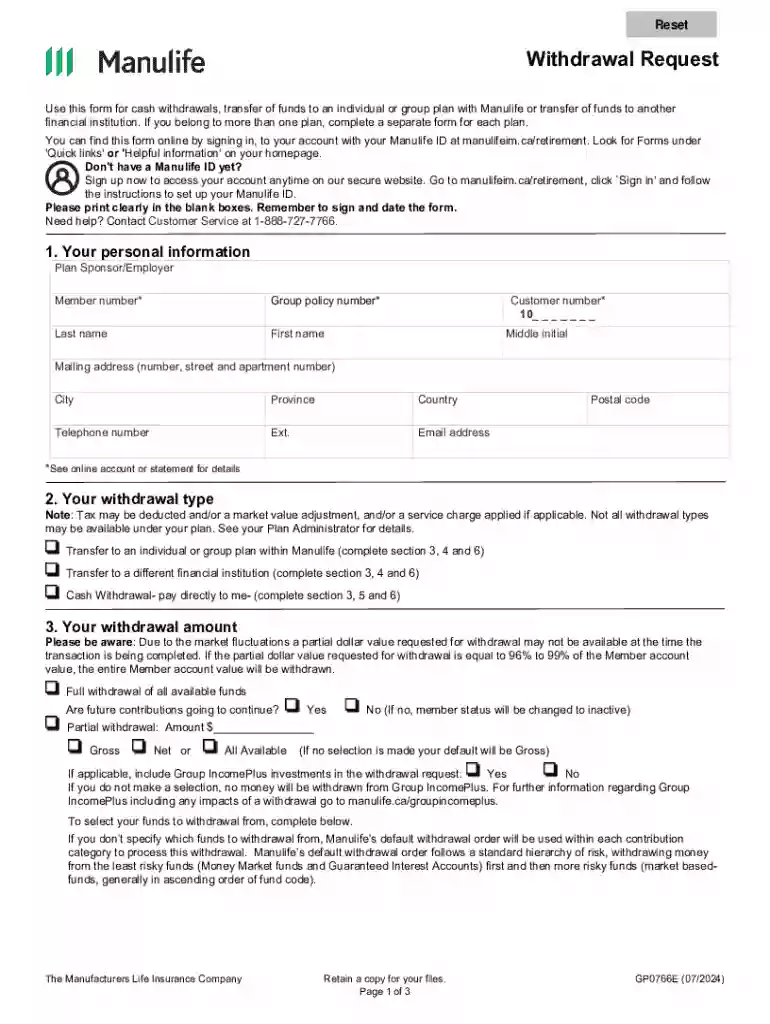
A "Withdrawal Request" is a formal document used to initiate the process of removing funds from a financial account, such as cash withdrawals, fund transfers to individual or group plans like those managed by Manulife, or to different financial institutions. The document ensures that all necessary personal and transactional details are collected for the request to be processed accurately. It outlines specific instructions for completion, specifying the withdrawal types available, the required information necessary for processing, and potential implications related to taxes and account status. It is essential for individuals and businesses when managing their financial transactions securely and legally.
Completing a withdrawal request involves several explicit steps to ensure accuracy and compliance. These steps include:
Provide Personal Information: Enter details such as your full name, account number, and contact information. This information verifies your identity and ensures the withdrawal is applied to the correct account.
Select Withdrawal Type: Indicate whether you are withdrawing cash, transferring funds to another account, or making a distribution to another entity. Different types may have specific requirements or limitations.
Specify Withdrawal Amount: Clearly state the amount you wish to withdraw. For certain types, such as retirement accounts, there can be limits on the amounts that can be withdrawn without tax penalties.
Choose Payment Method: Decide if the funds will be received via check, direct deposit, or another transfer method. Ensure you provide the correct banking information if you choose a direct deposit.
Review Tax Implications: Understand the potential tax consequences of the withdrawal. Some types of withdrawals may trigger additional tax obligations, which should be considered during the decision-making process.
Submit the Request: Once completed, submit the request using the preferred method, which might include mailing or submitting it through a secured online portal.
There are various ways to obtain a withdrawal request form, depending on the institution with which you maintain an account. Common methods include:
Direct Download: Many institutions provide downloadable forms on their official websites. These can be printed, filled out, and submitted as needed.
Request by Mail: Some organizations allow you to request a physical form to be sent to your mailing address.
In-Person Pickup: Visit the nearest branch of your financial institution to get a form in person. This method can also provide you the opportunity to ask questions about the process.
Digital Platforms: For tech-savvy users, many institutions offer digital versions of these forms that can be completed and submitted entirely online via customer service portals or bespoke apps.
A withdrawal request has legal implications, particularly when it comes to tax responsibilities and compliance with financial regulations. It serves as a legal document that helps ensure both parties—the account holder and the financial institution—are aligned on the specifics of the transaction. Understanding legal requirements such as those established by the IRS is crucial to avoid penalties. Using this document responsibly is vital, especially in maintaining clear audit trails and ensuring transparency in financial dealings.
Understanding key terms associated with a withdrawal request can amplify the efficiency and accuracy of the process. These include:
Beneficiary: An individual or entity designated to receive the funds if applicable.
Rollover: A type of financial move where withdrawn funds from one retirement account are transferred to another without tax penalties.
Distribution: The act of distributing funds from an account, often referring to funds taken from retirement accounts.
Withholding Tax: Taxes that may automatically be deducted from the withdrawal, especially relevant for retirement accounts.
A broad range of individuals and businesses utilize withdrawal requests. The most common users include:
Retirees: Often use this form to manage distributions from retirement accounts.
Business Entities: Companies regularly needing cashflow management may use these forms to transfer funds between different accounts or institutions.
Individuals: Anyone with a financial account has the potential need to withdraw funds for personal use or to transfer to other accounts.
Investment Managers: Acting on behalf of clients to manage fund distributions and redistributions.


Withdrawal request forms typically encompass several critical elements that ensure accurate processing:
Identification Section: Contains personal data and account-specific information.
Withdrawal Details: Include the amount, type, and desired method of receiving funds.
Tax Information: Enclosures regarding withholding instructions if required.
Signatures and Authorizations: Verification and consent from the account holder and any associated parties if necessary.
Different states may impose specific regulations affecting withdrawal requests, especially concerning state taxes or fees. Understanding these nuances is critical:
Tax Variations: Some states tax retirement account withdrawals differently, impacting the net amount received.
Processing Times: State financial institutions might have distinct timelines or processing fees.
Regulatory Compliance: Legal requirements for document processing may vary, affecting reporting and compliance measures.
It is vital for account holders to consider these state-level differences and, if applicable, seek advice from financial consultants to ensure complete compliance.
We've got more versions of the Withdrawal Request form. Select the right Withdrawal Request version from the list and start editing it straight away!
At DocHub, your data security is our priority. We follow HIPAA, SOC2, GDPR, and other standards, so you can work on your documents with confidence.




Either the SO or the PI can initiate a Withdrawal Request. The process requires a justification statement; as many as 10 supporting documents can be uploadedRead more
To make a request to access or delete your information as described above, please submit a Personal Information Request or call 877-499-6809. Right to Withdraw
If you are enrolled in classes and you do not plan on attending that term, you must submit a Withdrawal Request Form in CalCentral My Dashboard StudentRead more


