
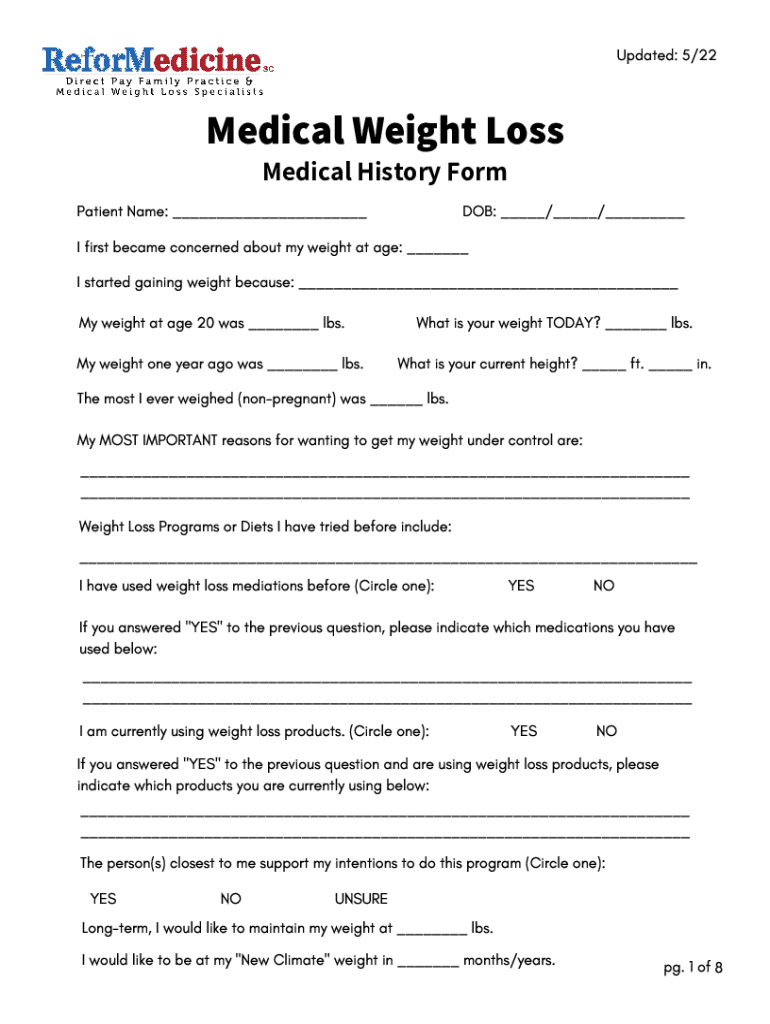







Definition and Meaning of a Medical History Form
A Medical History Form is a critical document used by healthcare providers to gather detailed information about a patient's health background. This form captures personal and family medical histories, current and past health issues, medications, allergies, surgeries, and lifestyle factors that may influence an individual's health. By compiling this data, healthcare professionals can make informed decisions about diagnosis, treatment plans, and preventative care measures. For instance, knowing a patient's family history of heart disease can guide early intervention strategies.
How to Use a Medical History Form
The Medical History Form is typically introduced during initial healthcare visits and regularly updated to reflect any changes in a patient's health status. Patients should honestly and comprehensively fill out the form, as accurate information is essential for effective medical care. The confidential nature of this form assures patients that their information will be used exclusively for their health management. In a clinical setting, healthcare providers review this form to identify potential risks and suggest personalized treatment plans.
- Before filling out, ensure you have documents that detail your medical history, including prescription records.
- Use the form as an opportunity to note any adverse reactions to medications or treatments.
- Ensure regular updates to the form are made to accommodate any changes in your medical condition or new health developments.
Steps to Complete the Medical History Form
Completing a Medical History Form can be broken down into a few methodical steps, ensuring all information is accurate and comprehensive.
- Gather Personal Information: Start by filling out your name, date of birth, contact information, and emergency contact details.
- Detail Medical History: Include past medical diagnoses, surgeries, hospitalizations, and ongoing health issues.
- List Current Medications: Write down all prescription medications, over-the-counter drugs, vitamins, and supplements you currently take.
- Document Family Health History: Note any significant medical conditions prevalent in your immediate family.
- Lifestyle Factors: Indicate smoking habits, alcohol consumption, exercise routines, and dietary practices.
- Review and Confirm: Double-check all provided information for completeness and accuracy before submitting it to your healthcare provider.
Key Elements of the Medical History Form
Each Medical History Form has fundamental sections necessary for comprehensive health profiling. These elements are vital for a complete understanding of a patient’s health landscape.
- Personal Information: Identifying details including age, gender, and ethnicity, which can influence health risks and conditions.
- Medical Conditions and Diagnoses: Chronic illnesses or recurrent health issues that need management.
- Surgical History: Types of surgeries undergone, with dates, which may affect current health strategies.
- Medications and Allergies: Comprehensive list of all medicinal substances and known allergies.
- Family Medical History: Genetic or hereditary conditions that are significant for the patient's health prospects.
- Social and Lifestyle Factors: Indicators like tobacco use, alcohol, and physical activity, providing insights into potential health influences.
Who Typically Uses the Medical History Form
Various individuals and entities utilize Medical History Forms for their respective functions, contributing to overall healthcare effectiveness.
- Patients: To communicate health-related information that affects their medical care.
- Healthcare Providers: For diagnostic purposes, treatment planning, and monitoring health progress.
- Insurance Companies: To evaluate risk and determine coverage plans.
- Research Institutions: As data for studies aimed at understanding health trends and treatment outcomes.


Legal Use of the Medical History Form
The Medical History Form is bound by specific legal frameworks that ensure its responsible use and protection of patient privacy.
- HIPAA Regulations: Protect the privacy of individually identifiable health information.
- Confidentiality Agreements: Often required when sharing information with parties outside of direct healthcare delivery.
- Compliant Sharing: The form can be shared among healthcare professionals involved in a patient's care but requires patient consent for external disclosures.
Digital vs. Paper Version
The transition from paper to digital forms brings notable differences and improvements to the processing and maintenance of Medical History Forms.
- Digital Forms: Enhanced accessibility, allowing patients to update their data online from any location. Digital forms facilitate automated alerts for missing details and easier storage and retrieval.
- Paper Forms: While still in use, paper forms are less efficient due to manual data entry requirements and the risk of physical damage or loss.
Software Compatibility and Integration
Medical History Forms are increasingly supported by software that integrates them into broader healthcare management systems.
- Compatibility with EMR/EHR Systems: Electronic Medical and Health Record systems streamline the integration of medical history data, enhancing healthcare delivery.
- Cloud-Based Solutions: Allow remote access and updating, ensuring practitioners have the latest information.
- Third-party Integration: Compatibility with platforms like DocHub for document management, editing, and signing processes, which improve operational efficiency.




