Definition and Purpose of Mississippi Lease Termination Notice Forms
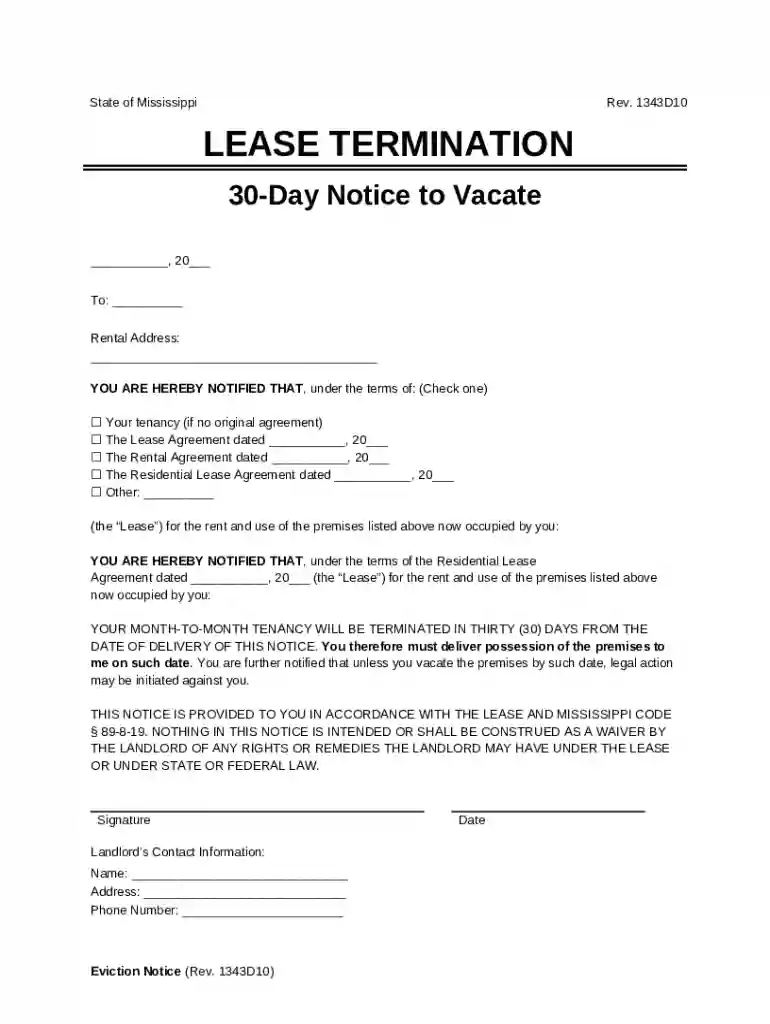
Mississippi Lease Termination Notice Forms serve an essential role in the legal landscape of landlord-tenant relationships. These documents formally inform a tenant of the landlord’s intention to terminate a lease agreement, typically for a month-to-month tenancy in Mississippi. They provide the legal foundation for ending the rental relationship and ensure that both parties are aware of their rights and responsibilities during the transition. The forms are a safeguard against misunderstandings and provide clear documentation if disputes arise, offering landlords a structured method for reclaiming possession of their property while giving tenants ample time to relocate.
How to Use the Mississippi Lease Termination Notice Forms
To effectively utilize Mississippi Lease Termination Notice Forms, follow these key steps:
- Review Lease Agreement: Before preparing the termination notice, thoroughly review the current lease agreement to understand the conditions and terms related to termination.
- Select the Appropriate Form: Depending on whether you are a landlord or a tenant, select the correct termination notice form. Each party may need a different form based on their role and reasons for terminating the lease.
- Complete the Form Accurately: Fill out the form with detailed information, including the names of all parties involved, the property address, and the termination date. Ensure accuracy to avoid any disputes or delays.
- Deliver the Notice: Use a reliable method to deliver the notice, such as certified mail, personally handing it to the tenant, or any other legally recognized method in Mississippi. Keep proof of delivery for your records.
- Confirm Receipt and Compliance: Follow up to ensure that the notice was received and the termination date is acknowledged. Establish a plan for walkthroughs or handing over the keys to ensure compliance with the notice.
Steps to Complete the Mississippi Lease Termination Notice Forms
Completing the Mississippi Lease Termination Notice Forms involves several detailed steps:
- Gather Necessary Information: Collect all relevant details, including the lease agreement, tenant contact information, and termination reasons.
- Fill in Landlord and Tenant Details: Clearly state the full names and contact information of both the landlord and tenant(s).
- Specify Termination Date: Indicate the exact date by which the tenant is required to vacate the premises, ensuring it aligns with state regulations for notice periods.
- State Reason for Termination (if applicable): If the termination is due to a lease violation, specify the violation and any previous steps taken to address the issue.
- Sign and Date the Form: Ensure that the notice form is signed and dated by the landlord or the authorized representative, establishing its validity.
- Attach Additional Documents: Attach any supporting documents that validate the reasons for termination, such as previous warning letters or communication records.
Legal Use of the Mississippi Lease Termination Notice Forms
Using Mississippi Lease Termination Notice Forms legally requires adherence to state laws and guidelines:
- Adhering to Notice Periods: In Mississippi, landlords typically must provide a 30-day notice for tenancy termination in month-to-month leases.
- Valid Reasons for Termination: Ensure that the termination reason complies with state law, whether it’s due to lease expiry, property sale, or tenant violations.
- Proof of Delivery: Maintain records of how and when the notice was delivered. Methods including certified mail with a return receipt are advisable to establish proof.
- Mitigating Disputes: Utilize the form as a reference in case of legal disputes, as it documents the landlord’s compliance with legal requirements and timelines.
Key Elements of the Mississippi Lease Termination Notice Forms
Understanding the key components of the Mississippi Lease Termination Notice Forms ensures comprehensive completion:
- Identification Information: Includes full names and addresses of all parties, along with identifying details of the rental property.
- Termination Date: Clearly displayed date by which the tenant must vacate.
- Acknowledgement of Terms: Section that reiterates the terms leading to termination, especially in cases of breach of lease clauses.
- Proof of Service Section: Allows the landlord to indicate how and when the notice was delivered, signed by an independent witness if necessary.
State-Specific Rules for the Mississippi Lease Termination Notice Forms
Mississippi has unique rules and requirements that influence the lease termination process:
- Standard Notice Period: Generally requires a 30-day notice for month-to-month tenancies.
- Late Fees and Payments: Any discrepancies in rent payments and outstanding fees may be addressed in the notice.
- Exceptions and Special Cases: For example, if a tenant is involved in illegal activity, shorter notice periods may be applied in compliance with state laws.
Examples of Using the Mississippi Lease Termination Notice Forms
Practical scenarios include:
- Standard Lease Expiry: A landlord issues a notice to terminate a month-to-month lease as they intend to renovate or sell the property.
- Breach of Lease Terms: A tenant continuously fails to adhere to property rules despite multiple warnings, prompting a formal termination notice.
- Tenant’s Intent to Vacate: Tenants may also use the notice to inform the landlord of their intention to leave, respecting the notice period obligated in the lease.
Who Typically Uses the Mississippi Lease Termination Notice Forms
Different parties can utilize these forms under varying circumstances:
- Landlords and Property Managers: To inform tenants of their required departure due to lease changes or property management decisions.
- Tenants: When wishing to formally notify their intent to vacate without penalty.
- Legal Representatives: Acting on behalf of landlords or tenants to ensure legal compliance during tenancy terminations.
These forms ensure legal and procedural clarity for both landlords and tenants in Mississippi, minimizing potential conflicts and aligning with state regulations.