Definition & Meaning
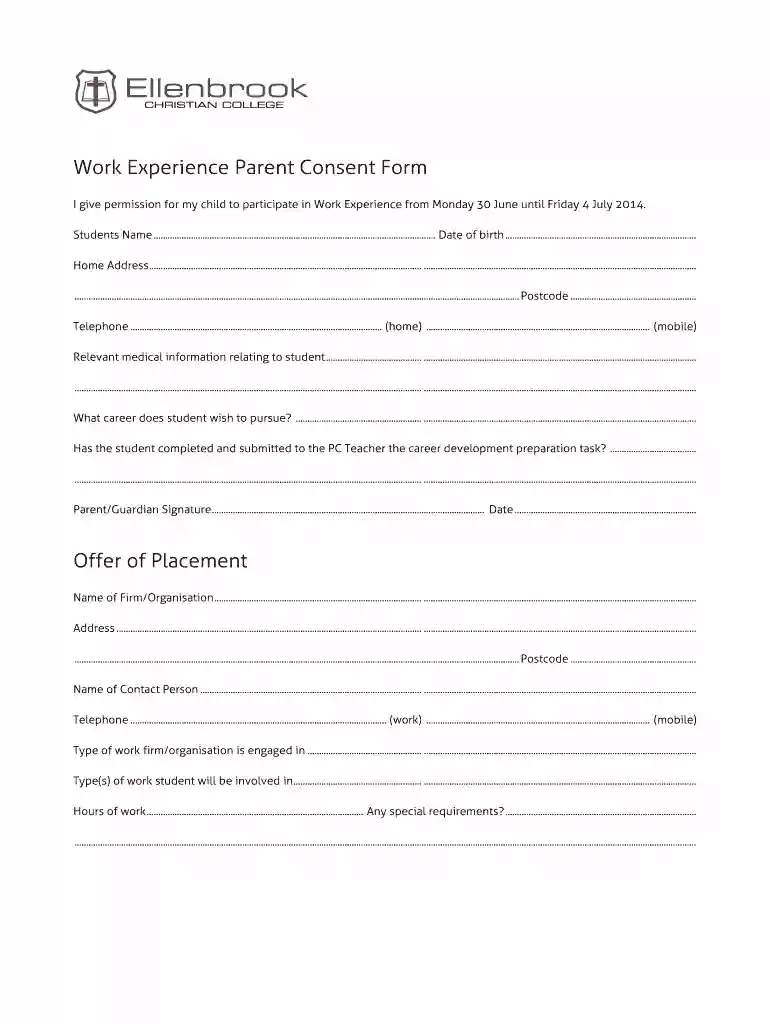
A "Work Experience Parent Consent Form" is a formal document that seeks approval from a parent or guardian for their dependent child to participate in a work experience program. This form is critical in various educational contexts where students are given the chance to explore job environments, gain practical skills, and understand career opportunities. It typically includes important details about the student, the nature of the work experience, and the responsibilities of all involved parties. Its main aim is to ensure that parents or guardians are fully informed about the work experience and any associated risks, thereby granting their consent for the student's involvement.
Key Elements of the Work Experience Parent Consent Form
The Work Experience Parent Consent Form consists of several critical sections that ensure all relevant information is captured and permissions are appropriately granted. These elements include:
- Student Information: Includes the student's full name, date of birth, address, and contact details. This section ensures the identification of the student participating in the work experience program.
- Parental Consent: Requires the signature and contact information of the parent or guardian, signifying their approval for the student's participation.
- Emergency Contact Details: Lists alternative contact information in case of emergencies. This is crucial for ensuring the student's safety during the work experience period.
- Medical Information: Requires disclosure of any medical conditions, allergies, or special needs the student might have, ensuring awareness and preparedness to handle potential health concerns.
- Details of the Work Experience: Provides information about the host organization, nature of the work, duration, and working hours. It may also detail any specific clothing or equipment required for the job.
How to Use the Work Experience Parent Consent Form
Using the Work Experience Parent Consent Form involves several steps to ensure it is completed accurately and timely. The process is generally as follows:
- Obtain the Form: The form is typically provided by the student's educational institution or found online on the institution's website.
- Complete Student Information: Fill out all personal and educational details of the student.
- Review Work Experience Details: Understand the specifics of the work placement, ensuring both parents and students are aware of the tasks involved.
- Fill in Medical Information: Ensure that all relevant medical data is accurately provided for the safety of the student.
- Sign the Form: The guardian must sign the form to indicate consent, demonstrating they have read and understood all aspects of the work experience.
Steps to Complete the Work Experience Parent Consent Form
Filling out the Work Experience Parent Consent Form requires attention to detail and accuracy. Here’s a step-by-step guide:
- Gather Required Information: Collect details of the student, including contact, educational background, and any medical conditions.
- Read the Guidelines: Carefully review all instructions and conditions outlined in the form.
- Complete Each Section: Enter information accurately in the sections designated for student details, parental consent, and medical information.
- Verify Work Experience Details: Double-check the work placement information, and ensure it aligns with what was communicated to the student and parent.
- Review and Sign: Go through the entire form to ensure no sections are omitted, then have the guardian sign to confirm consent.
Legal Use of the Work Experience Parent Consent Form
This form serves a legal function by ensuring that all parties—the educational institution, hosting company, and participants—understand the legalities involved in work experience arrangements:
- Informed Consent: Guarantees that the parent or guardian has been informed about the program’s details and potential risks, thereby agreeing to the student’s participation.
- Liability Limitation: Outlines any disclaimers regarding the responsibility of the participating organization and educational institution.
- Privacy Protection: Ensures compliance with privacy laws related to the handling of student and guardian personal information, reinforcing trust and confidence in the process.
State-Specific Rules for the Work Experience Parent Consent Form
This form can often be subject to variations depending on state regulations. Factors that might influence its content include:
- Age Requirements: Different states set various age limits for work experience participation, impacting the form’s requirements.
- Labor Laws: State-specific labor laws may dictate the permissible working hours and conditions for student placements.
- Mandatory Information: Certain states may require additional disclosures, such as detailed emergency procedures.
Examples of Using the Work Experience Parent Consent Form
The Work Experience Parent Consent Form finds application in numerous scenarios:
- High School Career Programs: Used by high schools to facilitate student placements in local businesses or industries for career exploration.
- Vocational Course Placements: Incorporates students in technical or vocational courses requiring practical experience.
- Community Outreach Programs: Utilized by community education initiatives to provide experiential learning opportunities partaking with local enterprises.
Form Submission Methods (Online / Mail / In-Person)
There are multiple channels for submitting the Work Experience Parent Consent Form:
- Online Submission: Many schools and organizations offer portals for uploading the digital version of the form. This method is convenient and ensures immediate receipt confirmation.
- Mail: Forms can be printed and mailed to the designated address provided by the educational institution or organization.
- In-Person: Submission during school meetings or parent-teacher conferences allows for personal communication and clarification if needed.
Digital vs. Paper Version
As technology evolves, both digital and paper versions of the Work Experience Parent Consent Form are available. Here are the distinctions:
- Digital Forms: Offer convenience and integration with document management systems like DocHub, allowing for easy edits, e-signatures, and sharing among stakeholders. They also aid in reducing paper usage and maintaining ecological sustainability.
- Paper Forms: Provide a tactile method for those preferring traditional documentation, especially in environments with limited digital infrastructure.