Definition and Purpose of a Motion to Change Venue
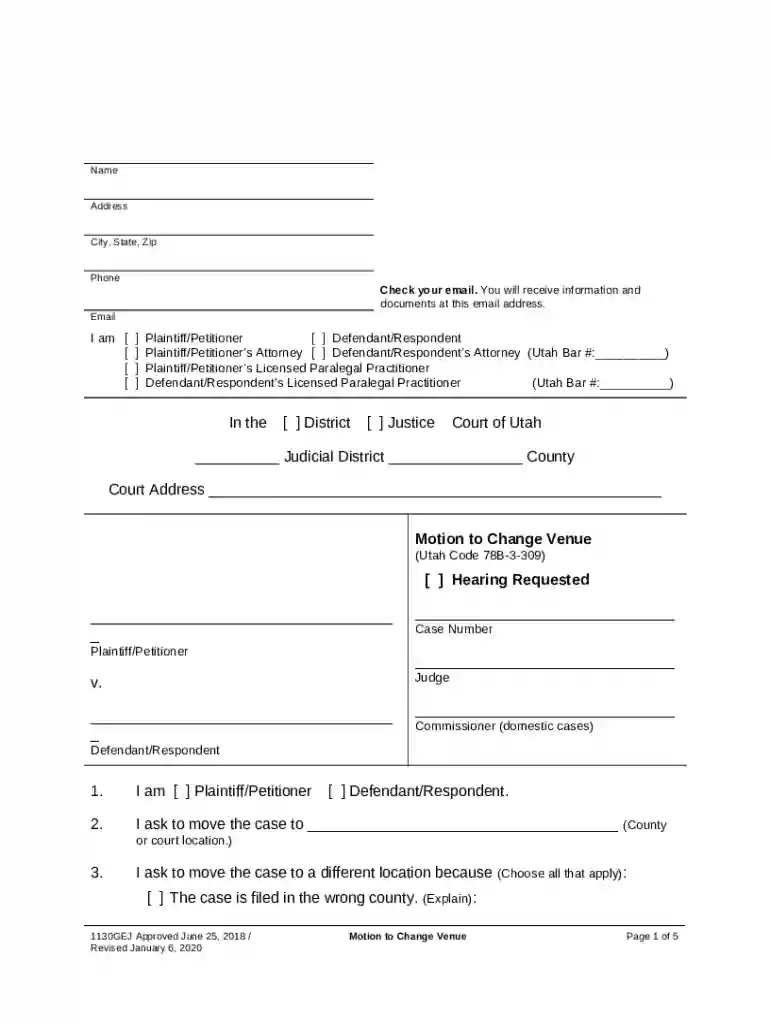
A Motion to Change Venue is a legal document filed in court, requesting the relocation of a court proceeding from its current location to a different jurisdiction. It is primarily used when a party believes that moving the venue will provide a more impartial setting or is required for legal or logistical reasons. The primary consideration for changing a venue often includes factors like impartiality concerns or the convenience of parties and witnesses.
Reasons for Requesting a Venue Change
- Impartiality Concerns: A venue change may be requested if there's a belief that a fair trial is unattainable due to public prejudice.
- Convenience: To accommodate the location of evidence or the residences of parties and witnesses, making court proceedings more efficient.
- Legal Benefits: Sometimes, a change in venue can be strategic for gaining access to a different legal framework or rules favorable to the case.
How to Obtain the Motion to Change Venue Form
The Motion to Change Venue form can be accessed in several ways, particularly in the United States:
- Court Websites: Most state or federal court websites provide downloadable forms directly from their platforms.
- In-Person Requests: Visiting the courthouse can sometimes provide physical copies or detailed advice on completing the motion.
- Legal Aid Services: Organizations that offer legal assistance often have standard forms available for public use or guidance.
Form Accessibility
- Online Resources: Many legal resource websites host templates and guides for completing the Motion to Change Venue.
- Legal Professionals: Attorneys can provide custom-drafted forms based on specific case requirements.
Steps to Complete the Motion to Change Venue Form
Completing a Motion to Change Venue form involves several key steps to ensure it meets the necessary legal standards:
- Gather Required Information: Details about the current venue, reasons for the request, and case-specific information, such as case numbers and involved parties.
- Fill Out the Form:
- Include the court name and case number.
- State your reasons clearly and concisely.
- Attach Supporting Documents: These can include affidavits, evidence supporting bias claims, or inconvenience proof.
- Review and Sign the Form: Ensure accuracy and completeness before signing.
- Submit to the Court Clerk: File the motion with the correct jurisdiction and pay any associated fees.
Who Typically Uses a Motion to Change Venue
Various parties involved in legal proceedings may file a Motion to Change Venue, including:
- Defendants: Often seek a change if they believe local prejudice could impair fair trial rights.
- Plaintiffs: May file to align with venue convenience or strategic benefits.
- Legal Representatives: Attorneys acting on behalf of their clients, ensuring the venue serves their client's best interests.
Legal Use of the Motion to Change Venue
Legal factors that influence the use of a Motion to Change Venue include:
- State and Federal Laws: These laws dictate whether a venue change is permissible and under what circumstances.
- Judge’s Discretion: Ultimately, a judge will decide if the motion provides sufficient grounds for a venue change.
State-Specific Rules for Motion to Change Venue
Rules and procedures for changing venues vary by state:
- Venue Statutes: Each state has different statutes that outline the criteria for venue changes.
- Filing Deadlines: Local courts may have specific timeframes within which such motions must be filed.
Considerations by State
- California: Requires substantial justification for venue changes.
- New York: Often considers the distance, population, and local jury pool dynamics.
Key Elements of the Motion to Change Venue
Understanding critical components of a Motion to Change Venue can guide preparation:
- Case Identification: Correct case number and court details.
- Factual Basis: Clear and supported reasons for requesting the change.
- Legal Basis: Citations of relevant legal precedents or statutes that support the request.
Examples of Using a Motion to Change Venue
Real-world scenarios can illustrate the practical application of this legal process:
- High-Profile Cases: Example of a case moved out of a local area due to intense media coverage potentially affecting jury impartiality.
- Convenience for Parties: Situations where parties are located far from the original venue, justifying a move to a central location.
These blocks collectively cover essential aspects of the Motion to Change Venue form, ensuring readers understand its purpose, process, and practical applications effectively.